It is in the public interest to denounce the illegal and abusive actions of the Quebec Bar aimed at "disbarring me for life" following legal disputes between me and long-time friends of Jean Charest, Premier of Quebec (2003-2012), member of the Quebec Bar, and grand ambassador of the Faculty of Law of the University of Sherbrooke, including Marie-Pierre Robert, Louis Marquis and Sébastien Lebel-Grenier.

From left to right : Marie-Pierre Robert, Sébastien Lebel-Grenier, Louis Marquis
The Quebec Bar’s actions of 2026 had nothing to do with its cliché of "protecting the public”. In 2025, I chose to withdraw from the Quebec Bar to no longer associate myself in any way with this organisation, which is increasingly discrediting itself, which is perceived more and more as corrupt, which is rapidly losing credibility in the eyes of the public, and which is increasingly becoming subject of ridicule under the current leadership of Catherine Ouimet and Marcel-Olivier Nadeau. I have chosen to dedicate my experience and efforts to the organisational leadership of the LEAGUE OF ACADEMIC RIGHTS AND FREEDOMS (LDLU), in the service of justice and public interest. In this sense, the decision of the Quebec Bar to disbar a non-member of the Quebec Bar was clearly useless and insignificant.

Catherine Ouimet, director of the Quebec Bar, 2020-2026, and Marcel-Olivier Nadeau, president of the Quebec Bar, 2025-2026.
In reality, the Quebec Bar has aided and avenged its friends and those close to Jean Charest who perpetrated fraudulent schemes, discrimination, and reprisals. A political score-settling against the opponent of their friends. The Quebec Bar repeated their lies and concealed their reprehensible acts.
Origin of the conflict
Marie-Pierre Robert, Louis Marquis and Sébastien Lebel-Grenier of the Faculty of Law of the University of Sherbrooke have resorted for many years to various fraudulent schemes and other recurring reprehensible behaviours in the granting of teaching contracts to lecturers : nepotism, favouritism, deceitful behaviours, influence peddling, discrimination, flagrant violations of the rules provided in collective agreements, lies about compliance with hiring rules, double standards systems, and other shady dealings.
Once informed of the discoveries, instead of settling the matter and correcting their abuses, Marie-Pierre Robert and Louis Marquis resorted to further abuses and reprisals.
Faced with the aggressiveness of these managers and their refusal to resolve these issues, I turned to the courts of Quebec.
Sébastien Lebel-Grenier left the Faculty of Law, Louis Marquis sought protection through a judicial appointment to the Superior Court of Quebec in Sherbrooke where the lawsuits against them took place, and Marie-Pierre Robert became the dean of the Faculty of Law of the University of Sherbrooke.
Marie-Pierre Robert threatened me that if I continued the legal proceedings against them, the grand ambassador of the Faculty of Law of the University of Sherbrooke, Jean Charest, and judges close to them would derail the trials, and that I would have problems with the Quebec Bar.
Marie-Pierre Robert's threats against me materialised.
Judges close to these university managers, close to their networks of influence, close to Jean Charest, or close to the institution itself were assigned to the cases and blocked the holding of the trial on the grievance revealing the fraudulent schemes, the discrimination trial and the retaliation trial, namely by summarily dismissing them without analysis of the merits of the evidence, without allowing these managers to be questioned, by distorting or hiding essential facts.
Only one recourse concerning the acknowledgment of qualifications to teach the introductory course in criminal law was subject to an arbitration, and even that arbitration was rigged (no administration of evidence allowed, no testimonies allowed, they wouldn't even want to allow me to be present in the room at my own arbitration), which allowed the managers and the judges to rewrite the sequence of events and to pretend that the origin of the conflict was the "recourse concerning the acknowledgment of qualifications".
The arbitrator [1] and the judges that followed him in judicial review and appeal needed to repeatedly and successively lie about my expertise and about my years of experience in criminal law to fabricate the false narrative to the effect that my application for acknowledgment of qualification to teach the first-year introductory course in criminal law (provided for in the collective agreement of lecturers of the University of Sherbrooke) would be "without merit" and that contesting their lies would be an "unacceptable" multiplication of proceedings justifying successively by domino effect a "declaration of quarrelsomeness", a "dismissal" and a "lifetime disbarment" from the legal profession in Quebec.
In this context, the decision and actions of the Quebec Bar and its Disciplinary Council were not ethical, honest, and irreproachable as they should be. The Quebec Bar and its Disciplinary Council were dishonest and made a corrupt decision following corrupt proceedings.
The Quebec Bar made a corrupt decision, by using lies
The Quebec Bar falsified my professional background and misled the public about my expertise
In a decision signed by Karl Chabot, a lawyer with fewer years at the Bar than me, and by two others, Jean-Guy Légaré and Louise Desautels, less academically educated than me, the Quebec Bar falsely claimed that in 2026 I was only a student "enrolled in criminal law studies since 2017", whereas in 2026 I was no longer a "student" since 2024 : I had been a Doctor in Criminal Law for a year and a half, holding two doctorates in Canadian criminal law and French penal law, from the Faculty of Law of the University of Sherbrooke and from the University of Bordeaux, validated by six experts from five different universities from Europe and Canada, and possessing the highest academic qualifications in this field of expertise.
“ ‘Me’ Popa completed a master’s degree at the University in 2016”, claimed the Quebec Bar, concealing the fact that the master’s degree I completed at the Faculty of Law of the University of Sherbrooke was a master’s degree in law (not in physical education), also concealing that the master’s degree was specifically in criminal law (not agricultural law).
The Quebec Bar also concealed the fact that my experience as a lawyer from 2013 to 2025 was primarily in criminal law at several law firms in Europe and in Canada, having previously been trained by the Director of Criminal and Penal Prosecutions between 2010 and 2013. This expertise in criminal law allowed me to uncover the fraudulent schemes perpetrated by those close to the Quebec Bar from the Faculty of Law of the University of Sherbrooke. I worked on several fraud cases and have a thorough understanding of the essential elements required to prove this criminal offence.
The Quebec Bar also concealed the fact that the law courses I taught from 2012 to 2024 took place specifically at the Faculty of Law of the University of Sherbrooke and that I taught criminal law courses during that period, just as the Quebec Bar concealed all of my scientific activities in cybercrime.
The Quebec Bar also concealed all of my work as a university researcher in criminal law, which spanned 10 years.
By concealing my expertise and years of experience in criminal law, the Quebec Bar, just like the arbitrator René Beaupré, the judges of the Superior Court of Quebec, the judges of the Quebec Court of Appeal and their friends at the Faculty of Law of the University of Sherbrooke, all lied blatantly and without scruples in their decisions to give an air of plausibility to the blatant lie that in 2022, I, who had been continuously working in criminal law since 2010, would not have met the minimum requirement of 5 years of professional and teaching experience to be acknowledged as qualified to teach the introductory course in criminal law, in my field of expertise, while Marie-Pierre Robert of the Faculty of Law of the University of Sherbrooke had herself already acknowledged that I met this criterion as early as 2018 when she hired me to teach part of said criminal law course.
It was enough for a single decision-maker to lie in his decision for the others to then recycle the proceeds of their criminality in their subsequent decisions.
It should also be noted that more and more often, including in my case, this legal fiction of "declaration of quarrelsomeness" is being strategically instrumentalised by certain judges to sabotage legitimate legal proceedings provided for by law, brought against individuals close to the justice system, or is being strategically instrumentalised against legal proceedings that affect the system's interests, directly or indirectly. It is also used by judges to insult credible denouncers and to try to discredit their revelations, in violation of a judge's oath of office, their ethical and legal obligations.
It also serves for the Quebec Bar as a pretext to participate in the same dirty strategy and eliminate lawyers who denounce abuses and corruption within the Canadian legal and judicial systems. By associating "quarrelsomeness" with legitimate denunciations, supported by experts, the Quebec Bar creates a dangerous precedent that signals that denouncing corruption within the judicial system and academia would risk being punished with disciplinary action. The Quebec Bar thus perverts its mandate of “protecting the public” into a shield that protects corruption.
These are just a few ways in which judicial corruption manifests itself in Quebec and Canada.
The Quebec Bar hid behind a lying judgement by Martin F. Sheehan, which the Quebec Bar knew was lying
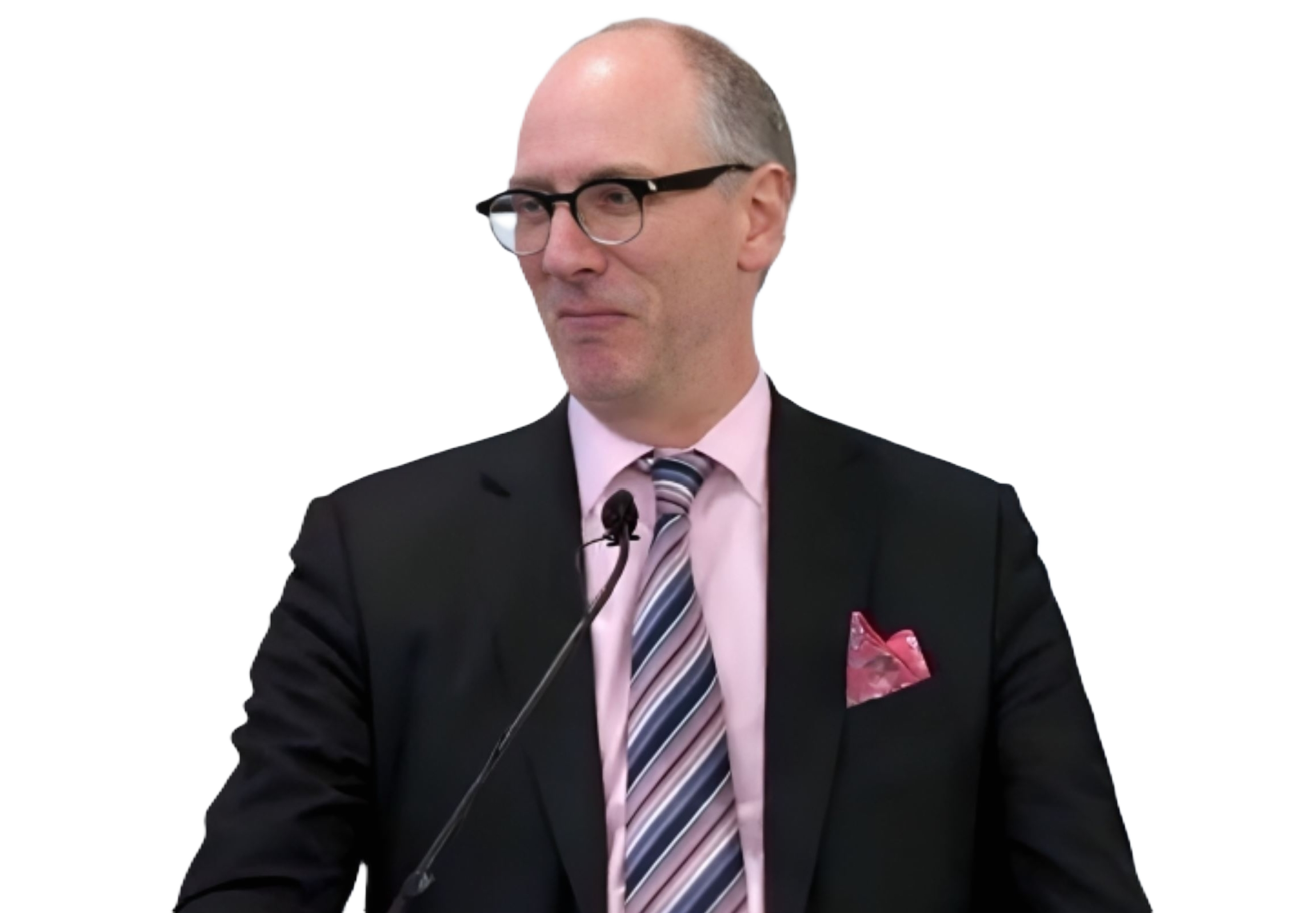
The Quebec Bar repeated Judge Martin F. Sheehan's false narrative that the origin of the conflict was the "acknowledgment of qualifications," when it knew that the origin of the conflict was the discovery, starting December 2021, of fraudulent schemes perpetrated by the managers of the Faculty of Law of the University of Sherbrooke in the hiring of lecturers.
The Quebec Bar falsely pretended that the recourse concerning the "acknowledgment of qualifications" to teach was "without merit," even though it knew that the recourse was well-founded. The Quebec Bar itself acknowledged that I was "an experienced lawyer" with "between eight and ten years" of experience between 2022 and 2024, a fact that clearly confirmed the merit of the recourse, which sought to acknowledge that I possessed at least 5 years of professional experience in 2022, and therefore to be acknowledged as qualified to teach the introductory course in criminal law at the Faculty of Law of the University of Sherbrooke. This also proved that Marie-Pierre Robert, Louis Marquis, René Beaupré, and the other judges (Céline Legendre and Martin F. Sheehan of the Superior Court of Quebec, as well as Stéphane Sansfaçon, Yves-Marie Morissette, Frédéric Bachand, and Geneviève Cotnam of the Court of Appeal of Quebec) had lied directly or indirectly on this aspect. The Quebec Bar knew that Judge Martin F. Sheehan's decision was false and unreliable.
The Quebec Bar also knew that Judge Martin F. Sheehan's decision was unreliable, considering that it was rendered by a judge disqualified to render this decision, given his numerous connections with the opposing party, a judge whose daughter was studying at the University of Sherbrooke [2] while he was judging the University of Sherbrooke, in favour of the University of Sherbrooke. A judge whose wife, lawyer Kim Lachapelle, had connections with the managers of the Faculty of Law of the University of Sherbrooke and with the law firm Cain Lamarre, which represented these managers before her husband, the judge. A judge whose father, judge Michael Sheehan, was made a Knight of the National Order of Quebec by Jean Charest and who worked for 30 years with Jean Charest 's friends and managers at the Faculty of Law of the University of Sherbrooke, the very same faculty his son was judging.

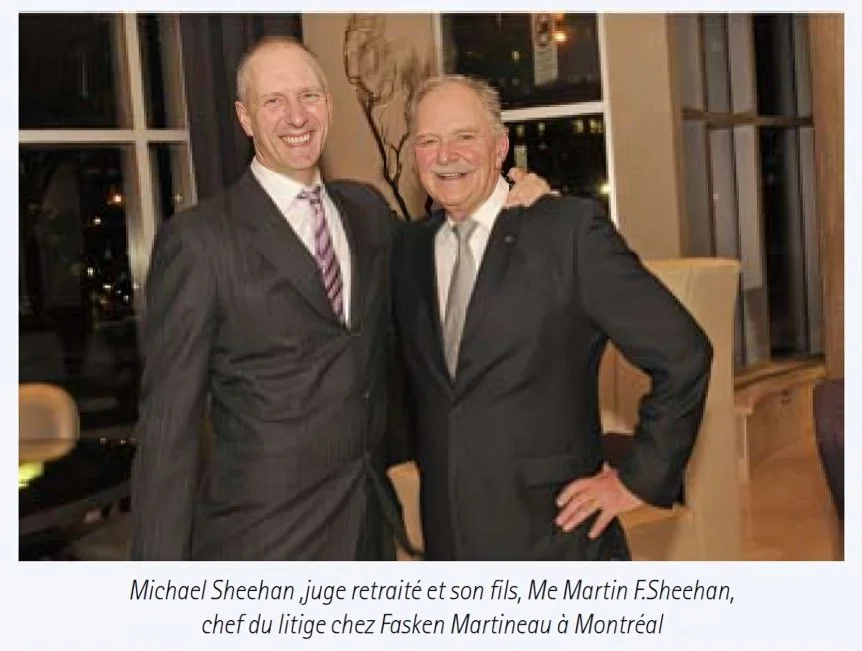
Martin F. Sheehan had interests in this case which made him disqualified to hear the dispute and render a decision, particularly under Section 203 of the Code of Civil Procedure of Quebec and Section 23 of the Charter of Human Rights and Freedoms.
Section 203 of the Code of Civil Procedure : A judge who has an interest or whose spouse has an interest in a case is disqualified and cannot hear the case.
The Quebec Bar could not hide behind a decision it knew to be false and unreliable to render its own decision.
It is manifestly illegal, even fraudulent, to hide behind the pretence that a judicial decision would be “presumed authentic” when the factual findings one requests to be blindly reproduced in another decision are manifestly false, unreasonable, or absurd. Invoking such a decision without analysis, without questioning, without mentioning the evidence that challenged such decision and that the Quebec Bar had at its disposal, demonstrates the conscious and intentional corruption on the part of the Quebec Bar.
The Quebec Bar has concealed several relevant aspects that have defined my professional conduct
An exemplary conduct
Beyond my exemplary conduct as a lawyer, the Quebec Bar has hidden from the public the dignified, composed, reasoned and principled stance I adopted in defence of the rule of law and fundamental rights, in the interest of justice, both before and during these proceedings.
My fellow colleagues prosecutors, professors, jurists and judges have often highlighted these qualities over the years.
A conciliatory conduct
The Quebec Bar concealed in its decision the fact that I prioritised the path of amicable settlement, a reasoned and conciliatory discussion based on arguments, while the managers of the Faculty of Law of the University of Sherbrooke refused to discuss or negotiate to settle the issue out of court.
The Quebec Bar concealed the fact that these managers made three times more requests and/or challenges within my legal proceedings than I did.
These managers chose to hire, to my knowledge, nearly a dozen lawyers against me, instead of using the services of the University of Sherbrooke's internal lawyers.
These managers chose to spend hundreds of thousands of dollars of taxpayers’ and students’ money, enriching the law firm of the president of the Quebec Bar from Cain Lamarre, instead of acknowledging their mistakes and correcting the harm they caused.
They are the real quarrelsome ones, and the demonstration is easy to make. You can only look at the list of their actions against me.
A conduct in the service of justice
As a justice officer, I had a duty to bring corruption, discrimination, abuse, and violations of the rule of law before the courts. It is the Quebec Bar that seems to have a problem with the fact that corrupt jurists are being denounced.
I served justice when I denounced the managers of a law school who resorted to fraudulent schemes, who did not respect the collective agreement, the law or the jurisprudence, who lied to their employees' faces, who engaged in discrimination or retaliation. Such conduct is unworthy and unacceptable for the head of a law school, who is expected to have impeccable conduct and to serve as an example to future lawyers. Deans who consider dishonesty and double standards as part of their "management rights", who discriminate and retaliate against employees, certainly do not serve as a model for future lawyers and cannot remain in their positions. Their fellow professors have the right to be made aware of such behaviours and to take appropriate action. Students also have the right to know what kind of reprehensible person is at the head of the faculty in which they invest years of their lives and thousands of dollars.
I also served justice by denouncing lawyers who benefited from these managers’ fraudulent schemes to be hired as lecturers, only to then represent these managers in court while concealing their fraudulent schemes, and who lied to the courts about the criminal nature of their clients' actions. Concealing fraudulent schemes and lying to the courts constitute serious ethical breaches that dishonour and harm the legal profession.
Through my efforts to defend rights, uncover the truth, and sanitise the academic and judicial environments, the public has learned about the shady dealings taking place behind the closed doors of a law school funded by taxpayers' money.
Too often in Quebec, victims of university abuse who denounce these abuses spend time, effort, intellectual resources, money, arguments, and risk their reputations to have their fundamental rights provided by the law respected, only to be confronted with reprisals from university managers, disrespect from judges, insults, injustice, distortions of facts and reality, lies, cases dismissed without a trial on the merits or without administration of evidence, favouritism and judicial protectionism in favour of university managers. Too often, the careers of those who report university abuses are unjustly affected as a result of denouncing illegalities.
This is unacceptable, and remaining silent in the face of such a toxic reality that shatters the already fragile illusions of a so-called “rule of law” is not an option.
Une conduite qui a renforcé le lien de confiance entre le public et l’administration de la justice
I strengthened the bond of trust between the public and the administration of justice when I denounced corrupt judges in Canada who violated their oath of office, who acted in conflicts of interests, who lied in their decisions. The judiciary appointed by the Government of Canada and the Government of Quebec must undergo a thorough cleaning, to get rid of reproachable judges and to promote true judges who apply the rule of law in a genuinely independent and impartial manner. Corrupt judges do not deserve to hold this high-responsibility position and should not have the power to judge disputes affecting people's lives and render decisions that sometimes irreparably impact their lives, careers, and futures.
Why wouldn't the Quebec Bar be in favour of such behaviour, applauding such behaviour, instead of sanctioning it?
The public has the right to know who these judges are and how they behave, so that they can demand that effective measures be taken against them.
My actions have been popular, well received, and accompanied by support and encouragement, both from members of the legal community and from members of the public.
Those who have not served justice and have broken the bond of trust between the public and the administration of justice are university managers like Marie-Pierre Robert, Louis Marquis and Sébastien Lebel-Grenier, arbitrators like René Beaupré, judges like Martin F. Sheehan, Céline Legendre and others who act in conflicts of interests and make lying decisions to protect their friends, and lawyers like Karl Chabot, Jean-Guy Légaré and Louise Desautels who deceive the public in their decisions to harm honest lawyers who expose corruption within the justice system.
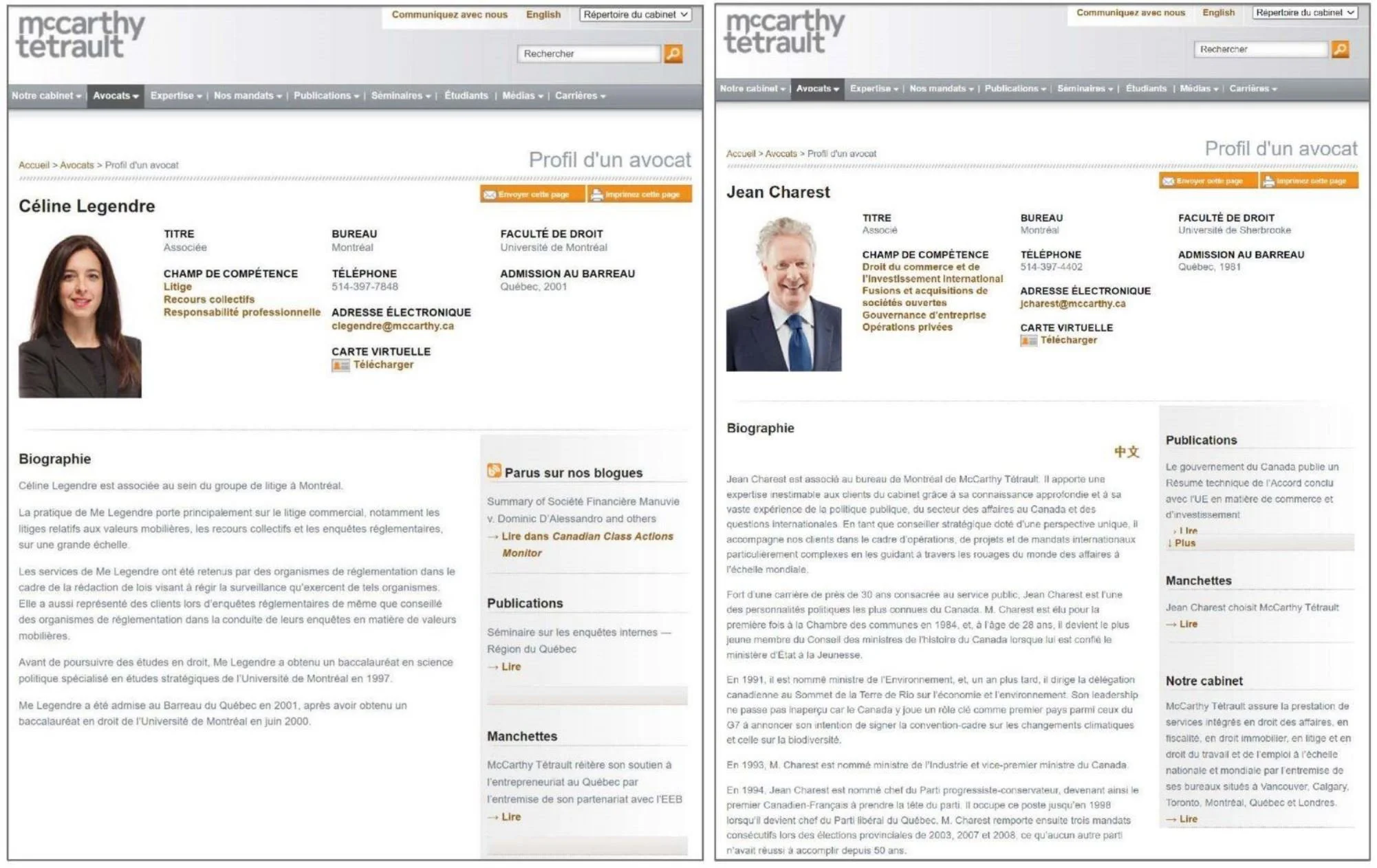
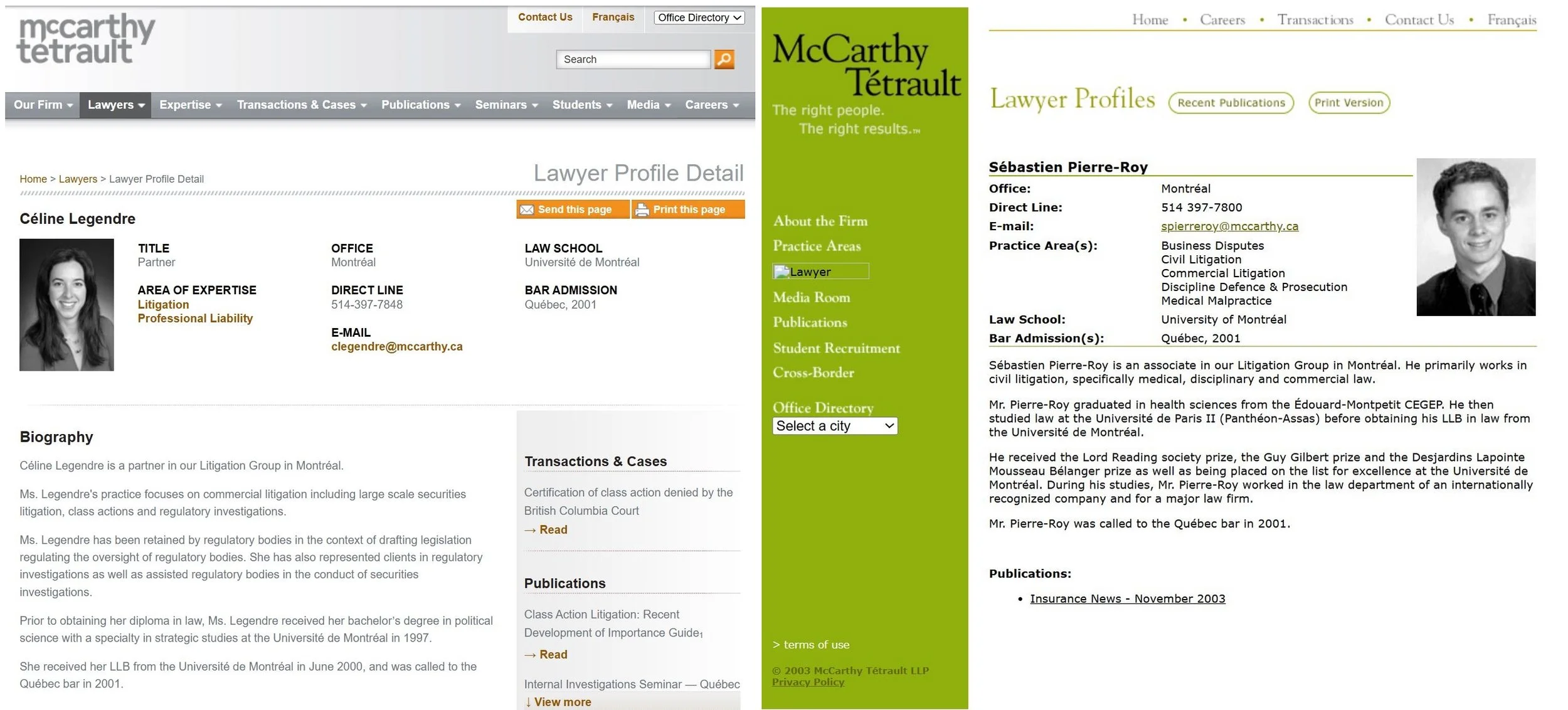
Judge Céline Legendre worked for several years with Jean Charest and with Marie-Pierre Robert’s husband, Sébastien Pierre-Roy, at McCarthy Tétrault in Montreal.
Corrupt practices of the Quebec Bar
Before making this corrupt decision, it was first necessary to place pawns in strategic positions.
Marcel-Olivier Nadeau from Cain Lamarre was installed as head of the Quebec Bar, a lawyer from a law firm who benefited from the fraudulent schemes of the managers of the Faculty of Law of the University of Sherbrooke and who represented these managers in court against me, specifically in the cases revealing these fraudulent schemes, where lawyers from Cain Lamarre like Charles Guay and Stéphane Reynolds were used as living examples of beneficiaries of said fraudulent schemes.
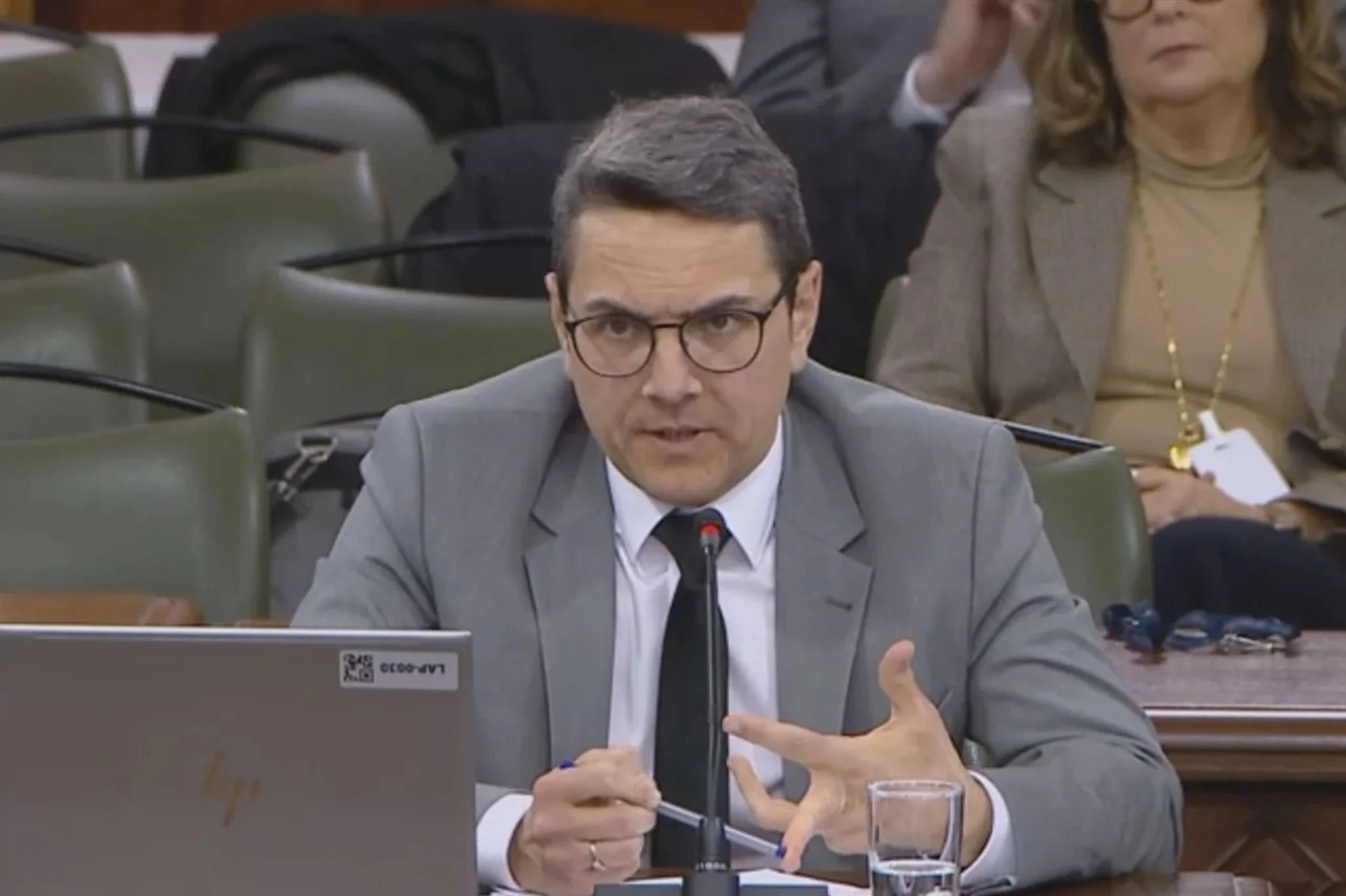
Then, of all the assistant syndics and ad-hoc assistant syndics that the Quebec Bar had at its disposal, the Quebec Bar chose to assign Sébastien Dyotte to file a complaint against me, a graduate of the Faculty of Law of the University of Sherbrooke, close to Jean Charest and linked to the network of concerned managers of the Faculty of Law of the University of Sherbrooke, member of the ADDUS association under dean Marie-Pierre Robert of the Faculty of Law of the University of Sherbrooke, like Jean Charest.
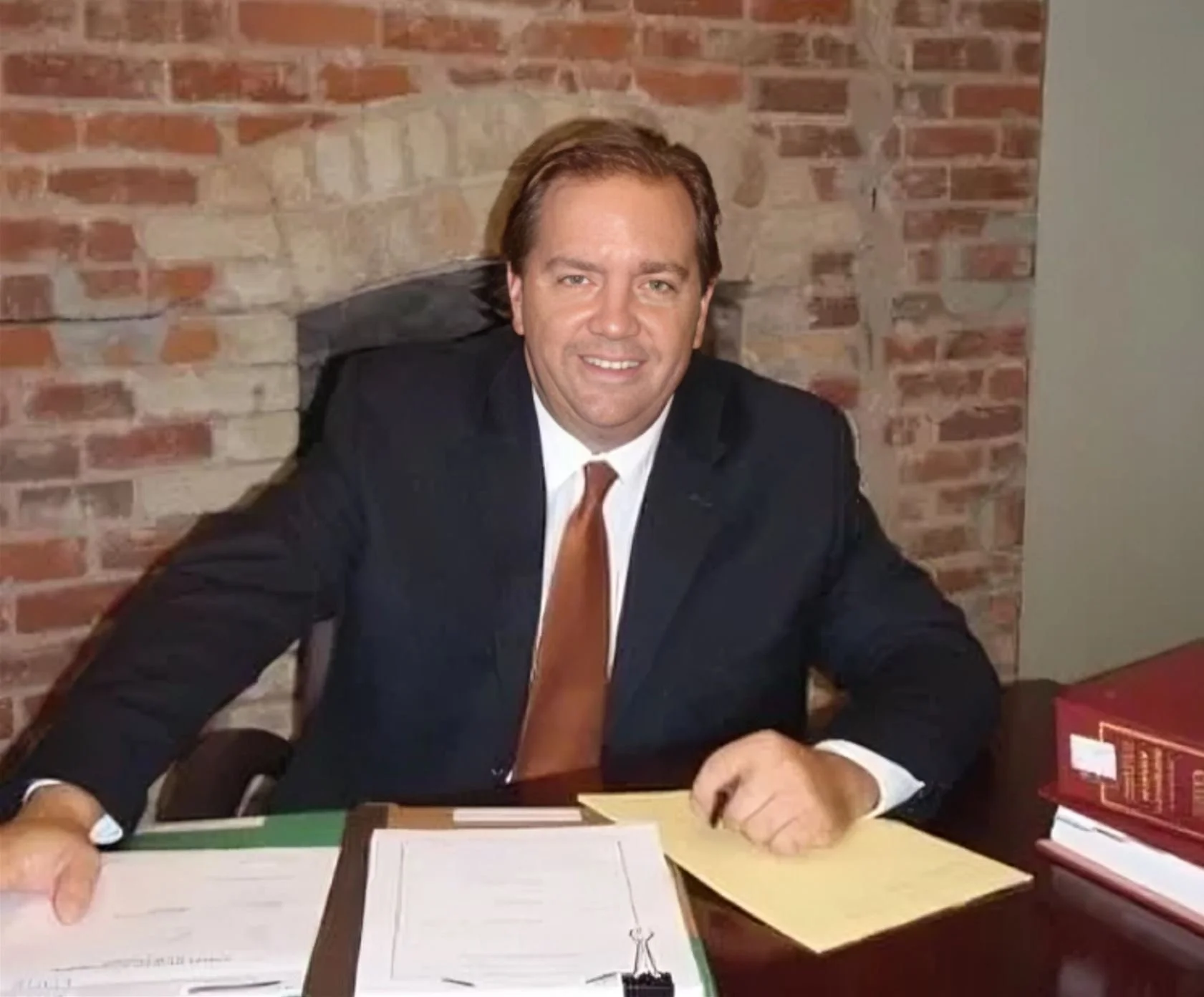

On the Disciplinary Council of the Quebec Bar was appointed Karl Chabot (called to the Quebec Bar in 2015) from the law firm Lavery.
Karl Chabot is a graduate of the Faculty of Law of the University of Sherbrooke, where he studied under Marie-Pierre Robert and Sébastien Lebel-Grenier, a member of ADDUS under dean Marie-Pierre Robert, as are assistant syndic Sébastien Dyotte and Jean Charest.
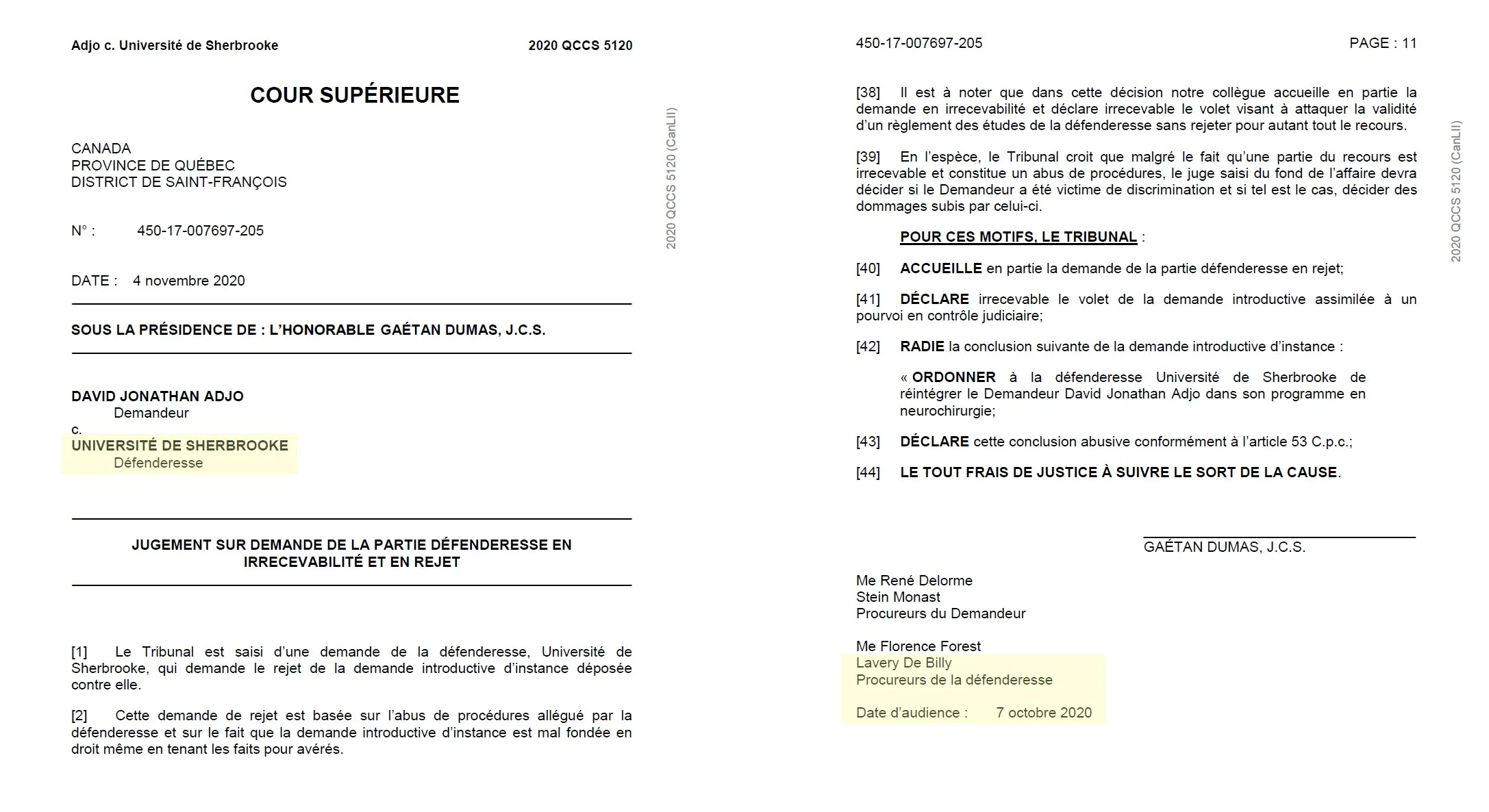
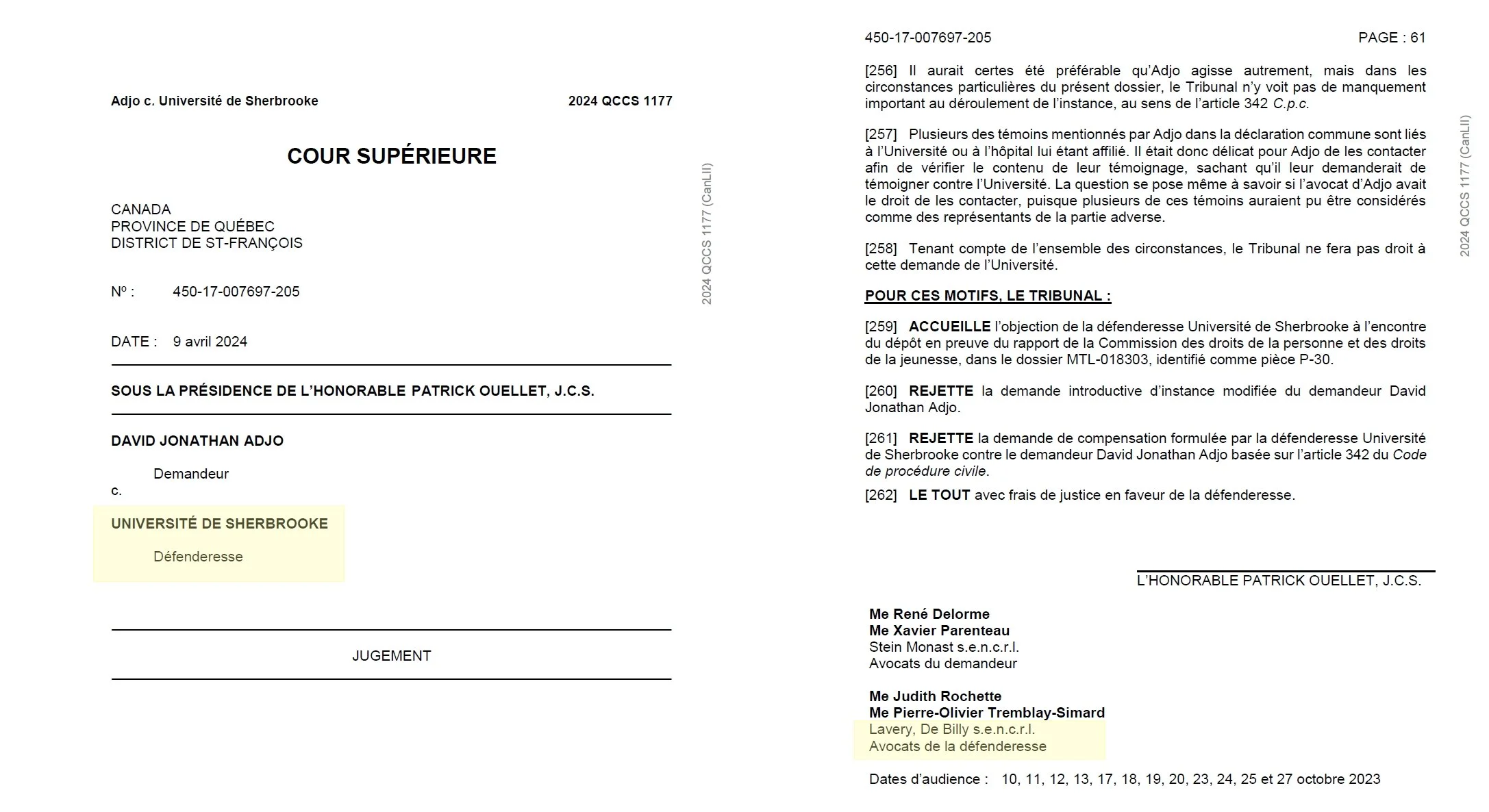
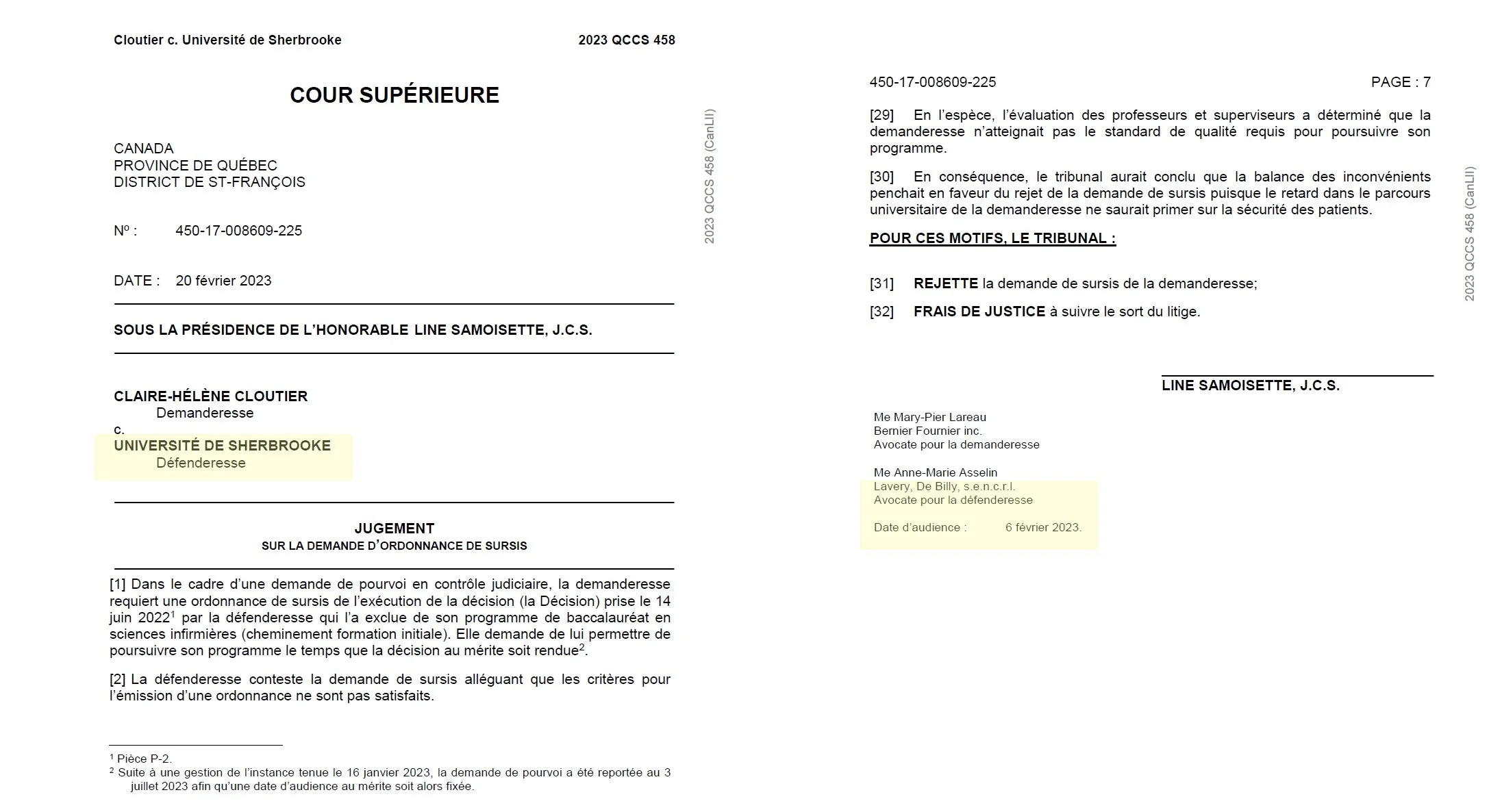
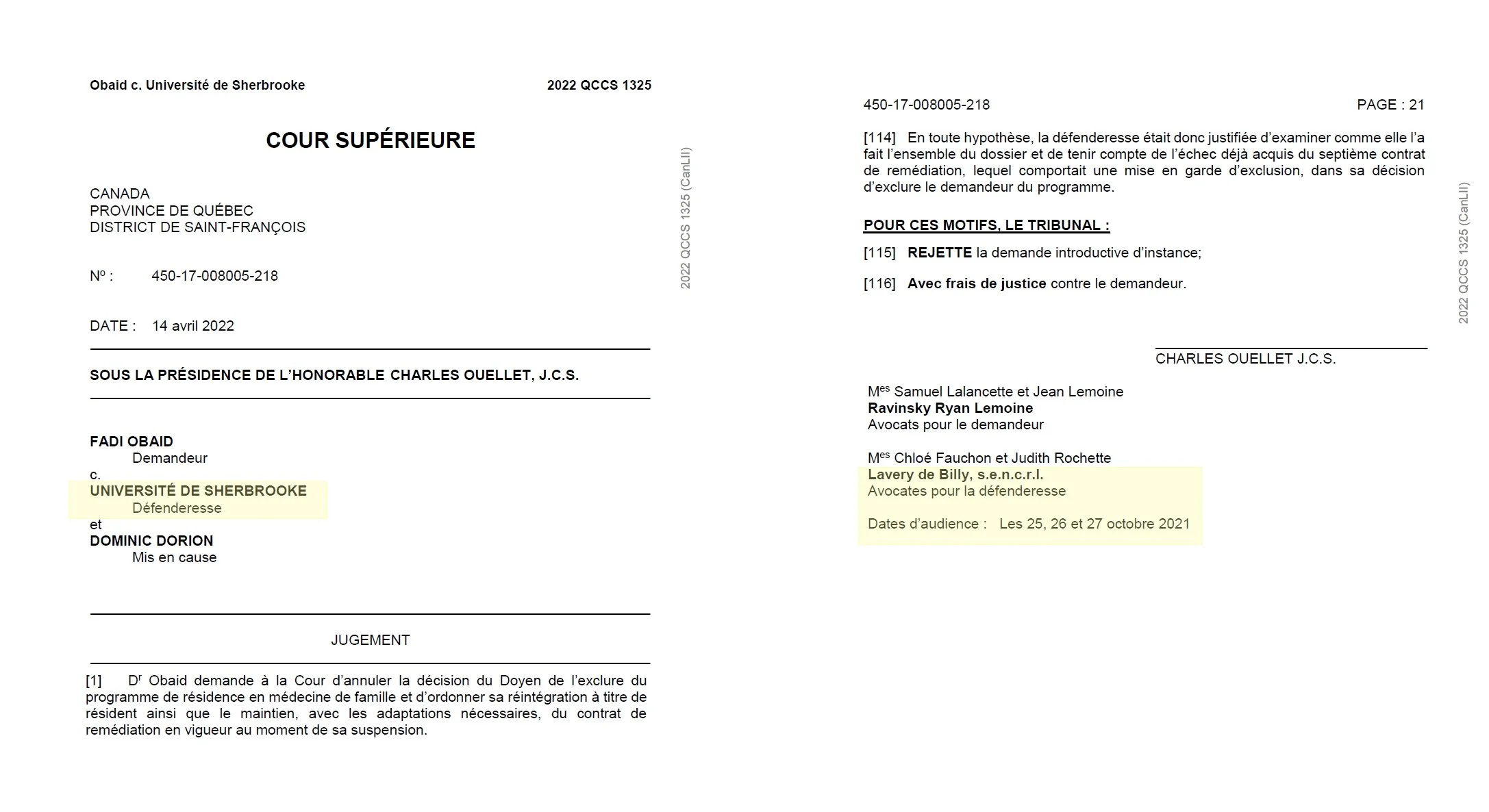
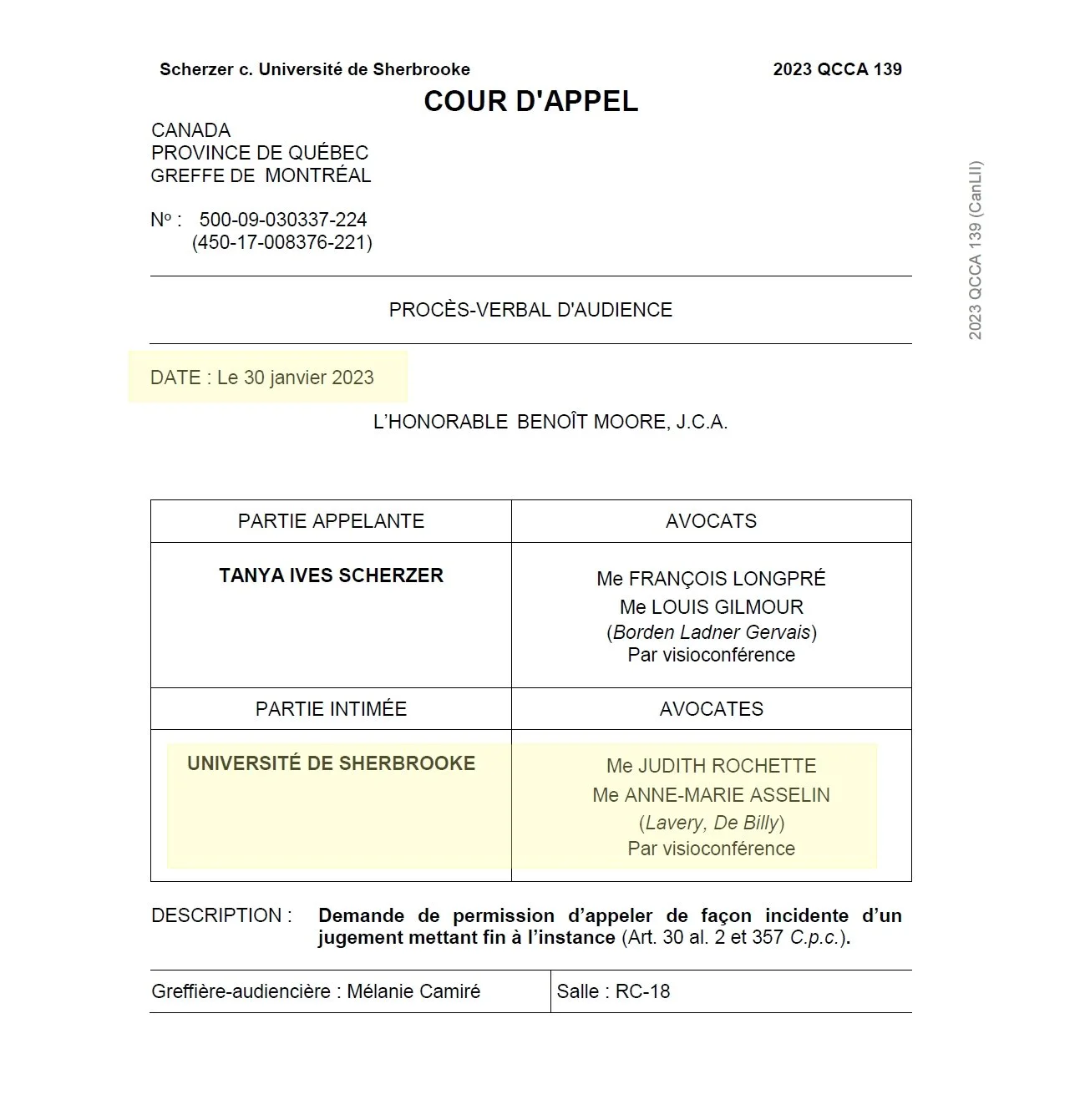
Lavery, the law firm where Karl Chabot is a partner, is a long-time partner of the Faculty of Law of the University of Sherbrooke. The University of Sherbrooke is a client of Karl Chabot's law firm for years, which has represented the interests of this institution and its managers in court on numerous occasions [3].
Lavery has provided money annually to this Faculty of Law since 1993, money from which benefited the management of Louis Marquis, Sébastien Lebel-Grenier and Marie-Pierre Robert, including a sum of $150,000 from which benefited the management of Marie-Pierre Robert and Sébastien Lebel-Grenier to pay for the construction of a classroom within the Faculty of Law which bears the firm's name.
Lavery’s lawyers often sponsor and participate in activities organised at the Faculty of Law of the University of Sherbrooke, and recruit students from the Faculty of Law through agreements signed with the managers of the Faculty of Law.
Several colleagues of Karl Chabot de Lavery are employed as lecturers at the Faculty of Law of the University of Sherbrooke, and some of them have been beneficiaries of the fraudulent schemes perpetrated by the managers of the Faculty of Law of the University of Sherbrooke.
This lawyer clearly does not understand the concepts of professional ethics and conflicts of interest. He has no lessons to give me on ethical conduct, and I do not understand what this man is doing on a disciplinary panel.
To lose all credibility and turn the Quebec Bar's Disciplinary Council into a blatant political scheme, this Council was chaired by Jean-Guy Légaré, a known associate of Jean Charest who was the leader of the Quebec Liberal Party from 1998 to 2012, additionally of being the grand ambassador of the Faculty of Law of the University of Sherbrooke.
Jean-Guy Légaré was a political pillar of Jean Charest within Jean Charest's Quebec Liberal Party.
Jean-Guy Légaré was an executive member of the senior leadership of Jean Charest's Quebec Liberal Party.
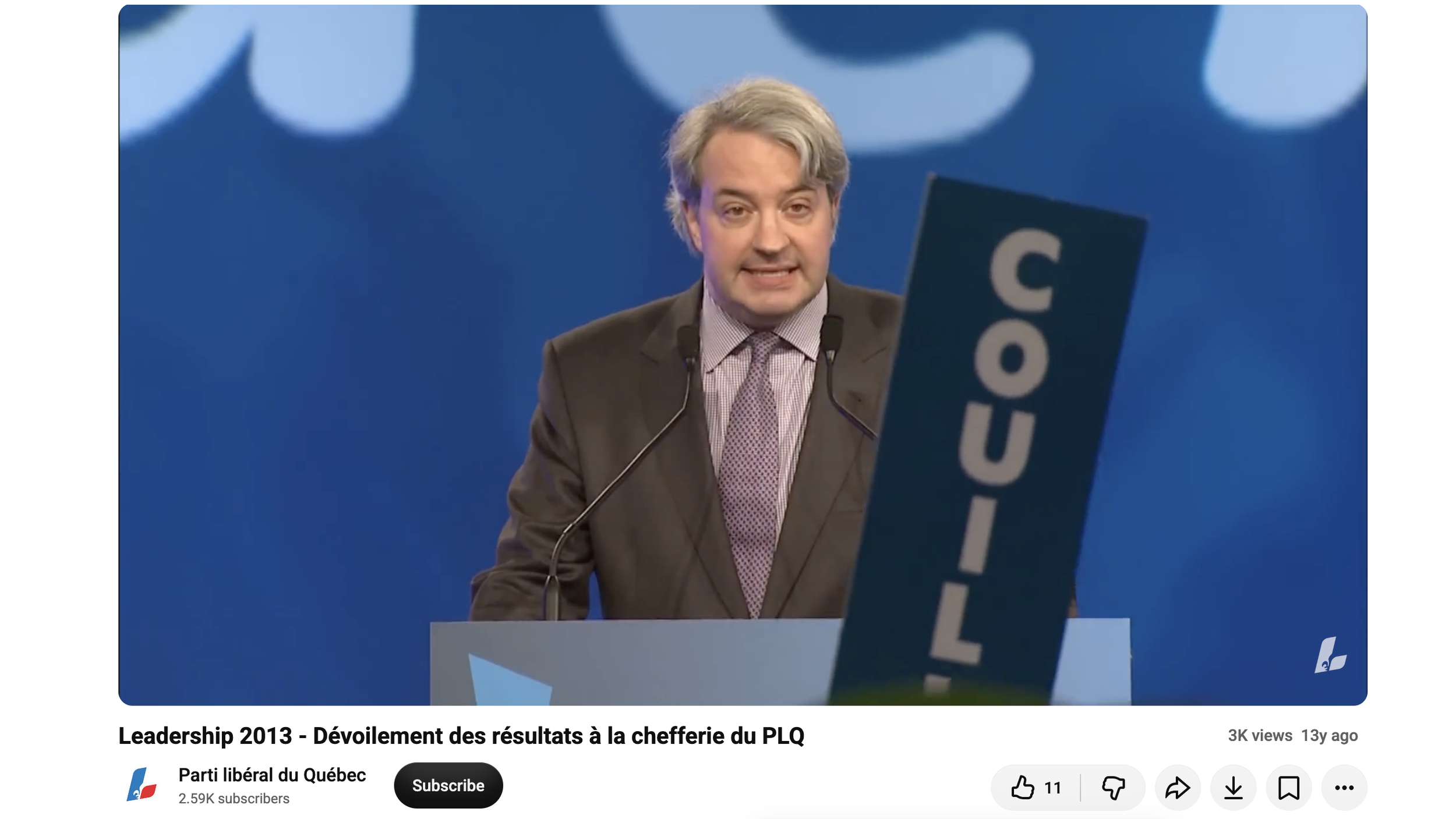
On the photo : Jean-Guy Légaré at the Quebec Liberal Party
Jean-Guy Légaré was also a member of the political commission of the Quebec Liberal Party under Jean Charest during Jean Charest's time.
Jean-Guy Légaré was the election president within Jean Charest's Quebec Liberal Party and announced the voting results for the succession of Jean Charest at the leadership of the Quebec Liberal Party.
Jean-Guy Légaré was appointed to the position of president of the disciplinary council by the government of the Quebec Liberal Party.
It was this friend of Jean Charest, indebted to Jean Charest, appointed to the position of president of the disciplinary council by Jean Charest, who came to judge my actions against the friends of Jean Charest and against the institution protected by Jean Charest, after I was threatened by a friend of Jean Charest with Jean Charest and with the Quebec Bar.
This man should not have accepted to preside over the Disciplinary Council, and his behaviour clearly indicates that he should be removed from this position, pending a police investigation.
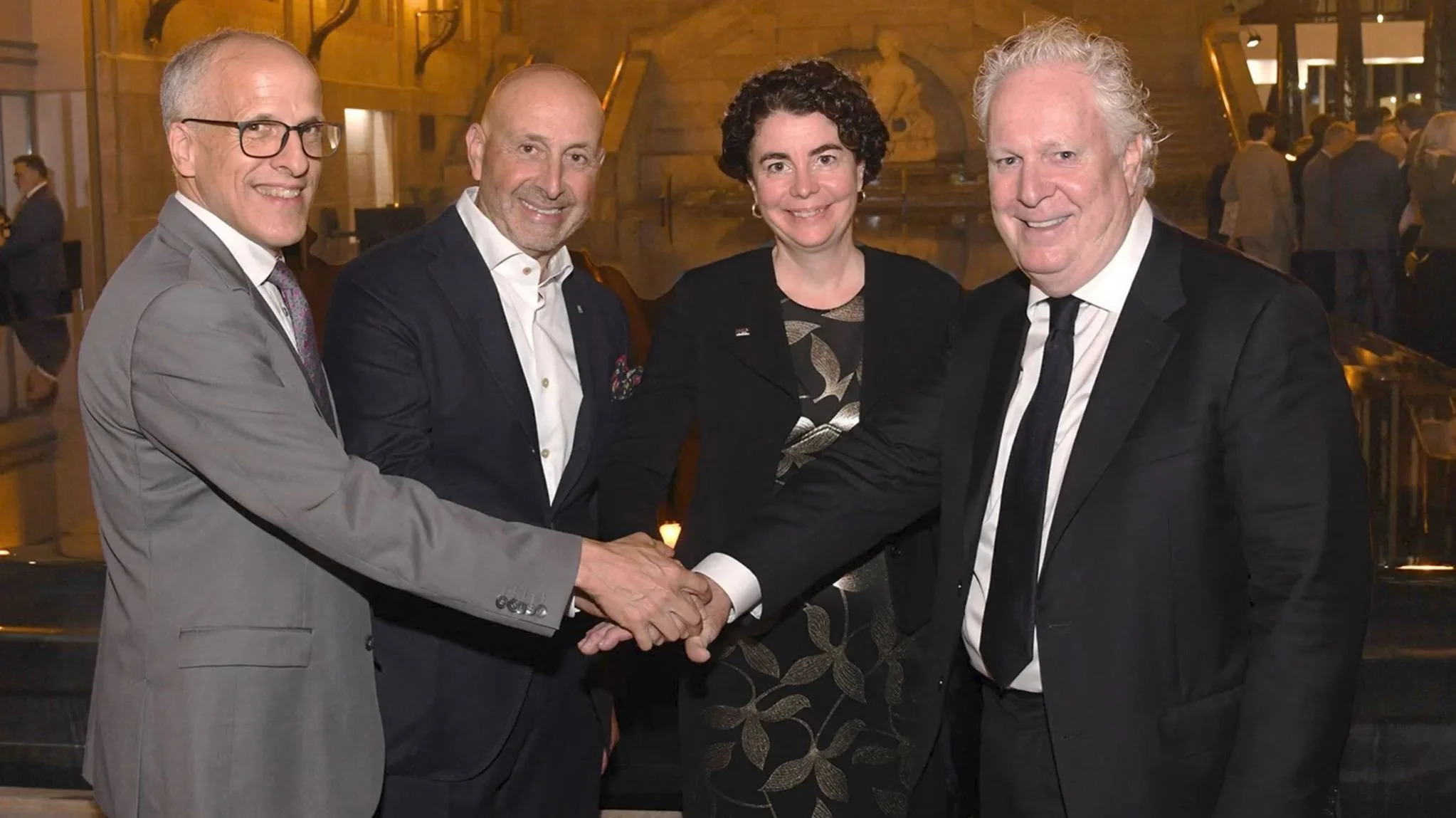
De gauche à droite : Pierre Cossette, recteur de l’Université de Sherbrooke (2017-2025) et candidat pour être député pour le Parti libéral du Québec dans la circonscription de Sherbrooke (2026), Vincent Chiara, ambassadeur de la Faculté de droit de l’Université de Sherbrooke, Marie-Pierre Robert, vice-doyenne (2015-2019) et doyenne de la Faculté de droit de l’Université de Sherbrooke (2024-présent), Jean Charest, grand ambassadeur de la Faculté de droit de l’Université de Sherbrooke depuis 2003, Premier ministre du Québec (2003-2012) et chef du Parti libéral du Québec (1998-2012).
Photo prise en Octobre 2024, au lendemain d’une audience visant personnellement Marie-Pierre Robert.
This is what corruption looks like in Quebec and Canada.
Even worse, the person who assigned Jean-Guy Légaré to preside the disciplinary panel in my case to judge "my conduct" in my "proceedings" against Jean Charest's friends is another well-known figure close to Jean Charest, Daniel Y. Lord, chief of staff to the chief whip of Jean Charest's government, chief of staff to Jean Charest's Minister of Public Security, chief of staff to the Minister of Workforce, Income Security and Vocational Training of the Quebec Liberal Party government, chief of staff to the Minister of Finance of the Quebec Liberal Party government, and a graduate of the University of Sherbrooke. At the end of Jean Charest's government's term, Daniel Y. Lord was appointed to the position of president of the disciplinary council by Jean Charest's government.
This is neither justice nor public protection, it is blatant corruption and criminality.
As for the third member of the Disciplinary Council, “retired lawyer” Louise Desautels, it seems that it was necessary to revive for this case a retired person essentially unknown from Verdun, where Antoine Dionne Charest, the son of Jean Charest, is a member of parliament, as no one else wanted to sully themselves with such corruption.
The constant case law in Quebec and Canada has for a long time established that
“when a reasonable apprehension of bias arises in respect of one panel member, and the decision has already been rendered, the only appropriate remedy is for the whole of the panel to recuse themselves and for the decision to be set aside. The apprehension of bias in respect of one member taints the whole panel”. [4]
The bias being evident both in the composition of the Discipline Council and in the lying content of its decision, the decision of the Quebec Bar is legally invalid.
It has no value or significance other than to reveal the corrupt side of the Quebec Bar and the participation of the members of the Disciplinary Council, knowingly, by aiding or abetting, in the offences that preceded them and that continue to this day.
Finally, who testified against me before the Disciplinary Council? Charles Gaulin, the lead lawyer for the University of Sherbrooke from Cain Lamarre, handsomely paid and enriched by Marie-Pierre Robert and the University of Sherbrooke, who, after the beginning of the revelations concerning the "UdeS Files", "ceased working" for Cain Lamarre and ended up, unsurprisingly, at Therrien Couture Joli-Cœur under the wing of Jean Charest.
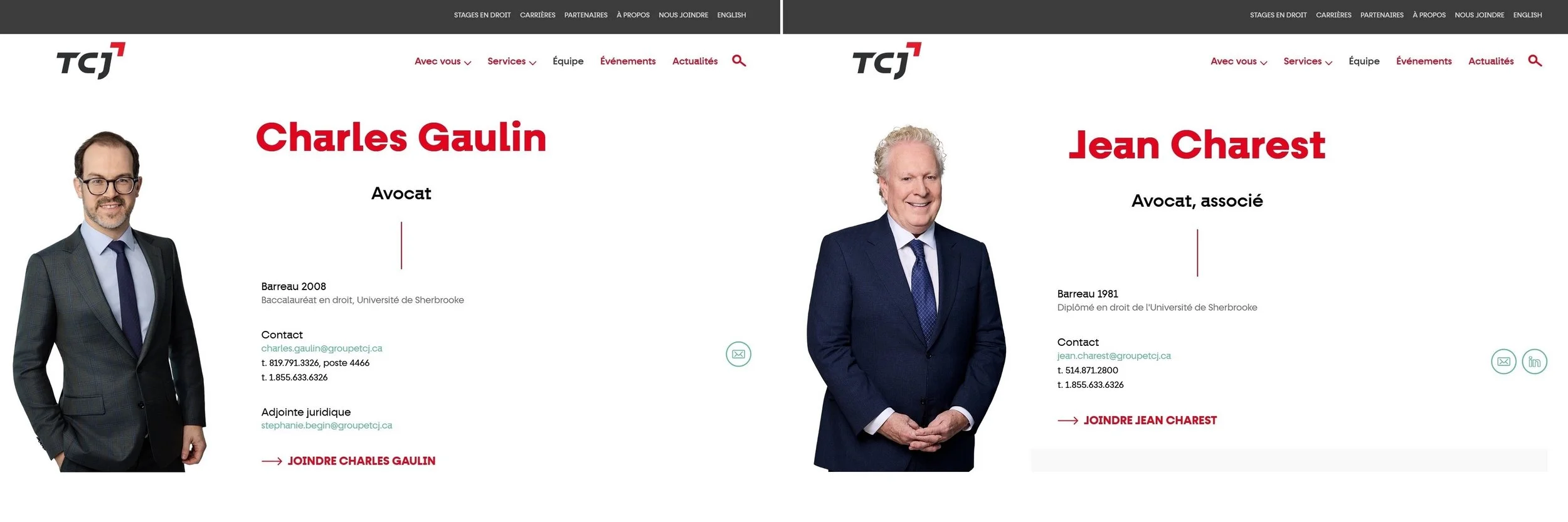
This clique within the Quebec Bar held a disciplinary procedure in secret, in my absence, without informing me that a complaint had been filed against me. The Quebec Bar also concealed the decisions of its Disciplinary Council until it could no longer do so, after the scandal broke and was disclosed in the media.
« For life »?
Malice and lack of judgment have reached spectacular heights within the leadership of the Quebec Bar and its Disciplinary Council : they claim that it is more dignified and honourable for the legal profession to have a criminal record for assaulting a police officer, to dip into clients' trust accounts (see the case of Judge Stéphane Lacoste of the Superior Court of Quebec), to lie to the court, to overcharge clients without informing them adequately (see the case of Judge Stéphane Sansfaçon of the Court of Appeal of Quebec), or to contact a judge and be denounced for undue influence on judicial decisions during the judge's deliberations, than to take legal action against those close to the Quebec Bar that reveals their fraudulent schemes.
According to the Quebec Bar, these reprehensible behaviours are more in line with the practice of law in Quebec than fighting corruption and injustice generated by those close to Jean Charest and the Quebec Bar.
If the Quebec Bar wants to protect the public, it would be more useful to disbar practicing lawyers who are truly reprehensible, starting with Jean Charest, this symbol of corruption in Quebec who has discredited the administration of justice and undermined the authority of the courts for over 30 years, since he was denounced by Judge Yvan Macerola of the Superior Court of Quebec for contacting him to discuss a case before the courts while the judge was deliberating.
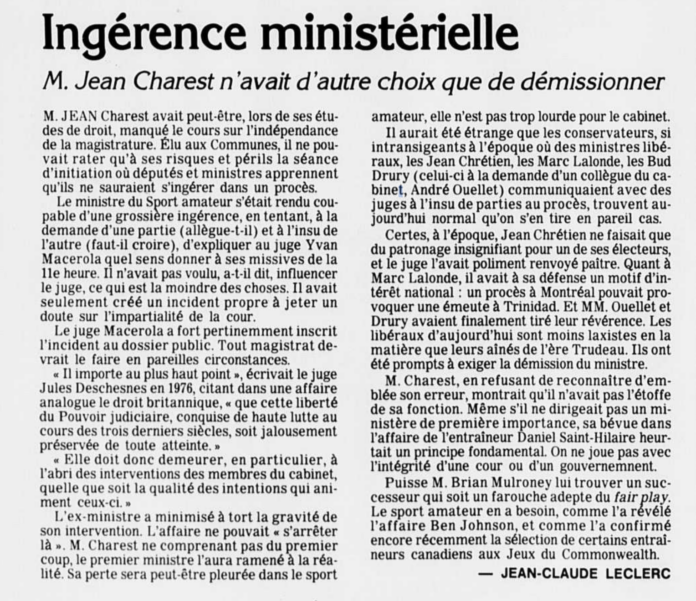
Meanwhile, I notice that this symbol of corruption in Quebec Jean Charest is still a member of the Quebec Bar, while the one who denounced the fraudulent schemes of Jean Charest's friends from the Faculty of Law of the University of Sherbrooke is no longer one.
This says a lot about the Quebec Bar and the unacceptable level of corruption that has infiltrated the justice system in Quebec and Canada.
*****
[1] After the lying decision rendered by Louis Marquis, it was his long-time friend, René Beaupré, who came to arbitrate his decision : René Beaupré had worked with Louis Marquis, had been a lecturer in Louis Marquis' department at the Faculty of Law of the University of Sherbrooke, was a graduate of the arbitration program created by Louis Marquis at the Faculty of Law of the University of Sherbrooke, and, at the time of the arbitration, René Beaupré claimed on his LinkedIn professional profile that he gave annual lectures for the Faculty of Law of the University of Sherbrooke.
[2] GOVERNMENT OF CANADA, “Government of Canada announces judicial appointments in the province of Québec”, Canada.ca, Marc 8th 2019, online: https://www.canada.ca/en/department-justice/news/2019/03/government-of-canada-announces-judicial-appointments-in-the-province-of-quebec.html.

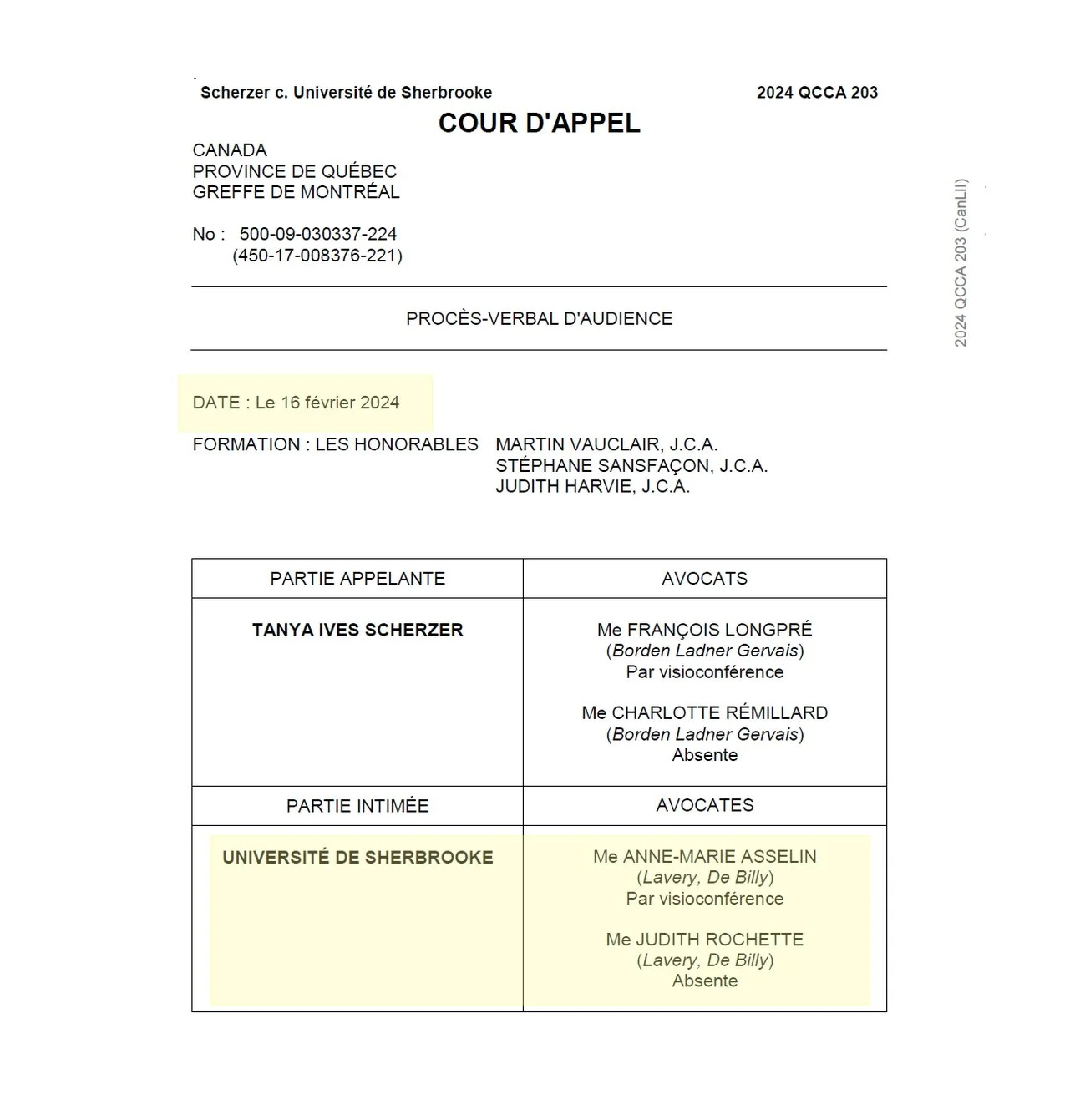
[3] Scherzer c. Université de Sherbrooke, 2024 QCCA 203; Scherzer c. Université de Sherbrooke, 2023 QCCA 419; Scherzer c. Université de Sherbrooke, 2023 QCCA 139; Obaid c. Université de Sherbrooke, 2022 QCCS 1325; Malakijoo c. Université de Sherbrooke, 2022 QCCA 61; Malakijoo c. Université de Sherbrooke, 2021 QCCS 5061; Cloutier c. Université de Sherbrooke, 2023 QCCS 458; Adjo c. Université de Sherbrooke, 2024 QCCS 1177; Adjo c. Université de Sherbrooke, 2020 QCCS 5120.



[4] Law Society of Ontario v. Caruso, 2026 ONLSTH 203.