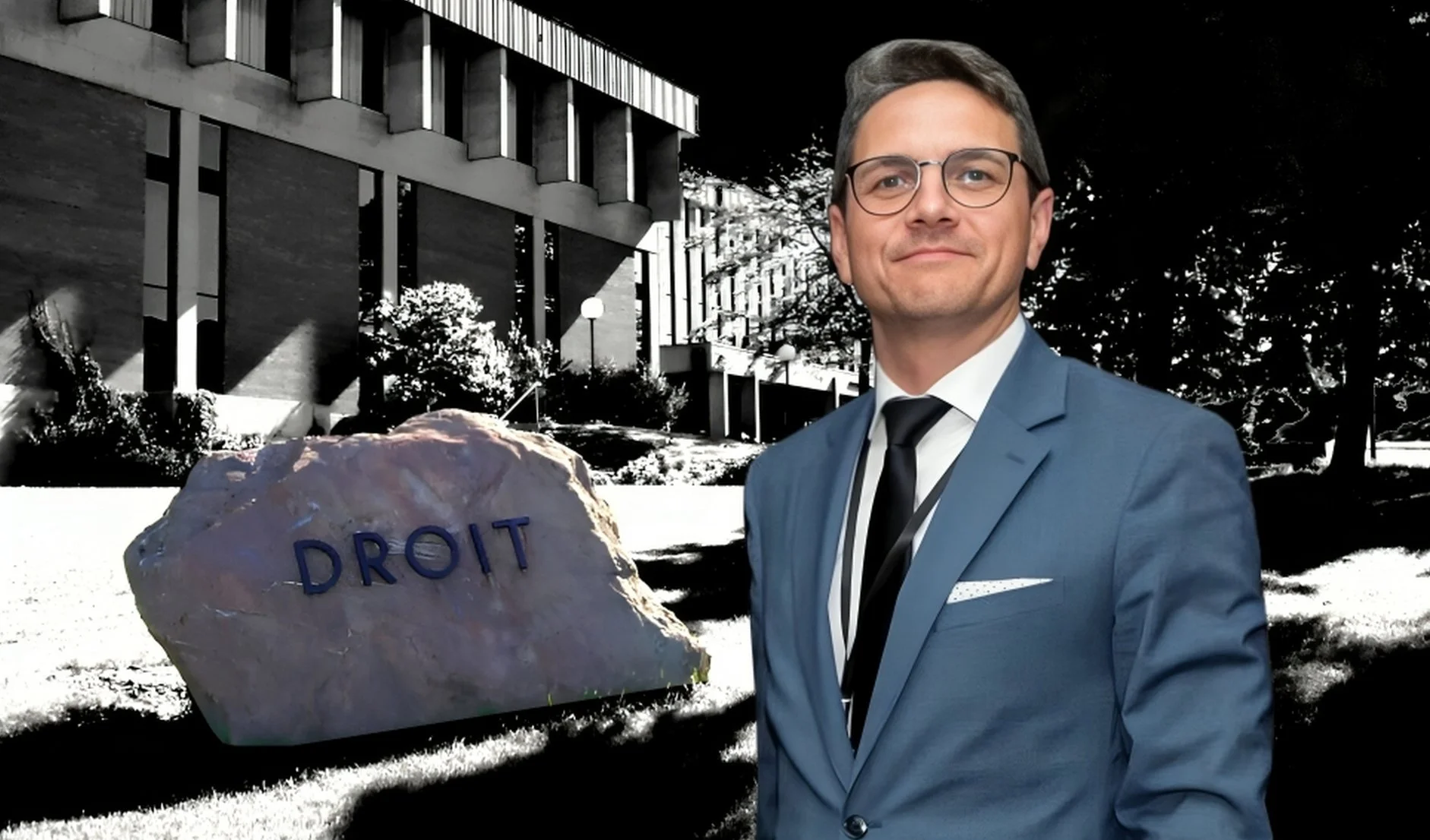
Concerning the president of the Quebec Bar, Marcel-Olivier Nadeau, of the law firm Cain Lamarre
Claudiu Popa
All publications in this series :
-
-
-
-
-
-
Coming soon
-
Coming soon
-
-
-
English version coming soon.
French version available here : https://www.claudiu-popa.com/blog-juridique/decoder-la-fraude
Following the publication of Part 4 of this series in October 2025 concerning the application to disqualify the law firm Cain Lamarre from representing its client the University of Sherbrooke, after the two main lawyers targeted by this application, Charles Gaulin and Audrey Campbell, ceased working for Cain Lamarre, and prior to the publication of Part 5, the Cain Lamarre Bar president took action and publicly came to the aid of his law firm's client's image.
Under the pretext of discussing the practice of law in the region, Marcel-Olivier Nadeau, the new president of the Quebec Bar, embarked on a “Grand University Tour” in January 2026 (a copy-paste of the 2025 university tour of the Chief Justice of the Supreme Court of Canada, Richard Wagner - I will get back to this later). He obviously began with his law firm’s client, the Faculty of Law of the University of Sherbrooke [1].

Of all the faculties and universities, Bar president Nadeau chose to celebrate the start of his tour at the most problematic, controversial, and contentious location, where several legal issues remain unresolved. As president of the Quebec Bar, who was supposed to embody the integrity of the profession, he has associated himself with the university and its managers, whose integrity has been severely affected by several recent scandals involving illegalities [2], discrimination [3], fraud, corruption, and other problems in the institution's governance [4].
A neutral, prudent, and diligent president of the Quebec Bar would at least have had the reflex to maintain a certain distance or, at the very least, find a way to better disguise the intention behind his actions, instead of giving the impression of openly endorsing what was happening there. Not Bar president Nadeau. Once he had “both hands on the wheel” of the Quebec Bar, Cain Lamarre’s lawyer used the legitimacy and reputation of the Quebec Bar to offer image benefits to his law firm’s clients (Dean Marie-Pierre Robert and the Faculty of Law of the University of Sherbrooke) by engaging in reputational whitewashing by association, an attempt to normalise or minimise the seriousness of their legal problems. This is a "copy-paste" of the previous attempt at reputational whitewashing carried out by the Quebec Bar Foundation, whose president is another lawyer partner of Cain Lamarre, for the benefit of the Cain Lamarre law firm, where the Quebec Bar Foundation insisted on convincing the public that these two entities share the same values, while the Bar Foundation received afterwards $10,000 from the Cain Lamarre law firm.
Marcel-Olivier Nadeau was there, representing the Quebec Bar, to deliver a message who served his law firm's clients; however, taking the risk of associating himself, his law firm (he was still a partner at Cain Lamarre), and the Quebec Bar to try to clear his clients' names was a blatant display of servility and poor judgment. This type of forced association, implying that the unfrequentable can become frequentable when one has interests in or close ties with the said problematic entity, tarnishes the image of the lawyers’ professional order and its neutrality. For this new leadership of the Quebec Bar, taking the risk of sending a message that the honour of the profession is negotiable when the client is "rich and powerful", well-connected, or sufficiently lucrative, discredits the Bar's claims of honourability.
Of course, Dean Marie-Pierre Robert, one of the main people behind these problems (see here and here), did not miss the opportunity to publicly express her gratitude for this attempt at reputational whitewashing offered to her by the lawyer from the law firm of which she was a client, who defended her before the courts and whose legal fees for the Bar president’s law firm were paid with student’s and taxpayer’s money :

“Thank you for your visit, Mr. president of the Bar!
You are always welcome at the Faculty.”
The business model is simple to understand :
Madam is abusing her power, creating disputes and refusing to settle them;
In response to the damages caused, legal proceedings are initiated;
Madam hires lawyers from the law firm that benefited from her abuses to represent her;
The injured party pays personally for the legal proceedings, while Madam does not pay out of her own pocket, she pays her lawyers with taxpayers’ and students’ money - 8 lawyers from Cain Lamarre have officially worked on these cases;
Cases concerning Madam are assigned to judges who are friends or close to Madam and/or her group of influence, and these judges rule in her favour;
Then, the lawyer from the law firm that enriched itself with taxpayers’ and students’ money comes along to rehabilitate Madam’s reputation, leveraging the prestige of his new position as president of the Quebec Bar. This president then goes on to claim to the public that the justice system is fair, equitable, independent, and impartial.




Do these people think we are idiots?
On the president of the Quebec Bar, Marcel-Olivier Nadeau
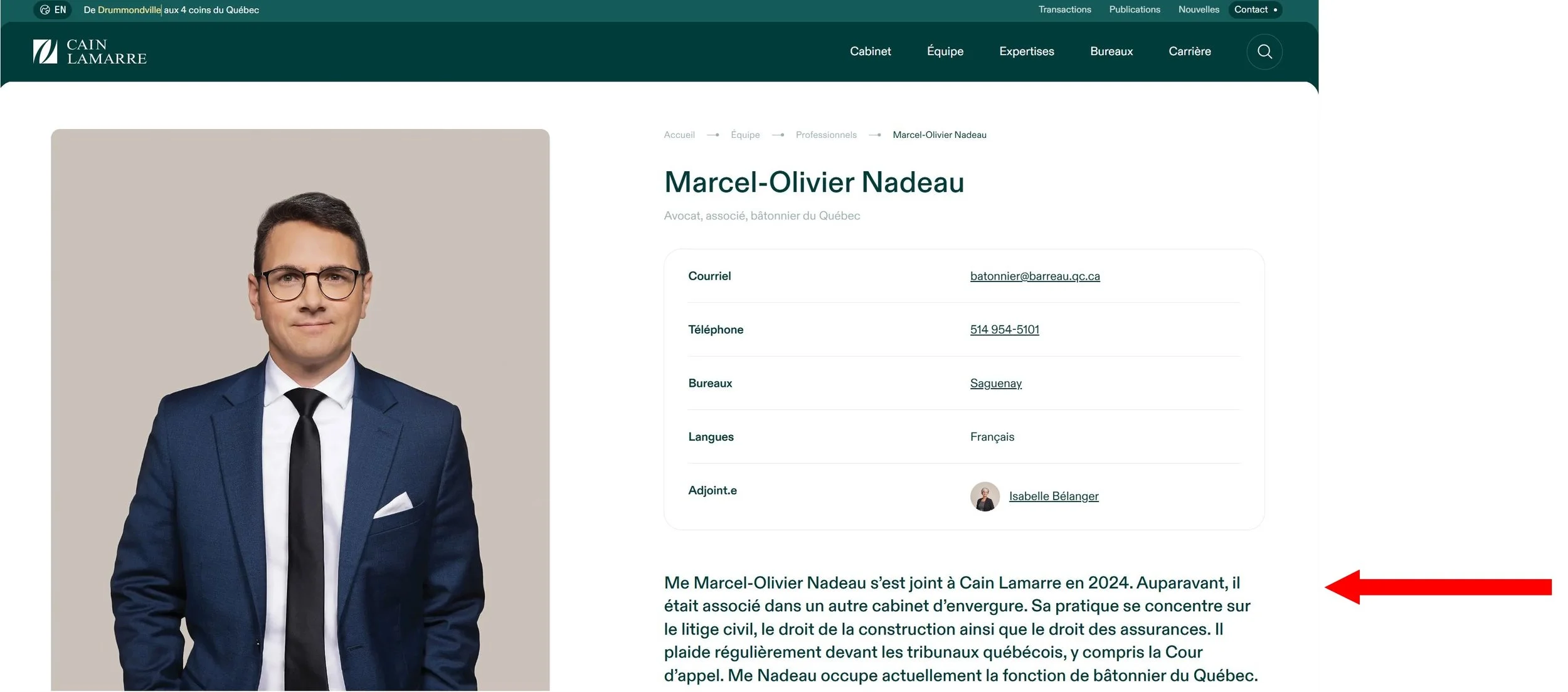
Recruited by the law firm Cain Lamarre in 2023 according to his statements on the website of the Quebec Bar [5] or in 2024 according to Cain Lamarre [6], while he was vice-president of the Quebec Bar since 2022, Marcel-Olivier Nadeau officially became president of the Quebec Bar on June 2, 2025, for a two-year term (2025-2027).


“I would like to thank the partners at my firm, Cain Lamarre, for their unwavering support.”
declared Marcel-Olivier Nadeau once he became president of the Bar.
As early as March 2025, Marcel-Olivier Nadeau was touted in several forums as having been “elected” president of the Bar, without, however, clearly indicating to the public that he was in fact the only individual who ran for the position and that he occupies it by default, due to a lack of other candidates. According to the auditor Raymond Chabot Grant Thornton, for 2025, out of 20,832 eligible lawyers who were members of the Quebec Bar, only 1,349 voted, a meagre 6.48% .
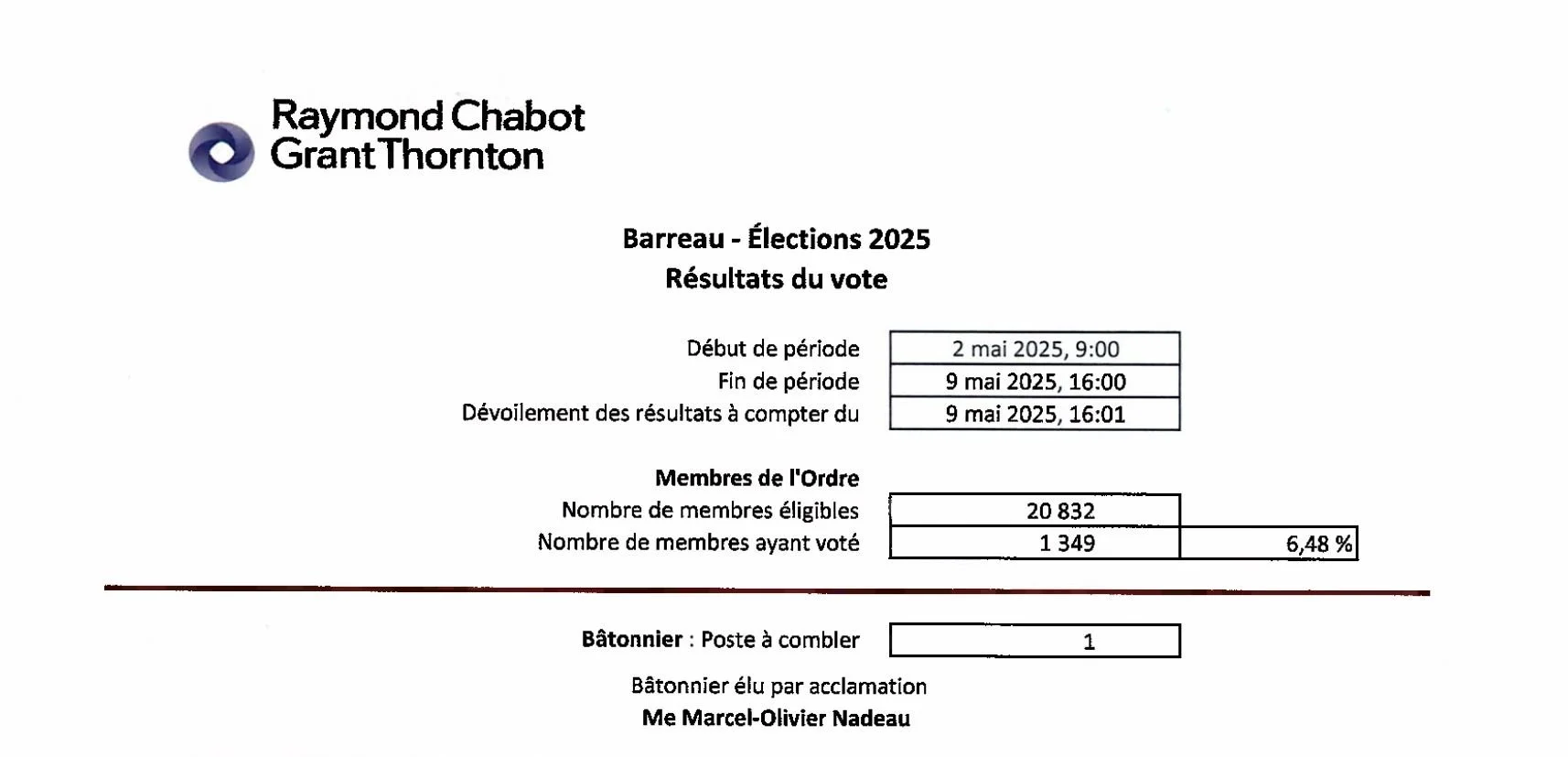
Source : Quebec Bar (https://www.barreau.qc.ca/media/kg1n4mkc/elections-2025-resultats.pdf)
However, the purpose of an election is to offer lawyers who are members of the Quebec Bar the opportunity to choose as president the candidate they consider best among two or more candidates, following a confrontation of ideas, visions, and governance programs. It is from this race for the presidency, and the subsequent popular vote, that a president derives his legitimacy. Conversely, the absence of choice essentially transforms an election into an appointment, a fatalism on the part of lawyers to accept the inevitability that such circumstances present. A sad administrative ratification process that results in a deficit of representation and genuine legitimacy. It was also said that Marcel-Olivier Nadeau became president “by acclamation”, but in reality, he became president by default, for lack of other candidates. In practice, no one acclaimed Nadeau. Let's not imagine an Olympic stadium filled with 20,000 lawyers applauding and shouting "Nadeau! Nadeau! Nadeau!", as the word "acclamation" might suggest.

His appointment stems from a deficiency rather than a positive and affirmative will on the part of the members of the Bar. The legitimacy of his mandate is questionable.
What results from this state of affairs?
A Bar president who (1) does not seem to understand his role as president, who (2) goes off to party in Paris instead of tackling problems on the ground in Quebec, who (3) is accused of instrumentalizing his function as president of the Bar to do politics and who, (4) conceals, by his silence, the real issues facing the justice system in Quebec.
A president of the Bar who doesn't seem to understand his role as president of the Bar
When asked by Droit inc. magazine what the role of president of the Quebec Bar represents for him, Marcel-Olivier Nadeau (Barreau 2010), a lawyer for 15 years, gave a simplistic and circular answer :
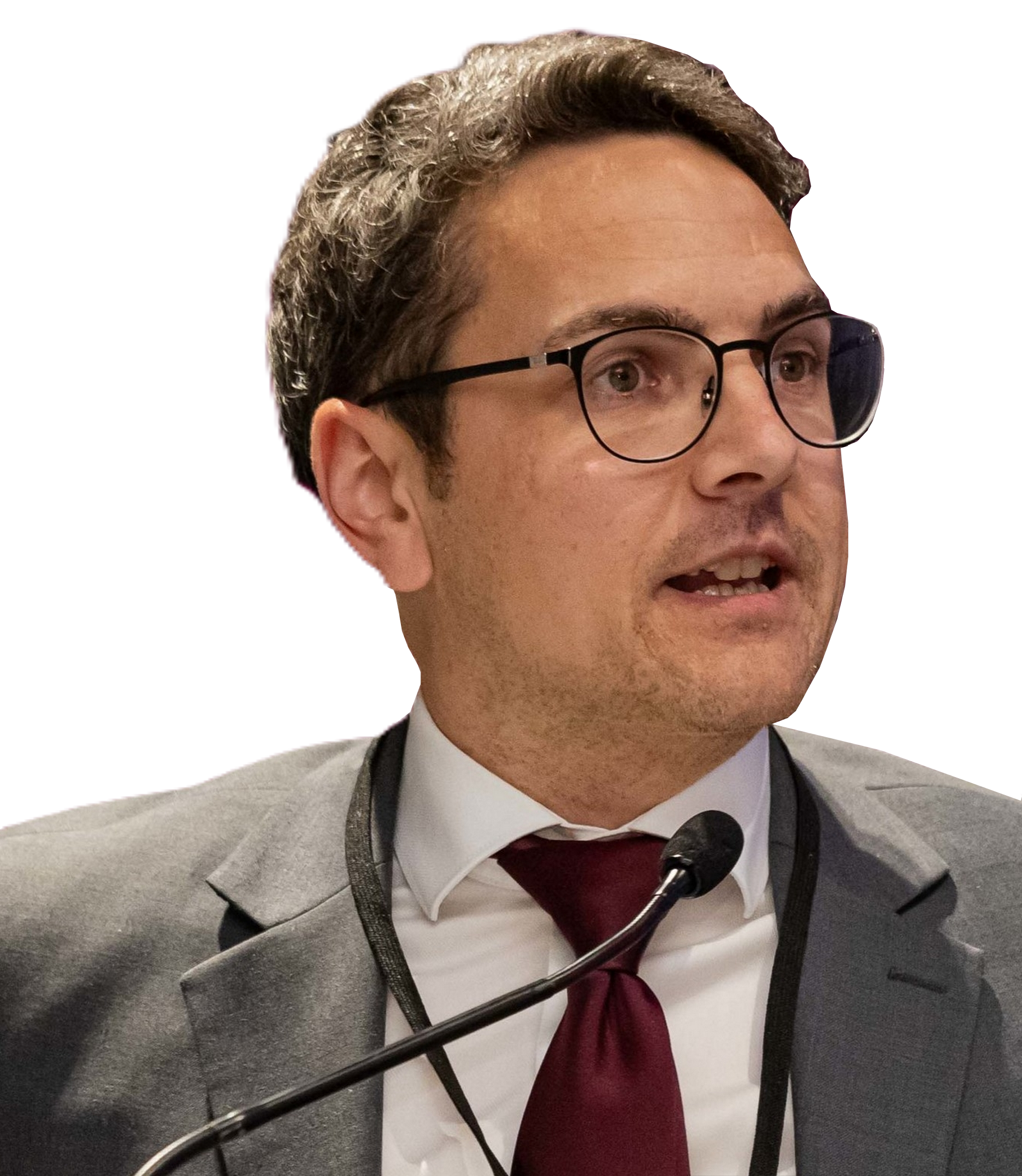
“First of all, it’s an extremely important role at the societal level, it’s the presidency of the largest order of jurists. There’s the whole aspect of controlling the practice of the profession, and then the Bar also deals with major social issues such as access to justice, the psychological well-being of lawyers, or the lack of new recruits in the region. I think it’s a fundamental role in our profession, obviously, but also in society.”
So, for Marcel-Olivier Nadeau, this role is “extremely important at the societal level” because “it is the presidency of the largest order of lawyers.” In other words, the role is important because it is important.
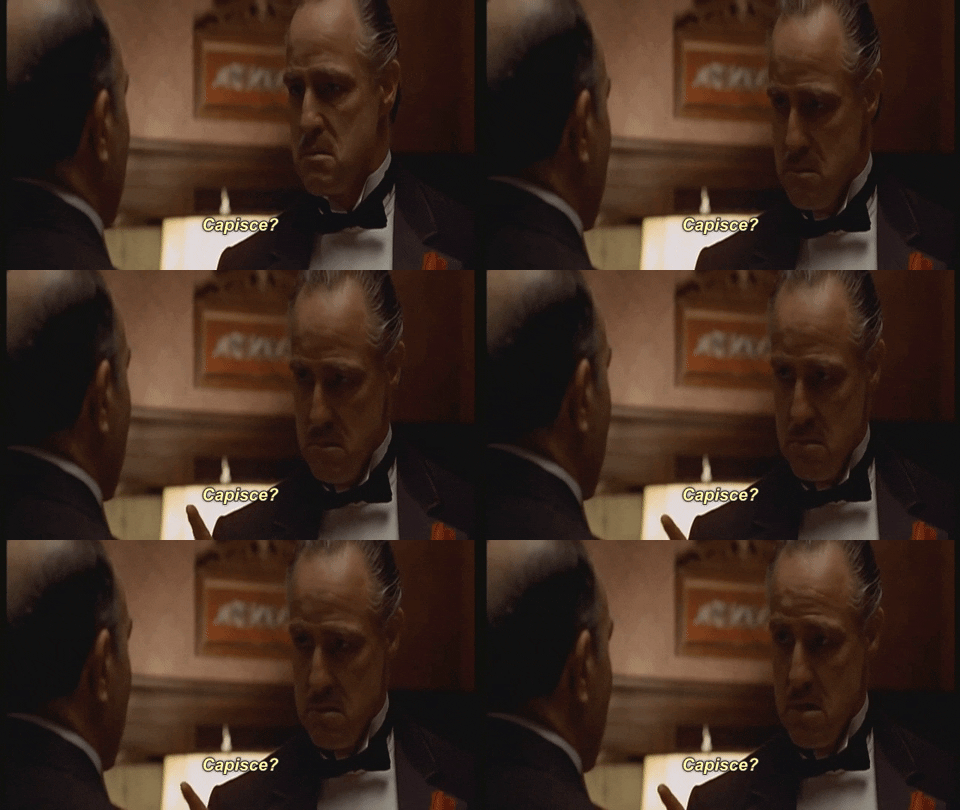
There are many law students who are more eloquent than the president of the Bar, who are able to offer a more substantial and insightful response without much effort. Bar president Marcel-Olivier Nadeau's childish and ill-considered response regarding his role is far from reflecting the judgment befitting a great protector of the public, as he ought to be. His stance suffers from a staggering simplicity and a glaring lack of vision for a position of this magnitude, relying primarily on slogans like "access to justice," "the psychological well-being of lawyers," and "the next generation of lawyers in the region", but which, in the absence of concrete measures or a specific approach to these issues, these slogans resemble more a grocery list read aloud, a series of boxes to check. The consequences of this rhetorical simplicity and circularity are evident in the proposed "priorities". For example, Bar president Marcel-Olivier Nadeau had proposed that

"In civil cases under $500,000, trial dates should be set as soon as legal proceedings are initiated."
However, this idea, taken from a judge in an English-speaking province, fails to take into account that the complexity of a case is not always measured by the amount that is being claimed. This purely administrative proposal imposes a rigid framework that also risks pushing lawyers to devote less time to properly preparing their cases, cutting corners to meet a prematurely set deadline, which will directly impact the quality of legal services offered to the public. Prioritizing the speed of the case at all costs, to the detriment of its substance, and focusing on the appearance of efficiency at the expense of the administration of justice, transforms the trial into a race against the clock and sacrifices the parties' right to quality justice.
Bar president Marcel-Olivier Nadeau also stated that
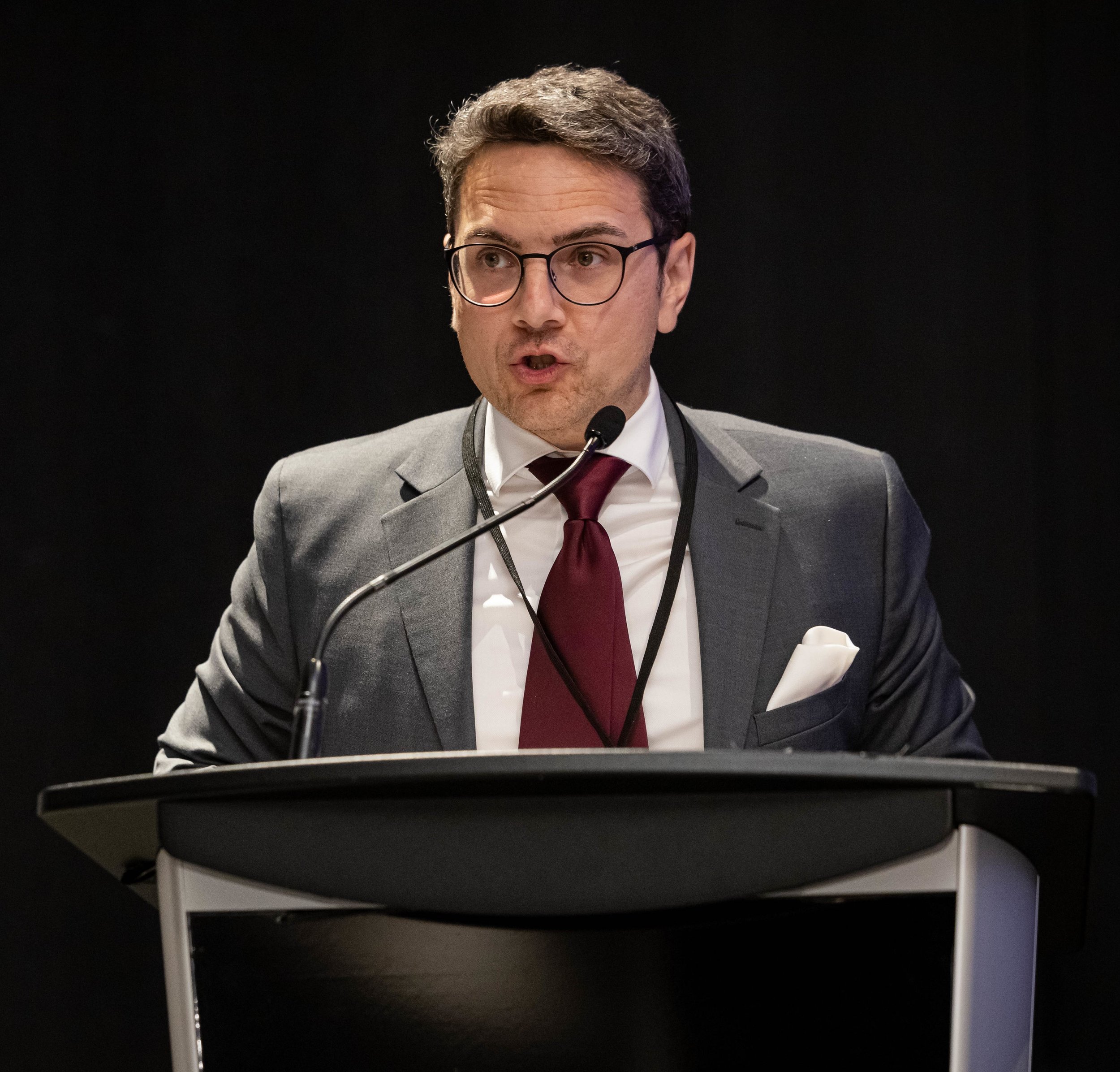
"it seems essential [to him] to strengthen our engagement with the public, particularly during the opening of the judicial year, to make these moments opportunities for dialogue. While these openings currently take place in a bipartite format, between judges and lawyers, I would like these events to become tripartite, and for citizens to be added to the discussion."
Marcel-Olivier Nadeau must not be aware of what many citizens really think about judges and lawyers in Quebec.
Will members of the public also be able to make speeches during the opening of the judicial year?
Personally, I am in complete agreement with the idea of seeing Chief Justice Manon Savard of the Court of Appeal of Quebec listen, at least once a year, to the public's uncensored opinion on the work of her Court.
I can already imagine her reaction :
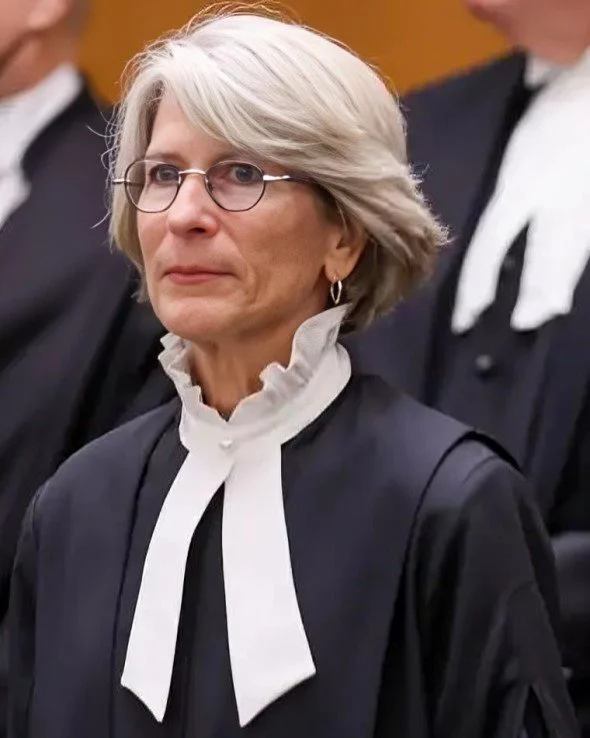
How does Marcel-Olivier Nadeau propose to manage the vocal protests (or otherwise) of citizens who express their dissatisfaction during judges' speeches?

Or does the Bar president Marcel-Olivier Nadeau intend to screen the public who may attend these events? Will he impose a pre-selection process of citizens who can attend his judicial openings only if they swear they like the members of the justice system? Or does the word “public” and “citizens” mean, for Nadeau, only the families and friends of lawyers and judges, mere extras who will simply applaud their speeches?
Does Marcel-Olivier Nadeau really think that people will take time off work to listen to him deliver his speech at the opening of the judicial year? Or does he prefer to hold the opening of the judicial year during the weekend, expecting the public to forgo spending time with their families or resting, in order to spend time with him?
Note that Bar president Marcel-Olivier Nadeau did not propose to broadcast the opening of the judicial year on the Internet, free of charge.
More generally, should we also explain to Marcel-Olivier Marcel-Olivier that inviting members of the public to attend the opening of the judicial year, when a large part of them cannot afford to pay the exorbitant fees charged by lawyers and are forced to represent themselves in court, is like inviting starving people to a banquet just to watch the rich eat?
Does he perhaps think that proposing to turn these pretentious, elitist events into legal “soup kitchens” will convince the public that the justice system is more trustworthy?
A “solution” so disconnected from the reality of citizens, that only a self-important lawyer from a large, wealthy law firm could have proposed.
But, once again, Bar president Marcel-Olivier Nadeau treats access to justice as a matter of public image rather than as a fundamental right that is being undermined. The “dialogue” he proposes, whatever that means, does not reduce professional fees, does not simplify the Code of Civil Procedure, and does not broaden the eligibility thresholds for legal aid.
Another project proposed by Bar president Marcel-Olivier Nadeau? He
"wishes to launch an annual legal information campaign, focusing on a topical issue, so that the public can better understand the importance and relevance of our institution."
Catapulting condescending propaganda about one's own "importance" does not improve access to justice, nor does it reduce the costs associated with such access. An "information campaign" does nothing to solve the problem of someone who cannot afford a lawyer or who have been waiting for years for an honest, fair, and equitable judgment. Knowing that the Quebec Bar is "relevant" does not help a tenant represent themselves before the Administrative Housing Tribunal, does not help an aggrieved employee assert their rights before the Administrative Labour Tribunal, nor does it help a parent obtain custody of a child. This proposal is aimed more at self-promotion and restoring the Quebec Bar’s image rather than helping litigants ensure that their cases are actually handled fairly, equitably, and impartially by a judge.
When asked what would enable him to declare "mission accomplished" at the end of his term, Bar president Marcel-Olivier Nadeau replied :
"that the Bar has become an essential player in the transformation of judicial culture and that the other partners — the courts, the Ministry of Justice, lawyers — are committed to this alongside us."
First, Bar president Marcel-Olivier Nadeau wants the Bar to become an "essential player". Someone should inform the Bar president that the Quebec Bar is already an essential player, established as such by law (Bar Act, section 23 of the Professional Code, etc.). Setting this as an end-of-term objective is a false objective; it is as if the captain of a ship were to say to his passengers at the beginning of the voyage, "I will be satisfied if, at the end of the voyage, we are still above water".
Secondly, Bar president Marcel-Olivier Nadeau views the courts as “partners” of the Quebec Bar and proposes that judges work “hand in hand” with the Quebec Bar. It sould be reminded to Bar president Nadeau that the Quebec Bar frequently appears before the courts as a plaintiff, defendant, respondent or intervener in cases brought before the courts. Fraternizing with the courts or designating the courts as “partners” of a party to a dispute creates legitimate doubt as to the independence and impartiality of the courts when their “partners” subsequently appear before them to seek favorable judgments. Judges cannot work “hand in hand” with a party to a dispute in an adversarial justice system whilst subsequently claiming that they will adjudicate its cases independently and impartially. The public does not believe this. On the contrary, the public readily understands that the more the actors in an adversarial system work “hand in hand,” the less that system is truly adversarial, independent, and impartial. And the less that system is what it claims to be, the more deceptive it is towards the public. Too often, members of the public find themselves before a judge who is a professional or personal friend of the opposing party’s lawyer, or of the opposing party itself, a judge who treats members of the public as if they were legally illiterate, who insults them instead of guiding them, and who rules in favour of their friends or “partners”. This does not fit the definition of the “rule of law” — it fits more closely the definition of a justice system based on nepotism and favouritism, a small world made up of interconnected people who judge one another favourably.
The public is aware of this. Marcel-Olivier Nadeau does not seem to be.
Partying in Paris instead of sorting out problems in Quebec
In the fall of 2025, newly elected president of the Bar, Marcel-Olivier Nadeau was already drawing on the resources of the Quebec Bar to offer himself and some of his friends from the Bar (Valérie Assouline - the president of the Montreal Bar, Alexandre Forest - president of the Canadian Bar Association - Quebec division, Andrée-Anne Dion of the Young Bar of Montreal, among others), a luxurious trip to France to celebrate the begining of the judicial year for the Paris Bar.


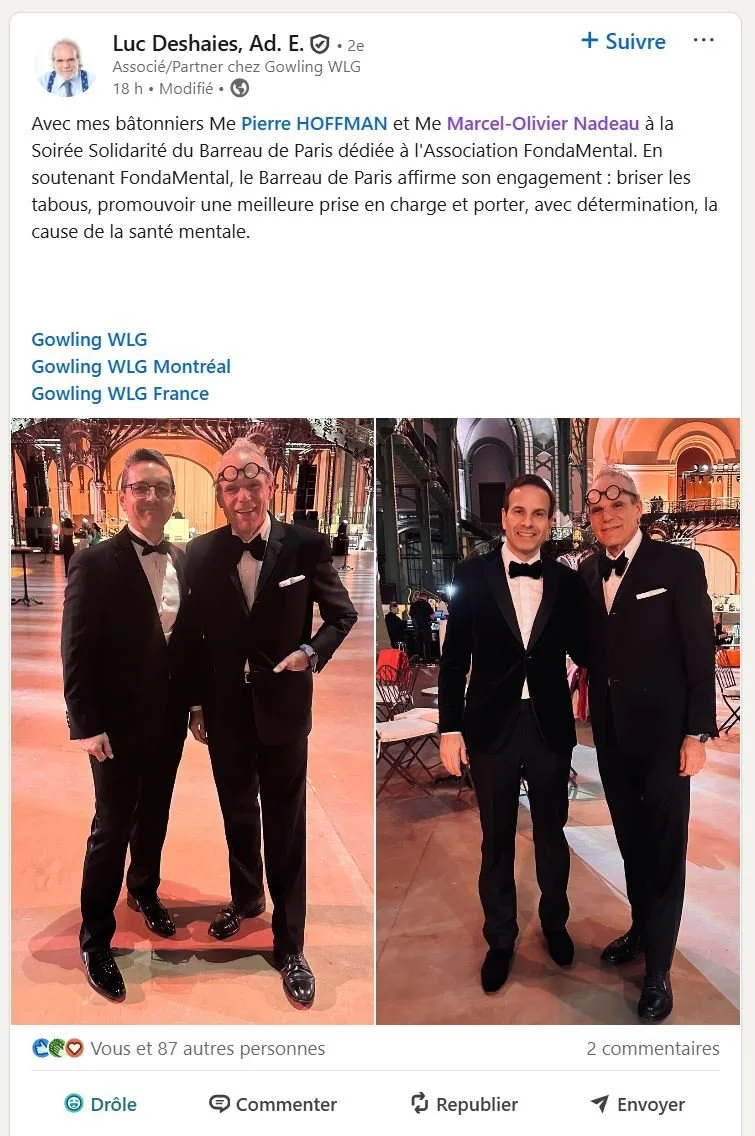
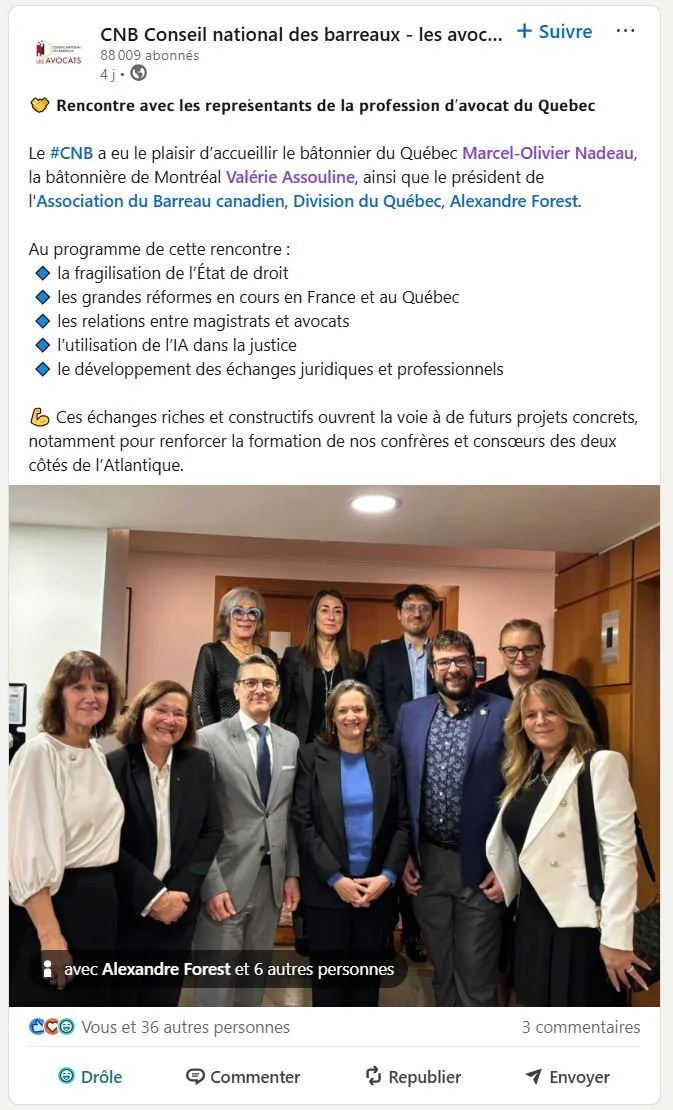




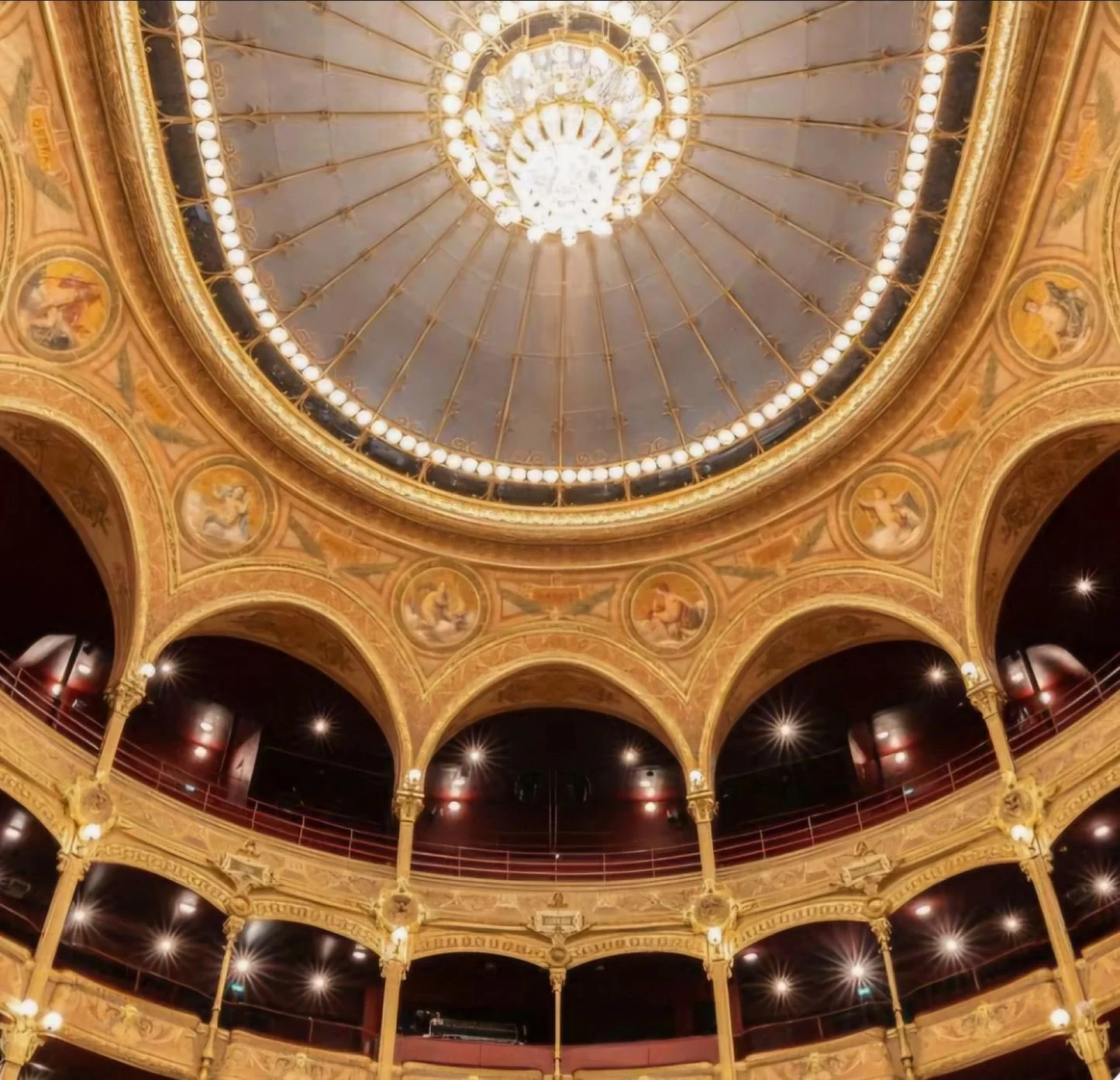
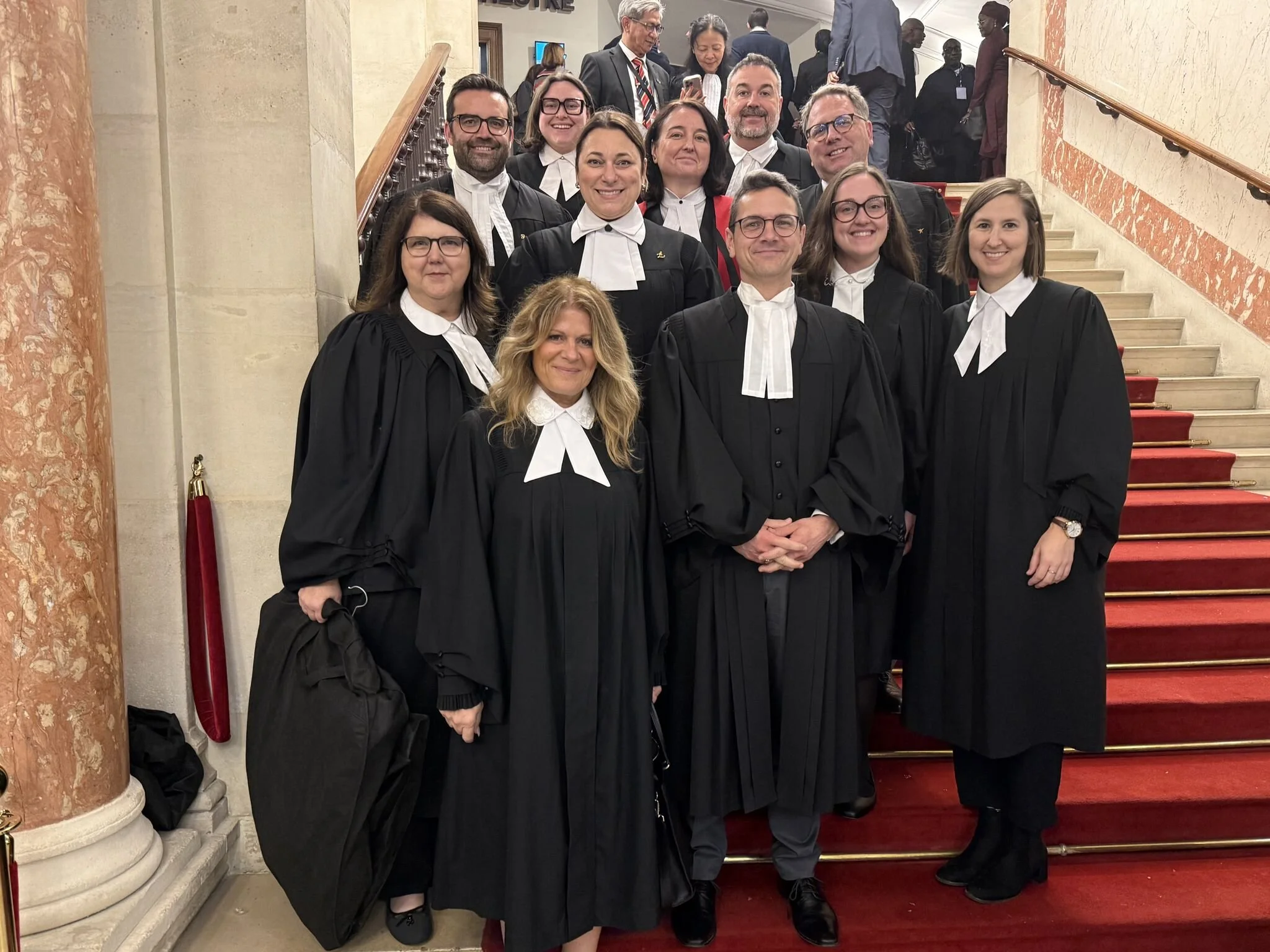
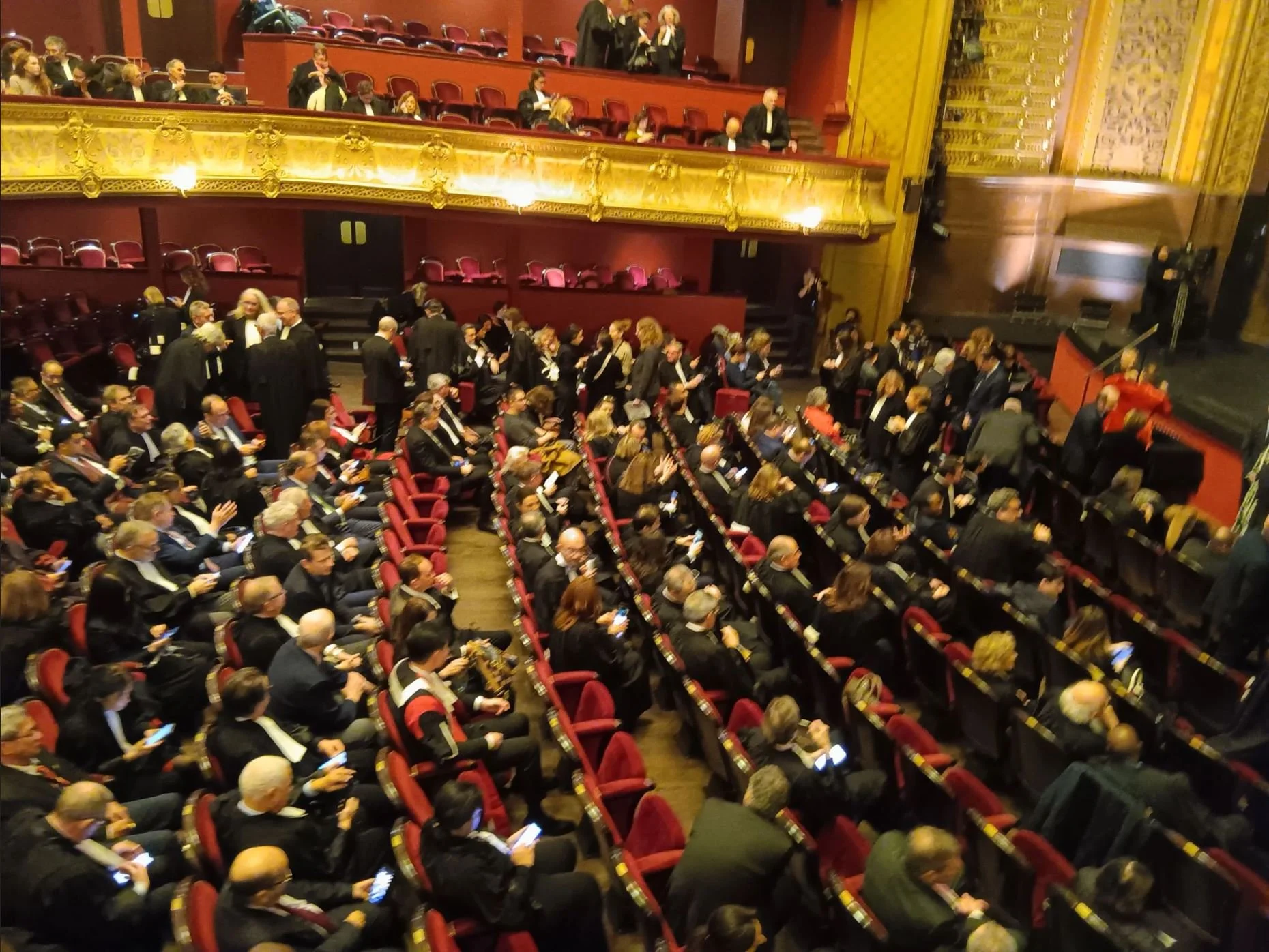
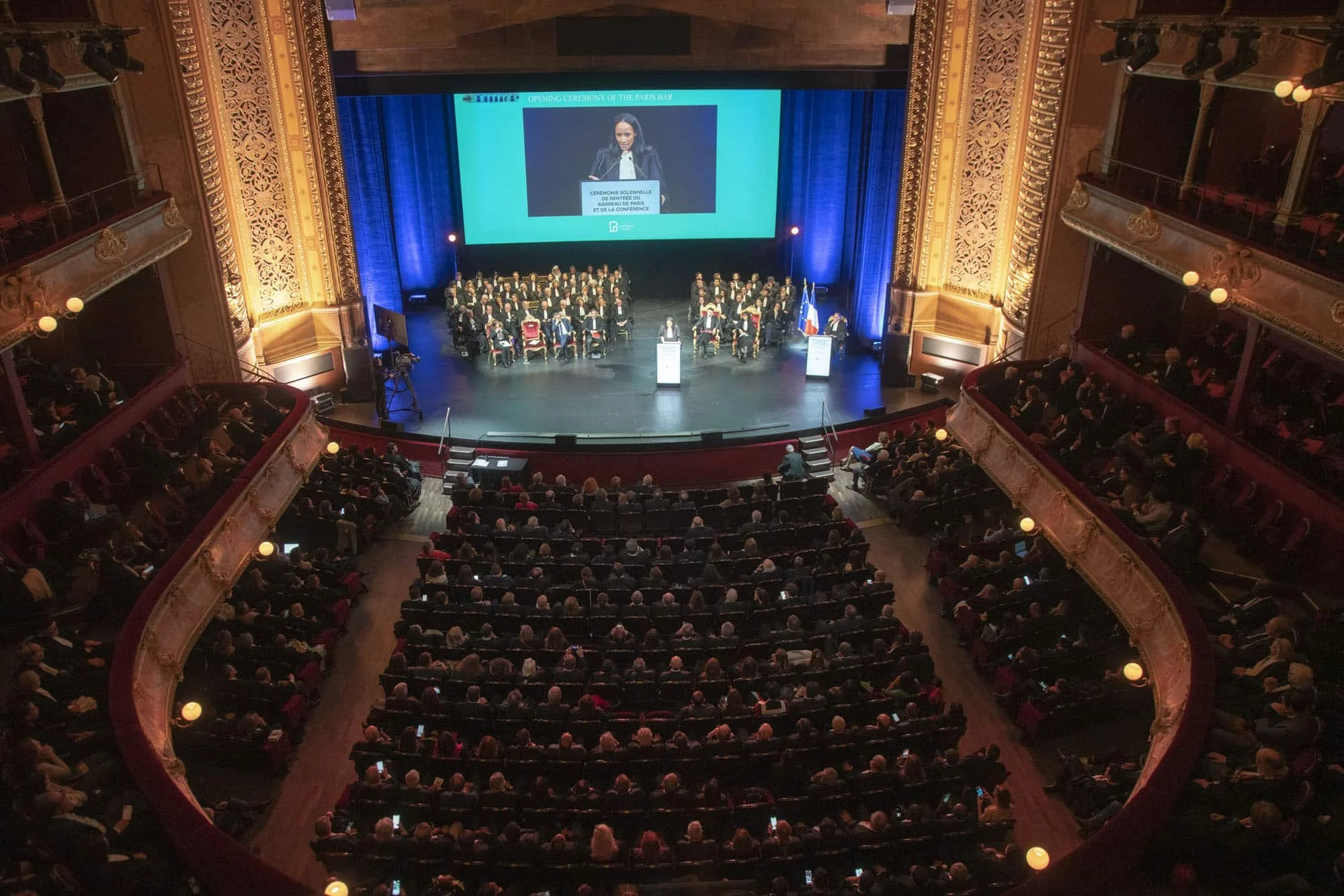
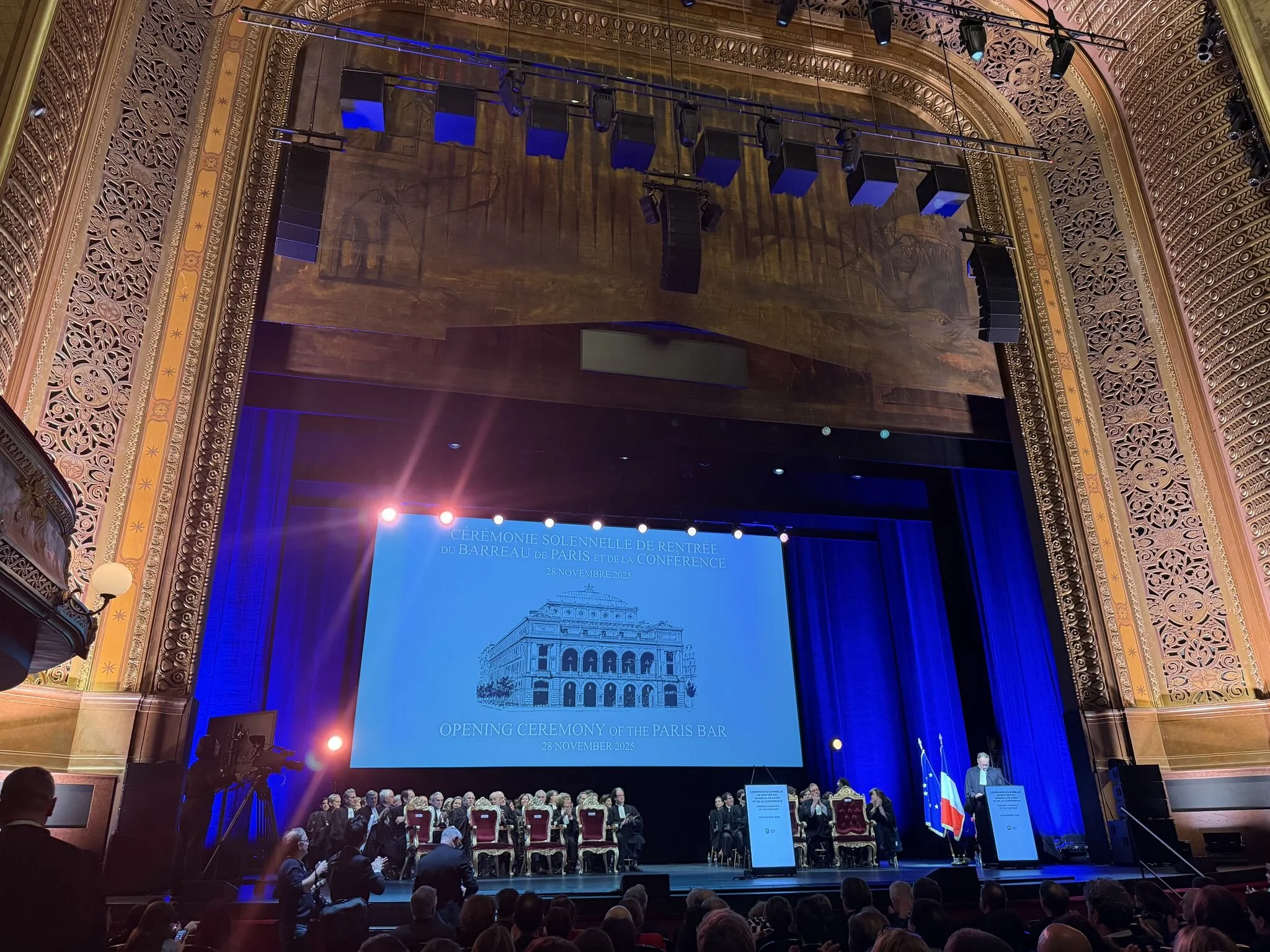
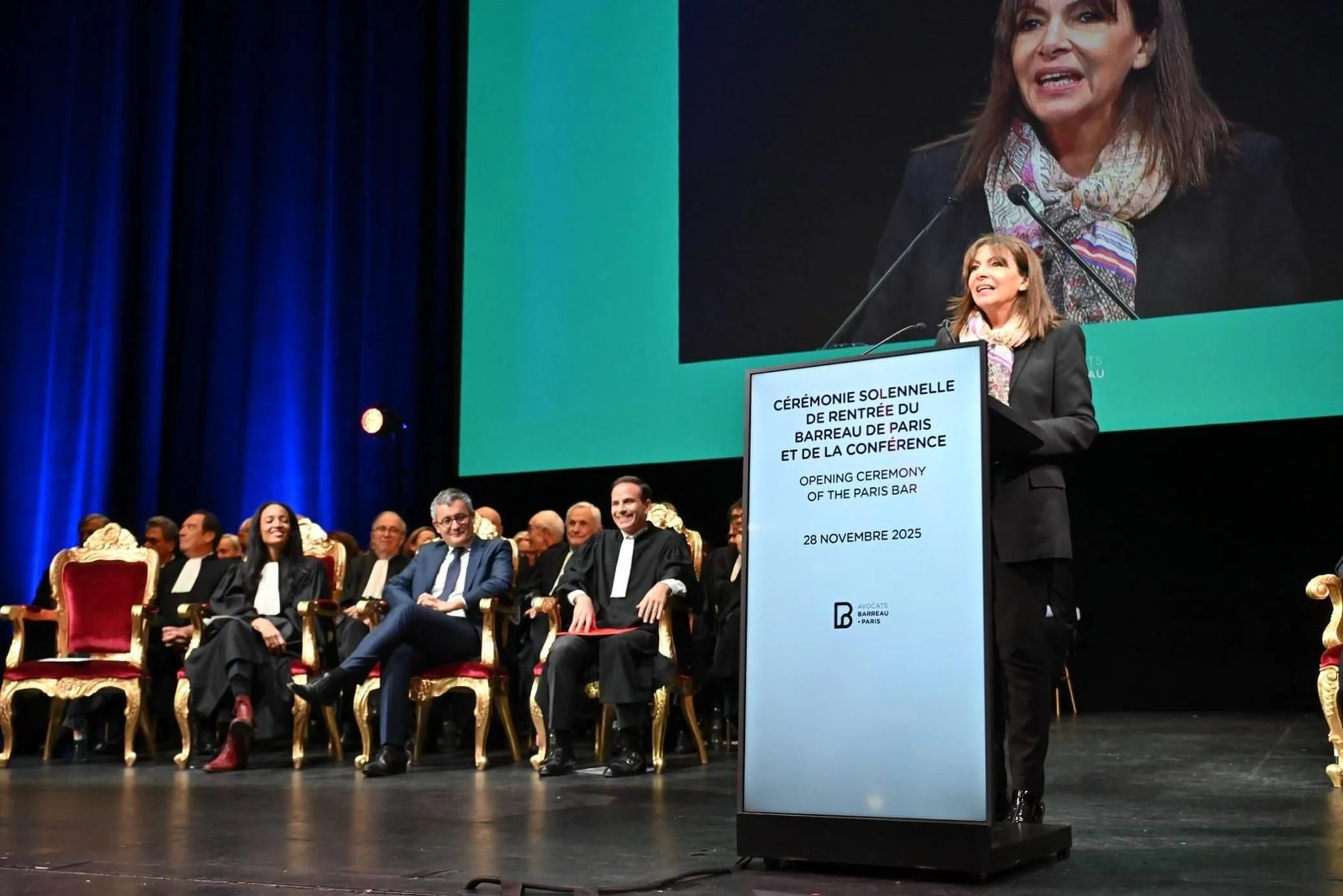

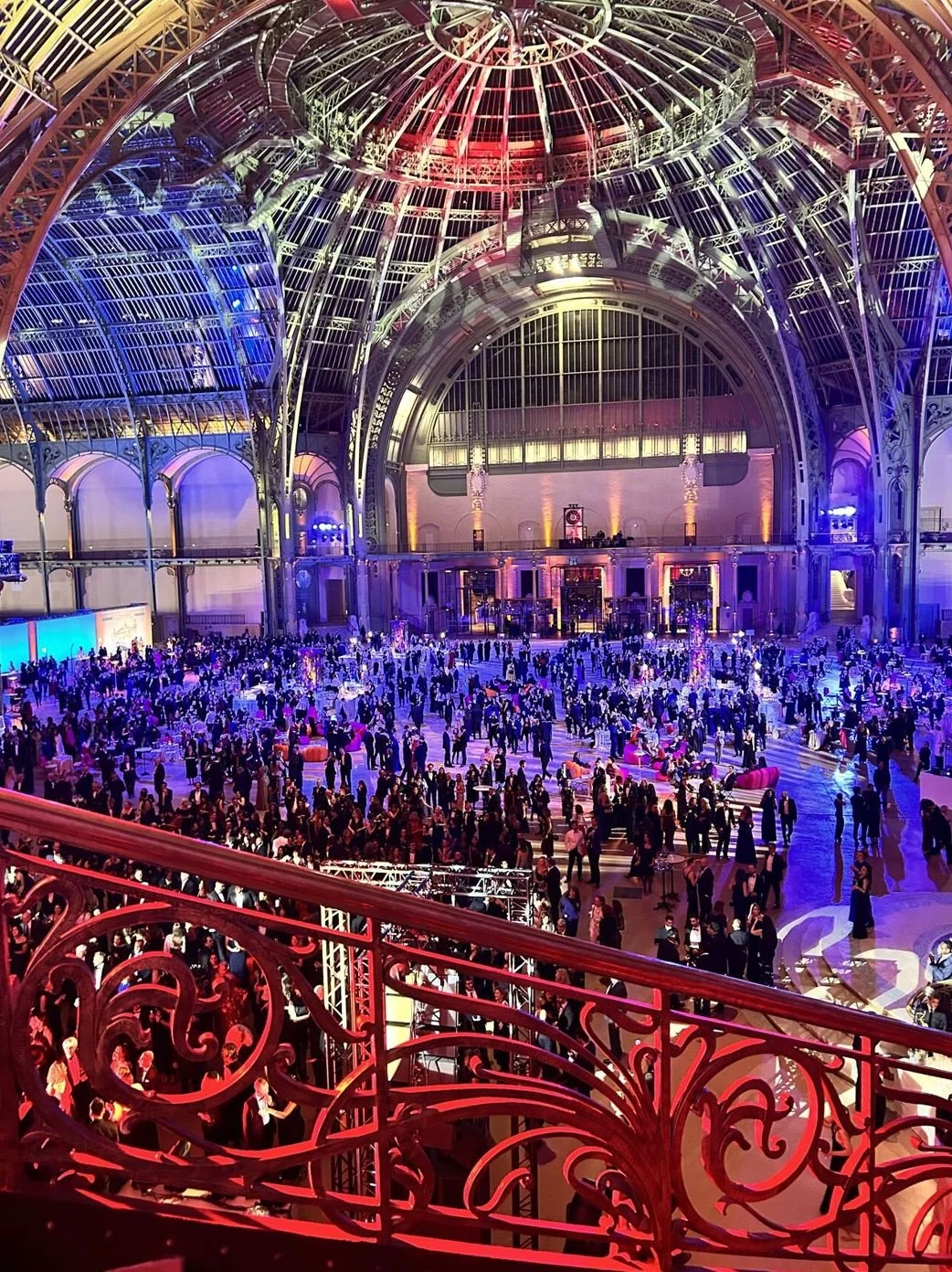
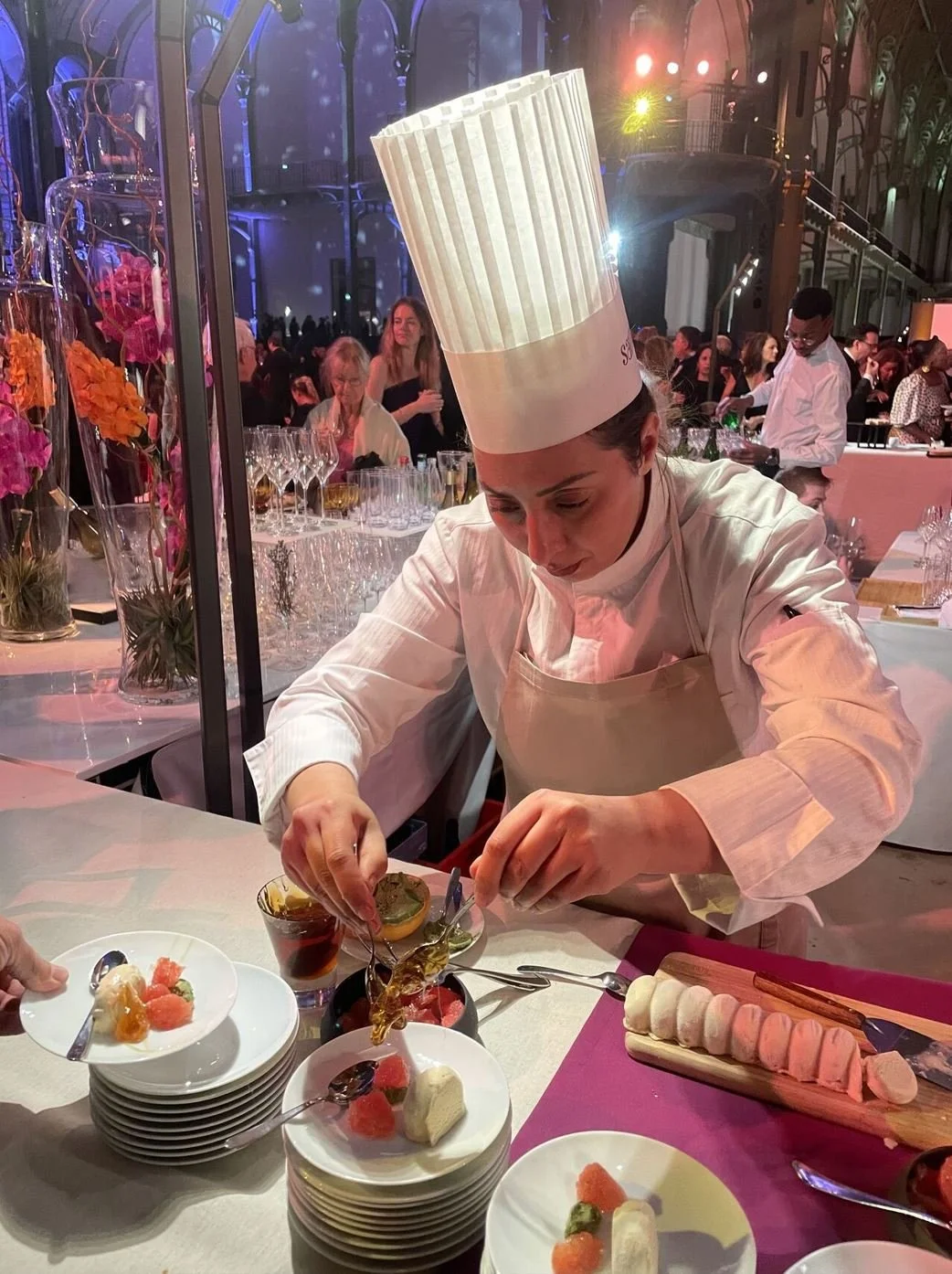


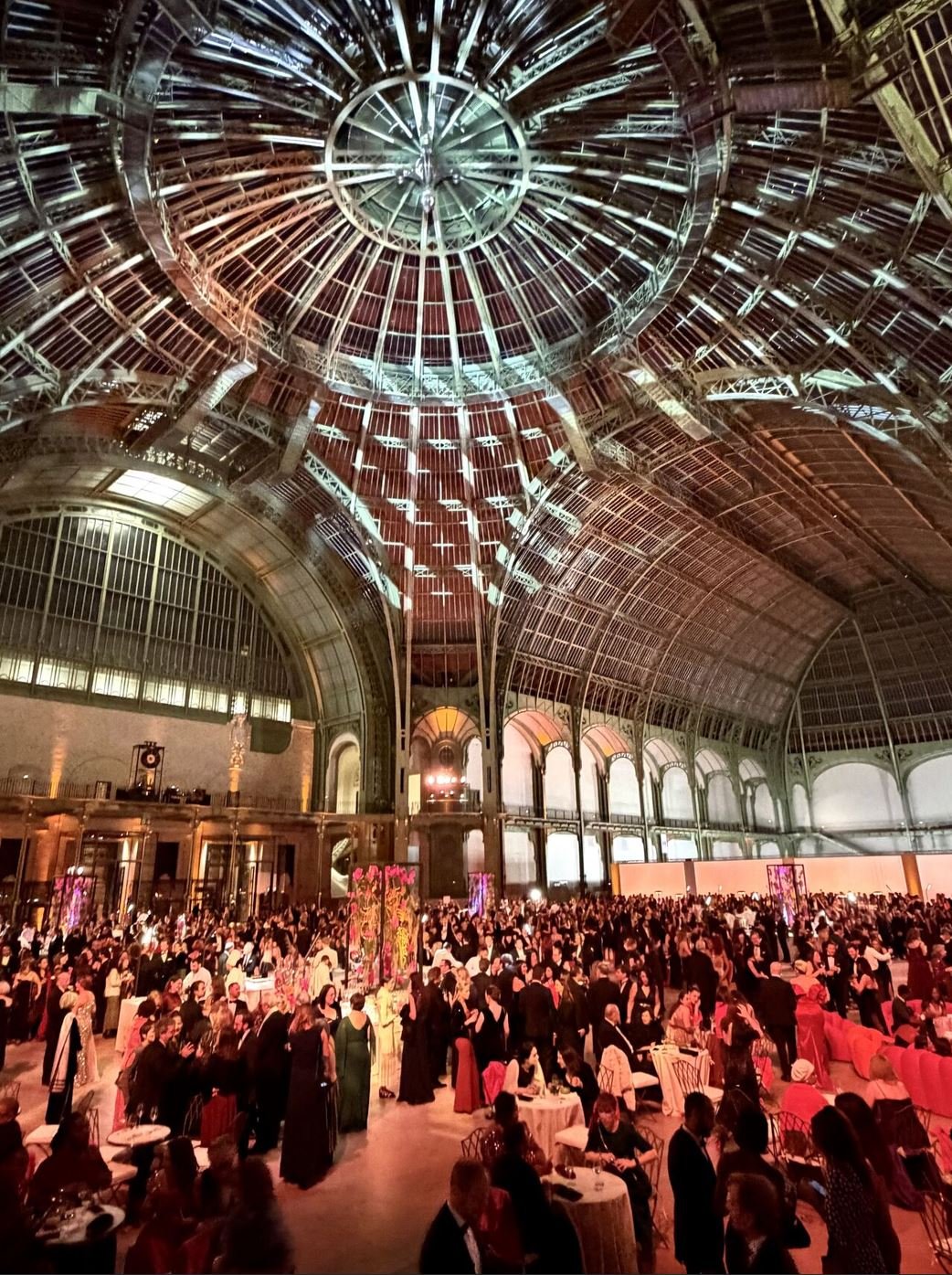

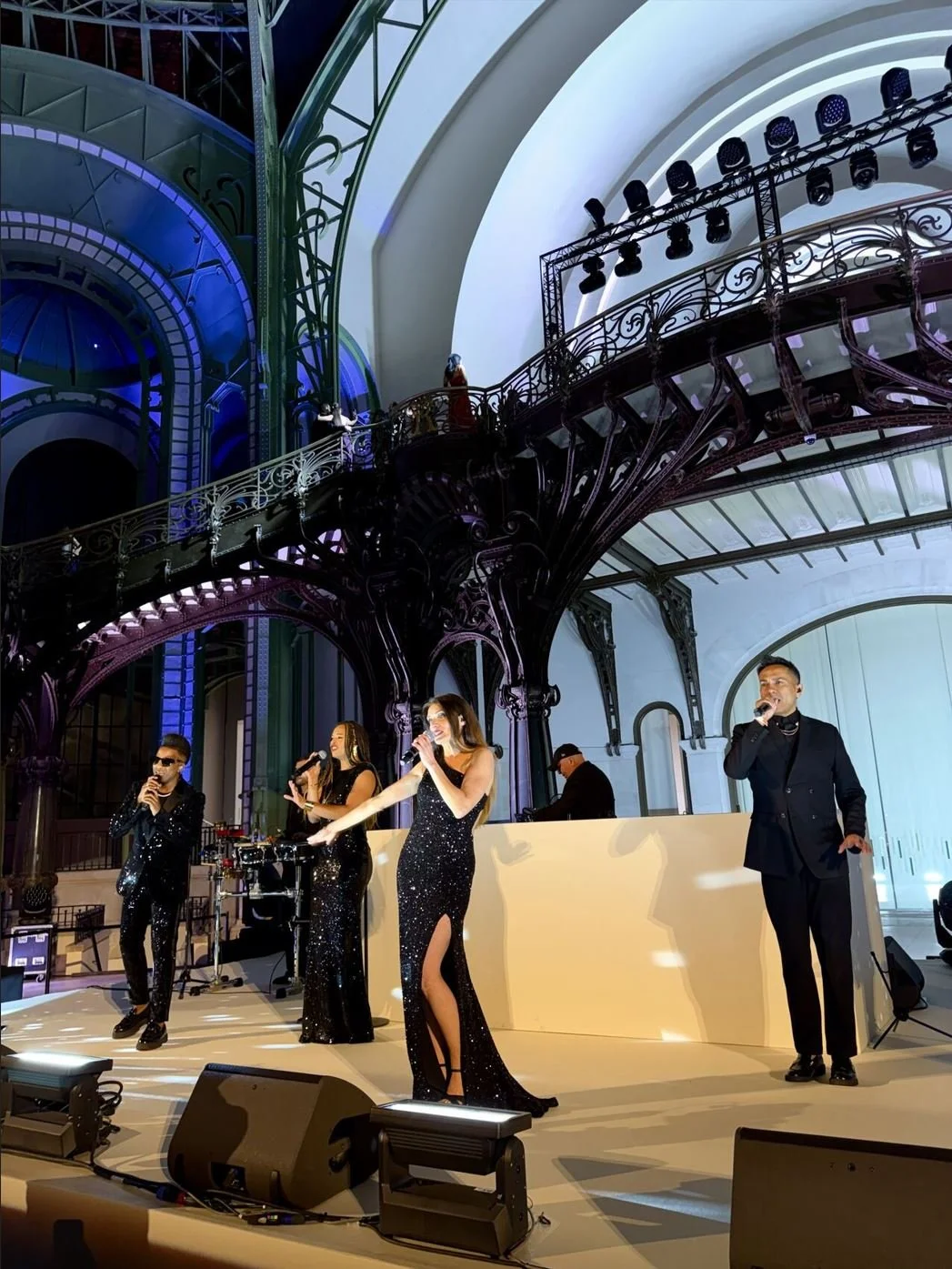
Dining, partying, fraternizing, and networking at the opening ceremony of the judicial year of a Bar from another country does nothing to resolve domestic problems in Quebec : it does not improve access to justice for Quebecers in Quebec, nor does it reduce court costs in Quebec, nor does it lower lawyers' fees in Quebec, not does it raise the eligibility thresholds for legal aid in Quebec, nor does it reduce court delays in Quebec. Furthermore, this revelry does not allow Bar president Marcel-Olivier Nadeau to fulfill his institution's primary mission : protecting the Quebec public.
The one who benefits from participating in this event is the Bar president himself, for his hubris and personal gain.
As for the lawyers who are members of the Quebec Bar, who are facing rising membership fees and a crisis in their mental well-being, seeing their leader enjoying himself and celebrating in Paris sends a message of arrogance and contempt.
Exploiting the role of the president of the Bar to further political ends
Just before leaving for the trip to Paris, Marcel-Olivier Nadeau outlined his political ambitions : he decided to fight with the political party in power at the National Assembly of Quebec to amend the content of several bills before their are passed.
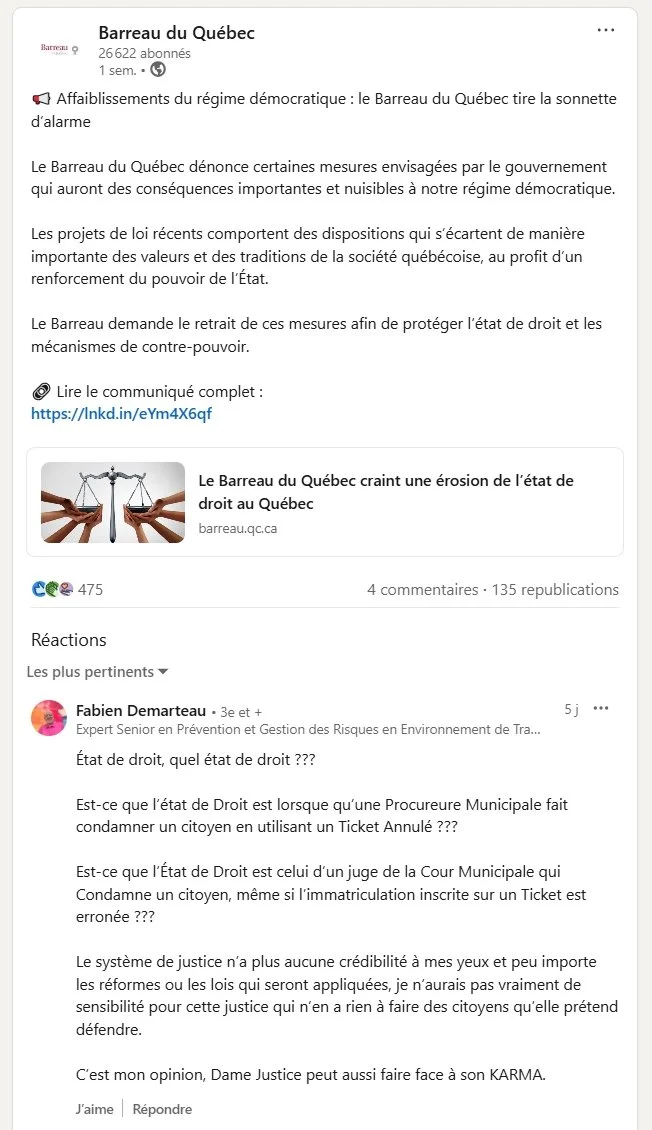
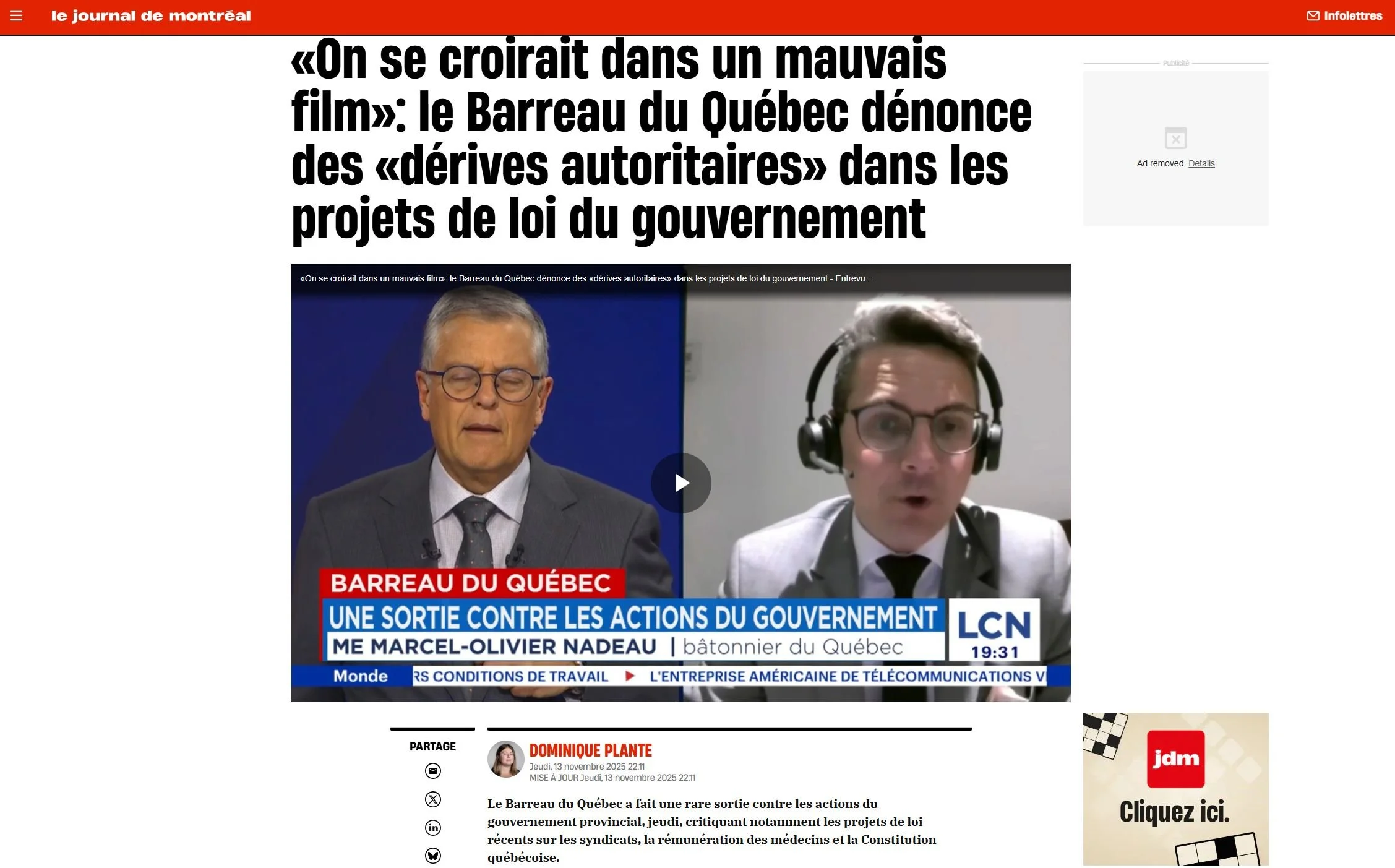
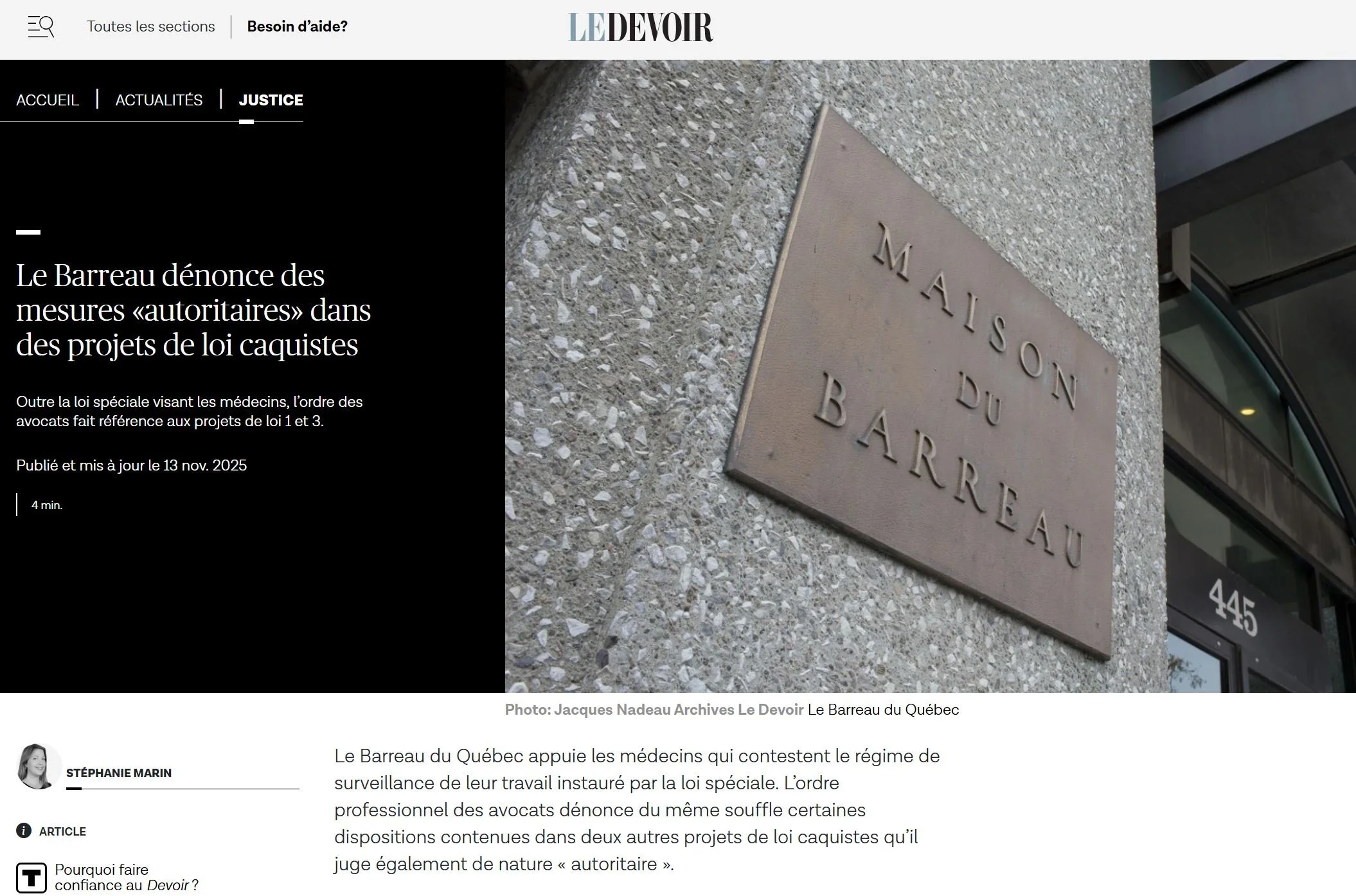
The Bar's voice must be purely legal and technical. When a Bar president ventures into partisan politics, he compromises the neutrality that this institution claims to uphold and exposes himself to criticism that affects the image of the Quebec Bar.
Whilst he seemed to have forgotten that he represents 31,000 members who have different political beliefs and that their membership fees should not be used to finance a political discourse that they do not share, several actors quickly reminded Marcel-Olivier Nadeau that temporarily holding the position of Bar president does not grant him an ideological "blank cheque" to take politically biased stances.
The Bar’s president Marcel-Olivier Nadeau's attempts to play the politician were immediately criticised or ridiculed, from within, by several of his members of the Quebec Bar, as well as by political analysts.
Quebec’s Justice Minister Simon-Jolin Barrette (Coalition Avenir Québec), a lawyer and member of the Quebec Bar since 2010 (like Nadeau), criticised the Bar president's statement:
Minister Jolin-Barrette accuses the Bar of lacking nuance
The Legault government is attacking the Quebec Bar. Justice Minister Simon Jolin-Barrette believes the professional order representing lawyers lacks nuance in its criticism of recent bills introduced by the government.
It is unprecedented for a Minister of Justice to vilify the Bar in such a direct manner.
In a press scrum on Friday, the minister criticised the Bar president for comparing Quebec to authoritarian regimes such as North Korea and the Union of Soviet Socialist Republics (USSR), the communist state that replaced the Russian Empire from 1917 to 1991.
"Sometimes, the Quebec Bar should nuance its statements", he said in the halls of parliament before Question Period.
Marc Bellemare, former Quebec Justice Minister (Quebec Liberal Party), a lawyer member of the Quebec Bar since 1979, severely criticised Marcel-Olivier Nadeau for his remarks, accusing him of "losing his cool" :
"Having been in office for barely five months, elected by acclamation as head of the Quebec Bar, he has been lashing out here and there at the Legault government. In his latest public statement on December 5th [2025], he accused Justice Minister Simon Jolin-Barrette of creating a diversion after the latter accused the Bar of lacking nuance by associating certain bills with the authoritarian excesses seen in Slovakia, Poland, North Korea and the United States.
The Bar president's frontal attack is eminently political, his criticism going far beyond the Bar's traditional approach of restraint and moderation towards a democratically elected government. It should be remembered that the CAQ holds 81 of the 125 seats in the National Assembly. […]
The Bar's press release of November 13th set an incendiary tone by denouncing the government's legislative initiatives on the healthcare system and union democracy, and by crudely linking them to the erosion of the rule of law and the risks of abuses "given the rise of authoritarian regimes... across the world."
In an interview on November 21st [2025], the Bar president went even further, stating his opinion that the Fédération autonome de l'enseignement (FAE) was perfectly justified (at a cost of $2 million) in challenging Bill 21 on secularism before the courts. "That's a union’s job to do that", he thundered. At the same time, he deemed it "surreal", highly authoritarian, and even intimidating that Bill 2 on medical practice controls the level of professional practice of doctors. His remarks end there : there is no other solution for the 1.5 million Quebecers who are impatiently waiting for a family doctor despite the $60 billion injected annually into this supposedly universal public system.
Bar president Nadeau is manipulating the Bar, turning it into a political war machine, which does not bode well. […]
No doubt the current president of the Bar secretly envisions a brilliant political career. For the time being, at least, his role is different. While he still claims to speak on behalf of Quebec's 31,000 lawyers, he ought to show a little restraint”.
Professor Guillaume Rousseau of the Faculty of Law of the University of Sherbrooke (a former candidate for the Parti Québécois and advisor for the Coalition Avenir Québec), a lawyer member of the Quebec Bar since 2006, had also criticised Bar president Marce-Olivier Nadeau :
"The Bar has spoken out to denounce the 'erosion of the rule of law' and the risks of 'authoritarian drifts' allegedly linked to the Quebec government, whilst also associating one of its measures to East Germany and therefore with totalitarian communism. In doing so, he is engaging in partisan politics, making a grossly mistake, and missing an opportunity to be useful."
He is engaging in partisan politics, because he is taking a stand not against a specific piece of legislation, but against a large part of the government's legislative agenda, by echoing the arguments of opposition parties. And he is doing so after launching an advertising campaign on the theme of the rule of law featuring a Liberal influencer.
He is mistaken, because we do not live under a one-party system. The government was elected and could be voted out in the next election. Quebecers are in no way in a situation comparable to that of post-war East Germans. He is also mistaken because he wrongly invokes the principles of the rule of law and the supremacy of law, erroneously suggesting that they protect the right to use Quebec public funds to weaken the Quebec legislature. This is reminiscent of the time the Bar unsuccessfully opposed the law on the Quebec City amphitheater by invoking these principles, before being reprimanded by the Superior Court, which accused it of attacking the appropriateness of this law ‘under the guise of the primacy of law’.
The Bar's recent statement is deplorable for all these reasons. And above all, because several measures proposed by the government are too serious, and in some cases, problematic within Bill 2, to be criticised so crudely. At a time of extreme polarisation, Quebec needs a non-partisan and rigorous Bar. Let's hope that this will be the case next time”.
Regarding another bill, Bar president Marcel-Olivier Nadeau submitted another brief on behalf of the Quebec Bar. On this occasion, he opposed Bill 1. He drew several other criticisms, notably for a blatant lack of scientific rigour :
In the Bar's brief, there are indeed errors, the origin of which I find difficult to explain. There are instances where section 33 of the Canadian Charter has been invoked that are not mentioned. There are, therefore, omissions. The research is truly incomplete, and the results of this are reflected in the Bar's brief.
- Guillaume Rousseau, in parliamentary committee, February 12th, 2026
A group of lawyers and professors also criticised the Quebec Bar’s brief in an open letter published in the newspaper Le Devoir on February 17, 2026 [7] .
In response to Marcel-Olivier Nadeau's politicised statement, experienced journalist Sébastien Bovet put the question to Quebec's Minister of Labour, Jean Boulet (Coalition Avenir Québec) :
"So, the Quebec Bar’s opinion doesn't move you?"
Smiling, as if to subtly highlight the absurdity of the Bar president's position, Minister Jean Boulet replied curtly :
"No, it doesn't move me."
Analysts at the public broadcaster (Radio-Canada) were not impressed either by the work of Bar president Marcel-Olivier Nadeau. Antonine Yaccarini, former deputy chief of staff to the Minister of Justice, lawyer Sonia Lebel :
“It’s just empty rhetoric because, first of all, the Bar should focus on one bill at a time, rather than giving the impression that it is mixing several bills at once. It’s very confusing for the people who are trying to understand”. “We’re really dealing with a general impression, we’re also dealing with the slippery slope theory: ‘Watch out, we might be heading towards something.’ I think we need to work on objective facts.”
The show's host also asked the former federal Member of the Parliament Alain Rayes (Conservative Party of Canada) : "We're talking about authoritarian provisions that weaken checks and balances. What are your thoughts on that?" Alain Rayes replied:
“When I saw that statement, I smiled. I think, well, they might have some vested interests”. “In the case of Bill 2, there were two attempts to challenge it, first by the students. It was dismissed by the Superior Court, on the same elements that the Bar is raising. And the Federation of Medical Specialists, who also attempted to challenge certain elements of the Bill, all of which were related to the intervention the Bar’s has just made. So, in both cases, the Superior Court said, ‘No, I won’t get involved in that’. So, a lot of empty rhetoric.”
The host also asks : "When we talk about authoritarian drift, the reflex is to think of North Korea, Putin in Russia, there are other examples, but the CAQ? Antonine, is that where you think it's exaggerated?" Antonine Yaccarini continues :
"That's completely exaggerated". "Talking about authoritarianism this week is completely out of place". "It's a bit of a shame, really. We're in a period of intense polarisation [...], and now the Bar, instead of calming the public debate, is inflaming it once again. [...] Does this serve the citizens? I doubt it."
Other analysts have also criticised this statement by the Quebec Bar, including journalist Antoine Robitaille :
When the Bar engages in political activism
The Quebec Bar has been running a media campaign since Thursday to denounce a law and bills proposed by the Legault government.
That it is attacking certain elements of Billl 2 concerning doctors is understandable.
This legislation was passed under a gag order […] But the Bar decided to take a broader approach by simultaneously denouncing two other bills introduced by the government : Bill 1 (the 2025 Constitutional Act on Quebec) and Bill 3, aimed at “improving the transparency” of unions. In doing so, the Bar chose to step outside the strictly legal sphere and opted for political activism.
It could have waited to participate in the consultations on Bills 1 and 3. And on that occasion, to criticise specific legal elements that, in its view, violated the rule of law. No, it preferred to make political assertions : "Considering the rise of authoritarian regimes and the weakening of many democratic regimes around the world, now is not the time to weaken public freedoms of expression and association or the mechanisms of checks and balances."
What are we to understand? That the Bar is becoming some kind of political party? That it allows itself, just like any other litigant leaning against the bar of a pub – or at their keyboard on X – to rant and rave, shouting : “Putin, Trump, Legault, same fight!” Seriously, we’ve sunk to that level! […] [8].
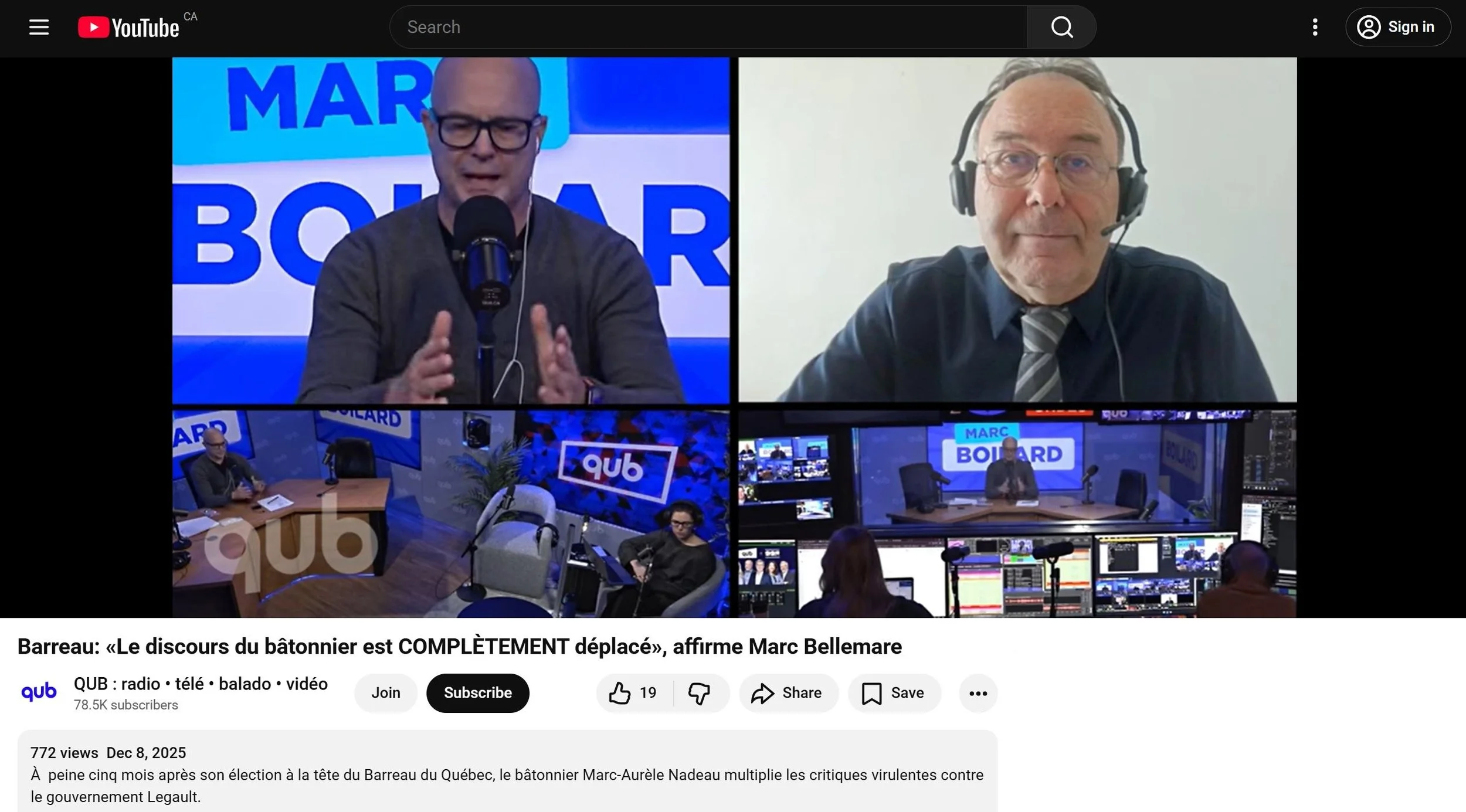
In short, managing to be criticised by Liberals, CAQ-ists and PQ-ists at the same time and on the same subject, to be unanimously criticised by the public broadcaster's analysts invited to comment on the situation, in addition to being called “Marc-Aurèle Nadeau” by TVA Nouvelles [9], is a remarkable feat for this new president of the Quebec Bar.
Here again, Marcel-Olivier Nadeau is not inventing anything. He is copying. The same criticism had already been made in 2014 to Judge Johanne Brodeur of the Superior Court of Quebec, when she was president of the Quebec Bar and was playing the politician of the Quebec Liberal Party, in opposition to the Parti Québécois’s Charter of Values.
More than a decade later, we still have the same problem at the Quebec Bar.
Bar President Marcel-Olivier Nadeau is concealing the real issues facing the justice system in Quebec
Just a few months into his term, Bar president Marcel-Olivier Nadeau began making noise about the "risk of erosion of the rule of law", the risk of "authoritarian drifts" and the importance of fighting to protect rights and freedoms (which the clients of his law firm and his fellow lawyers were blatantly violating).
Of course, no one is against virtue (“Long live individual rights”, is essentially what everyone will say). But coming from the mouth of someone who contributes to tarnish the image of irreproachability of the justice system, it rings false.
This noise Marcel-Olivier Nadeau was making, however, is no accident. It serves the system well. The Bar president, a pawn of the system, is well aware of this, because behind this noise lie problems considerably more sinister and obscure than those “denounced” by the actors of the system (costs, access, well-being of lawyers, etc.), of which Nadeau is also well aware and which the public will not hear him speak of.
For example, the incestuous proximity between the various actors in the justice system, who simultaneously claim to be independent of one another.
Ranging from members of the same family pleading cases before each other, from hidden personal or professional friendships, to judicial promotions based on nepotism and favouritism - characteristic of a small circle that considers itself aristocratic and elitist -, such behaviour is incompatible with the objectivity advocated, destroys the image of independence and opens the door to different degrees of corruption : judicial bias in favour of friends, judicial cronyism, decisions rendered in conflicts of interests, cover-up of abuses, lies in judicial decisions, etc.
The average Canadian citizen may find themselves, often unknowingly, facing a closed justice system, completely controlled and held hostage by a small clique, organised into castes, against the interests of the citizen. At the same time, using reverse psychology, these actors within the justice system say the opposite of what they actually do and often speak of independence and impartiality. They claim to form a adversarial system (antagonistic, conflictual, confrontational).
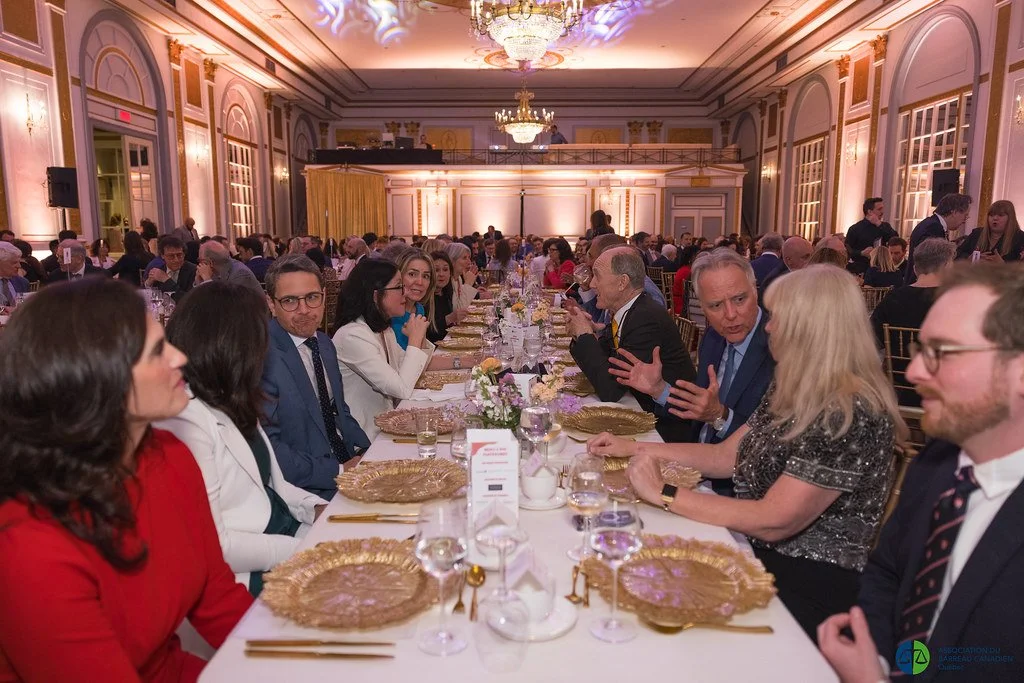
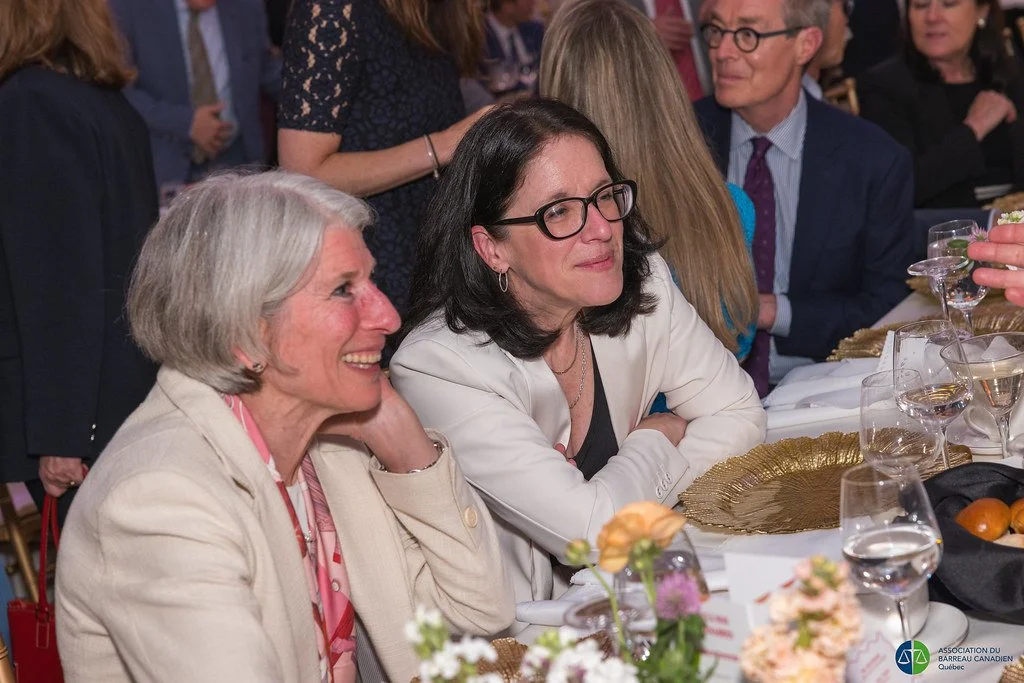
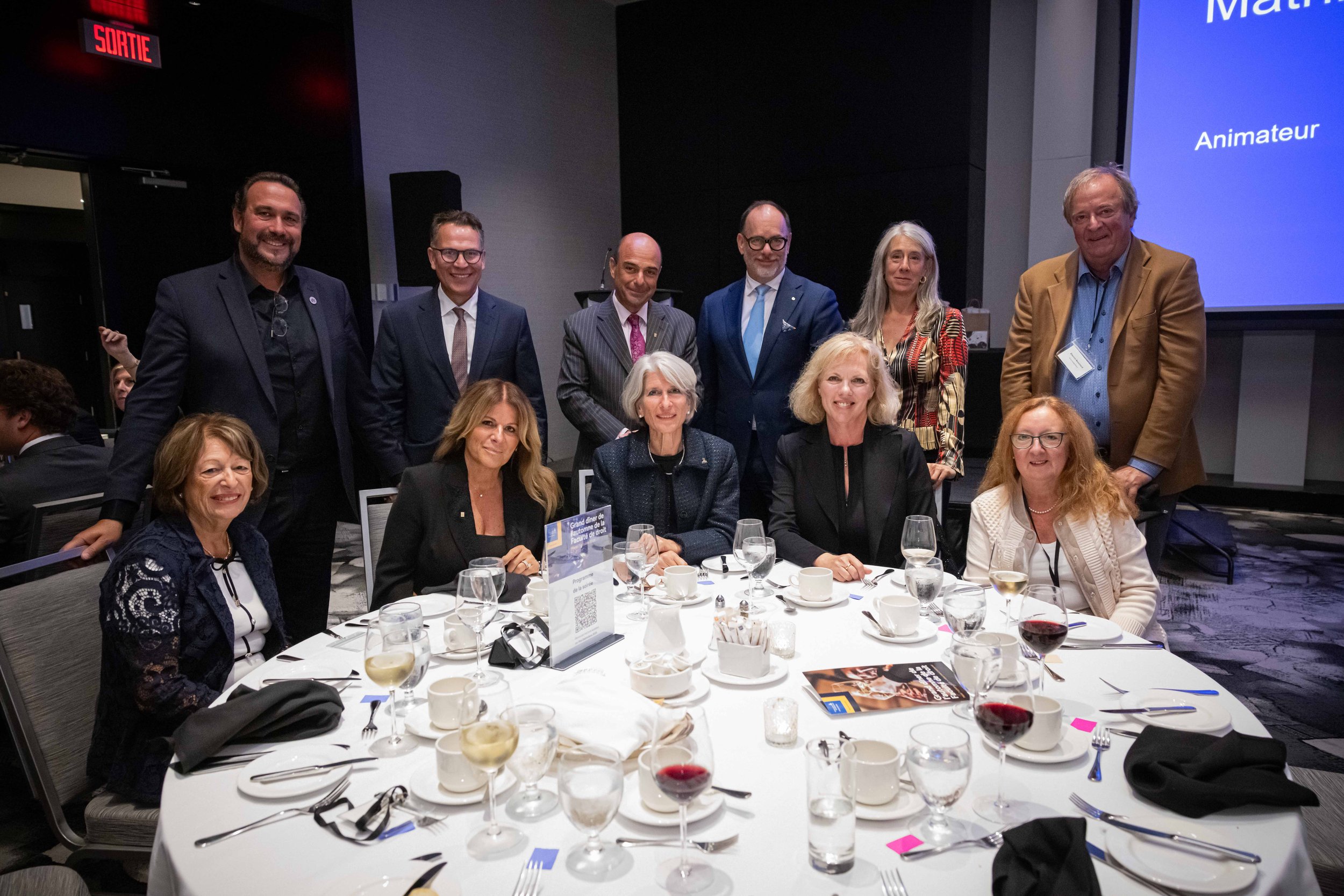
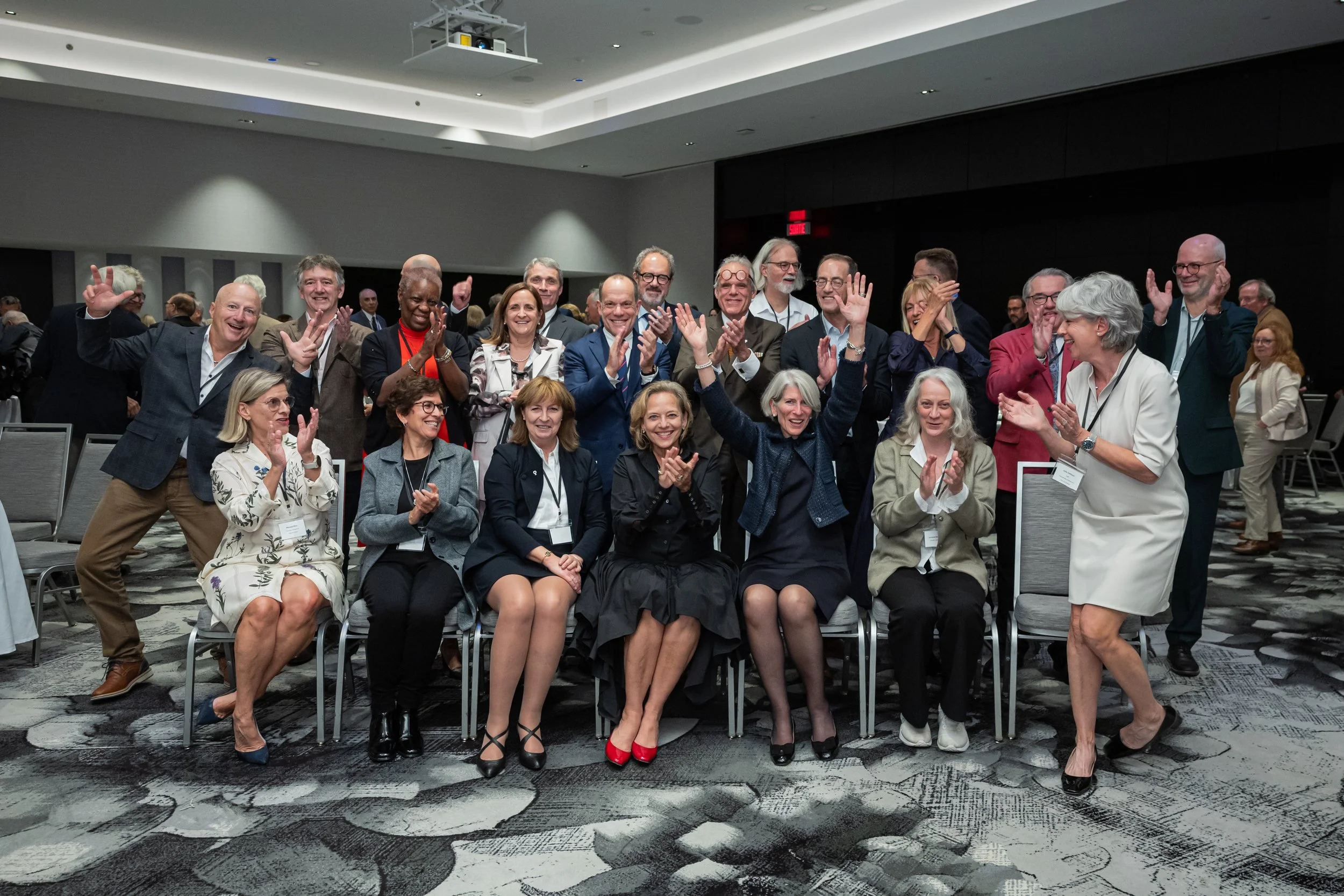
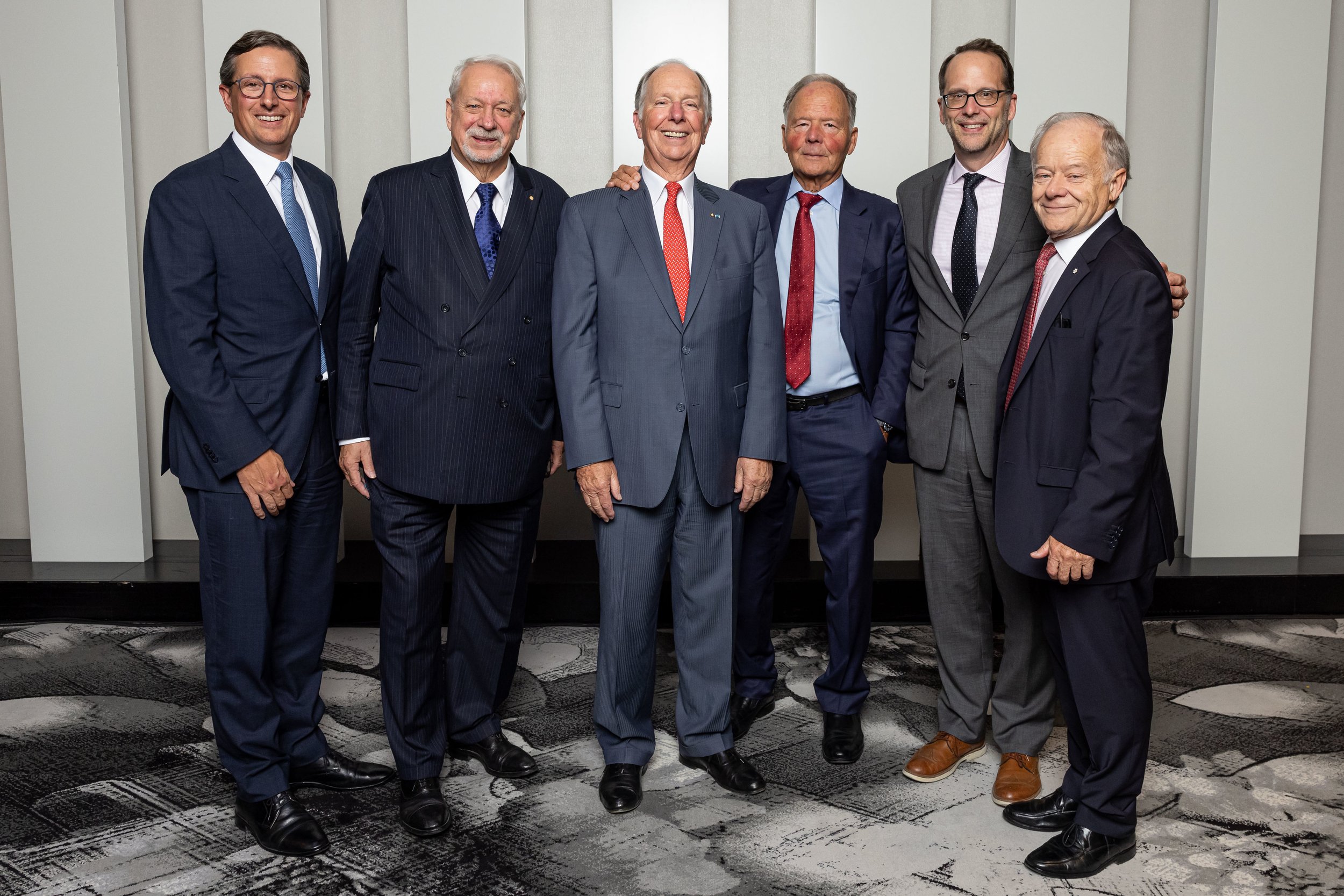
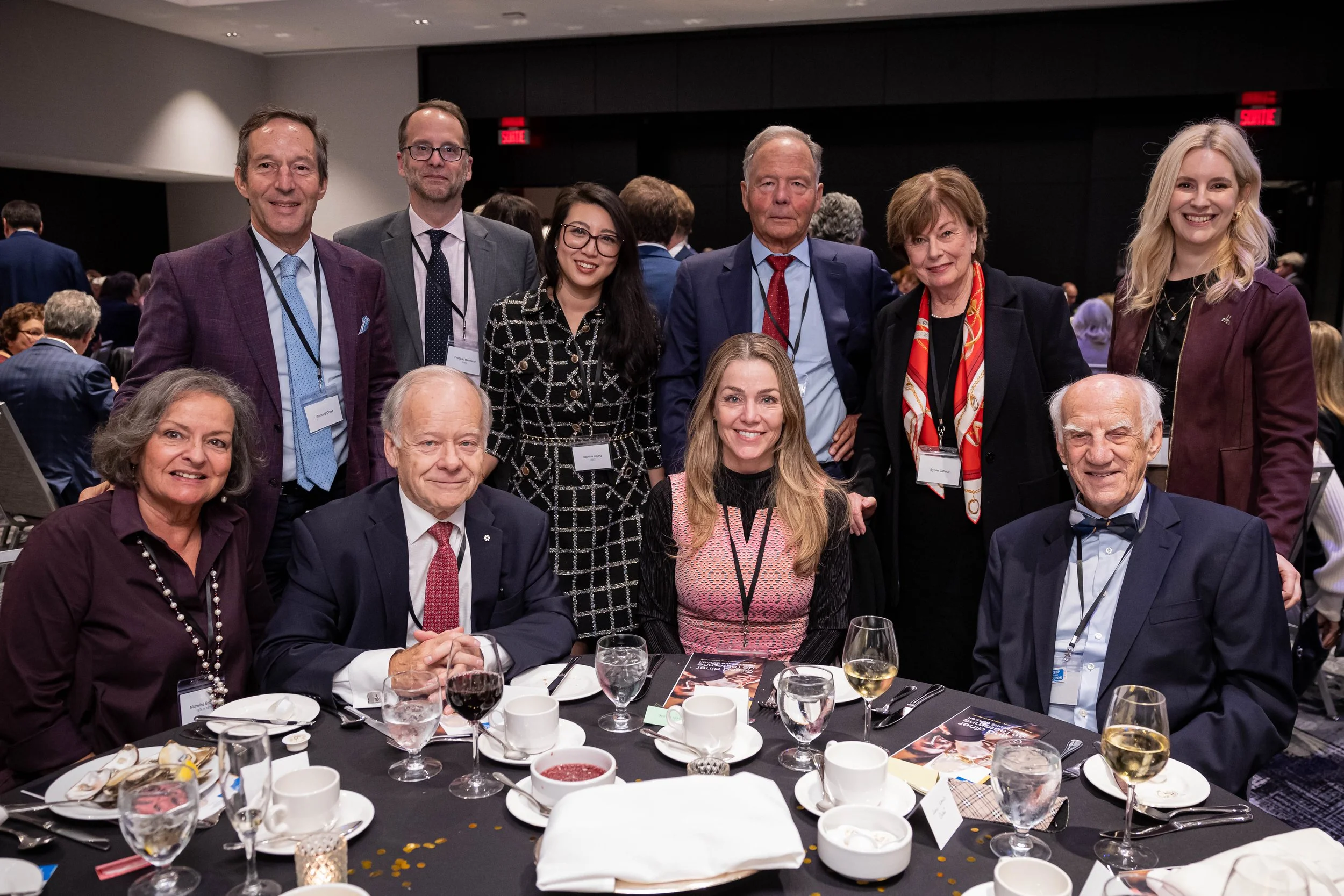
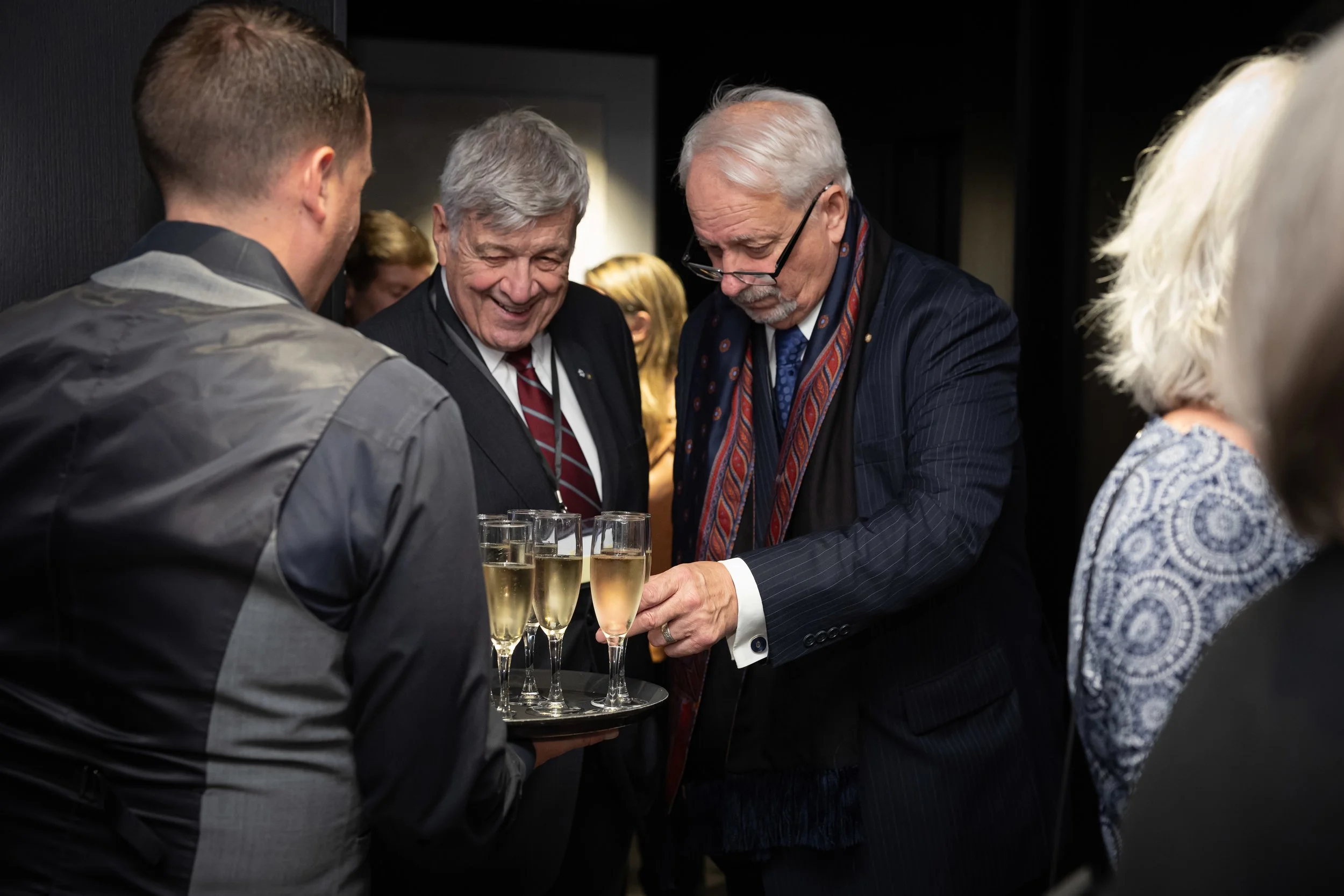
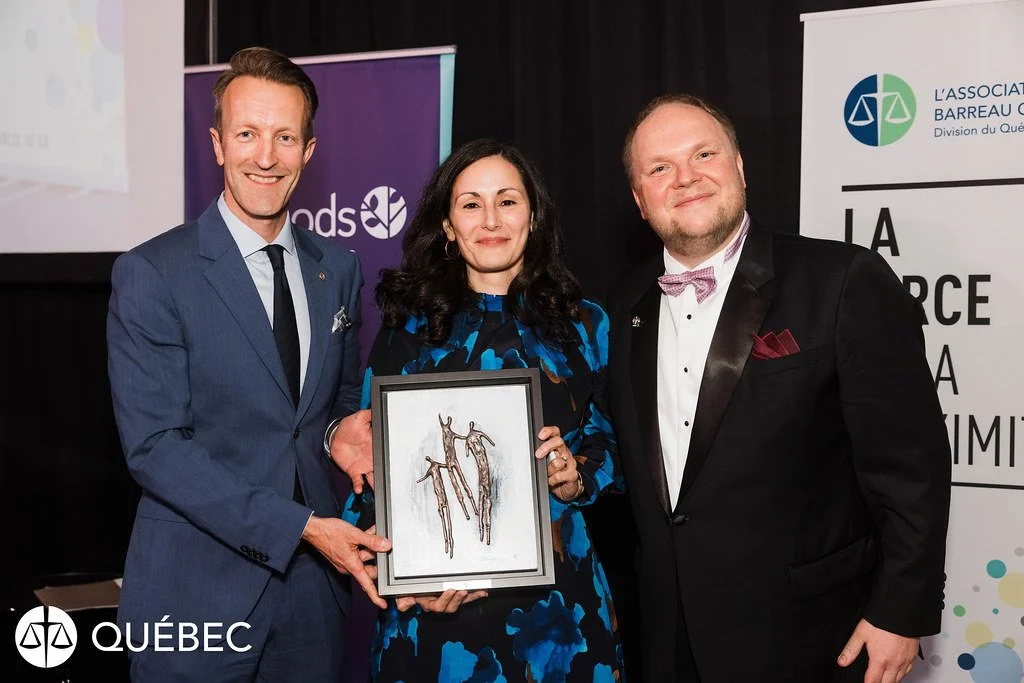
But look at them. Do they look like a gang of adversaries? [10]
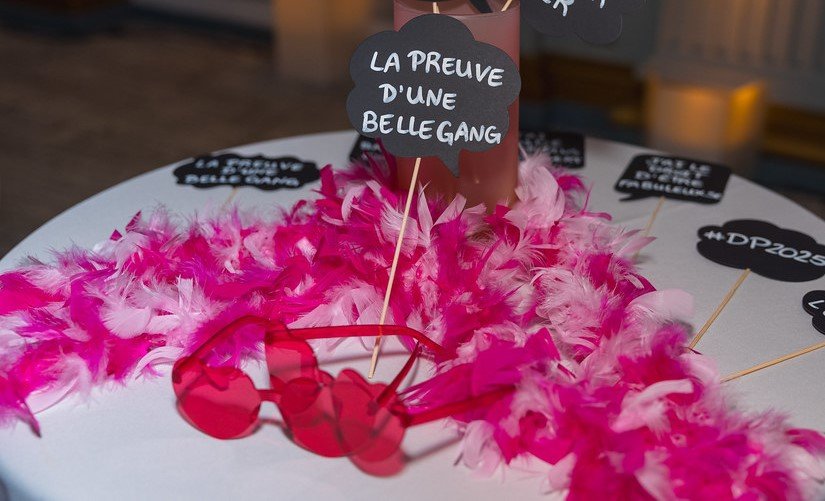
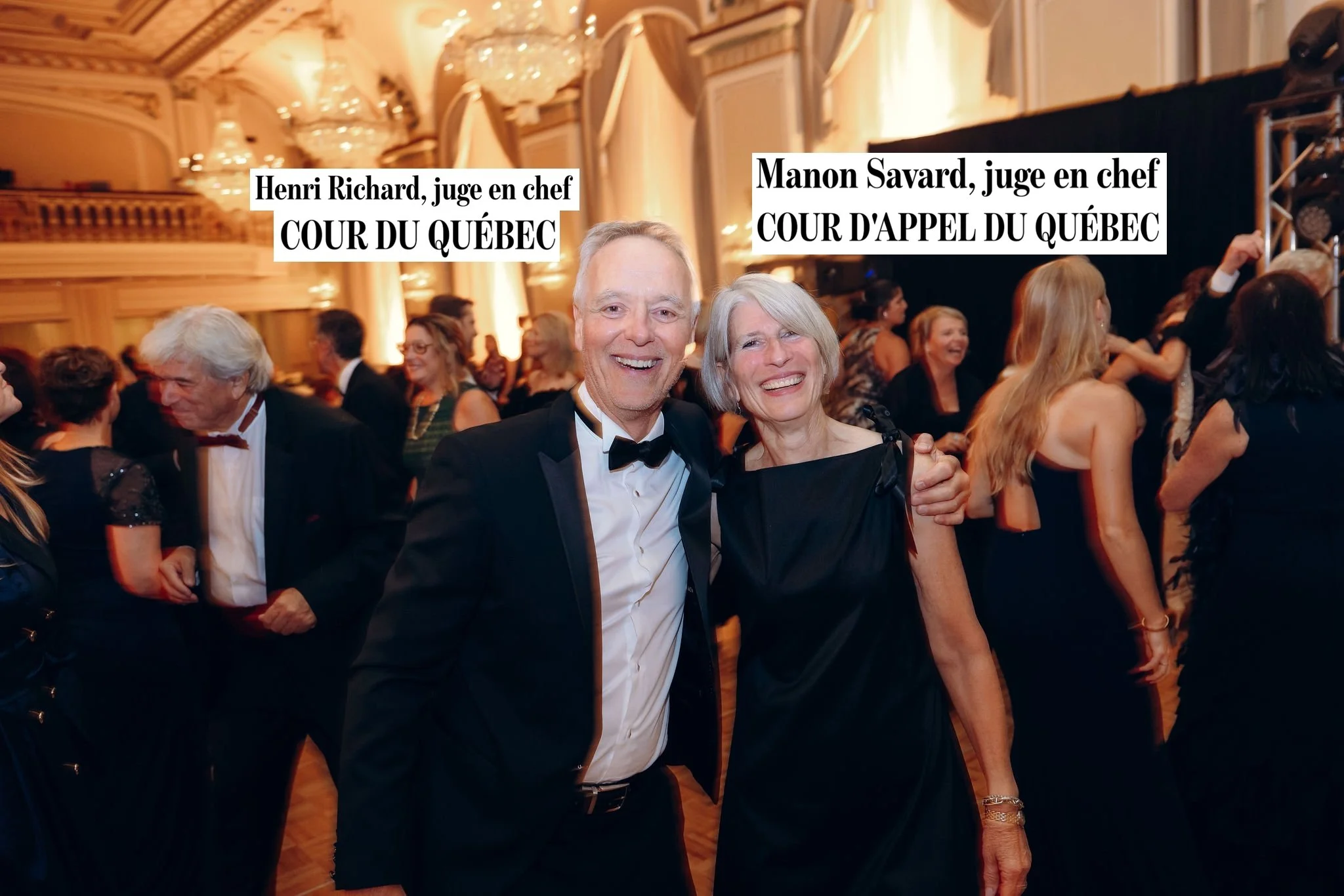
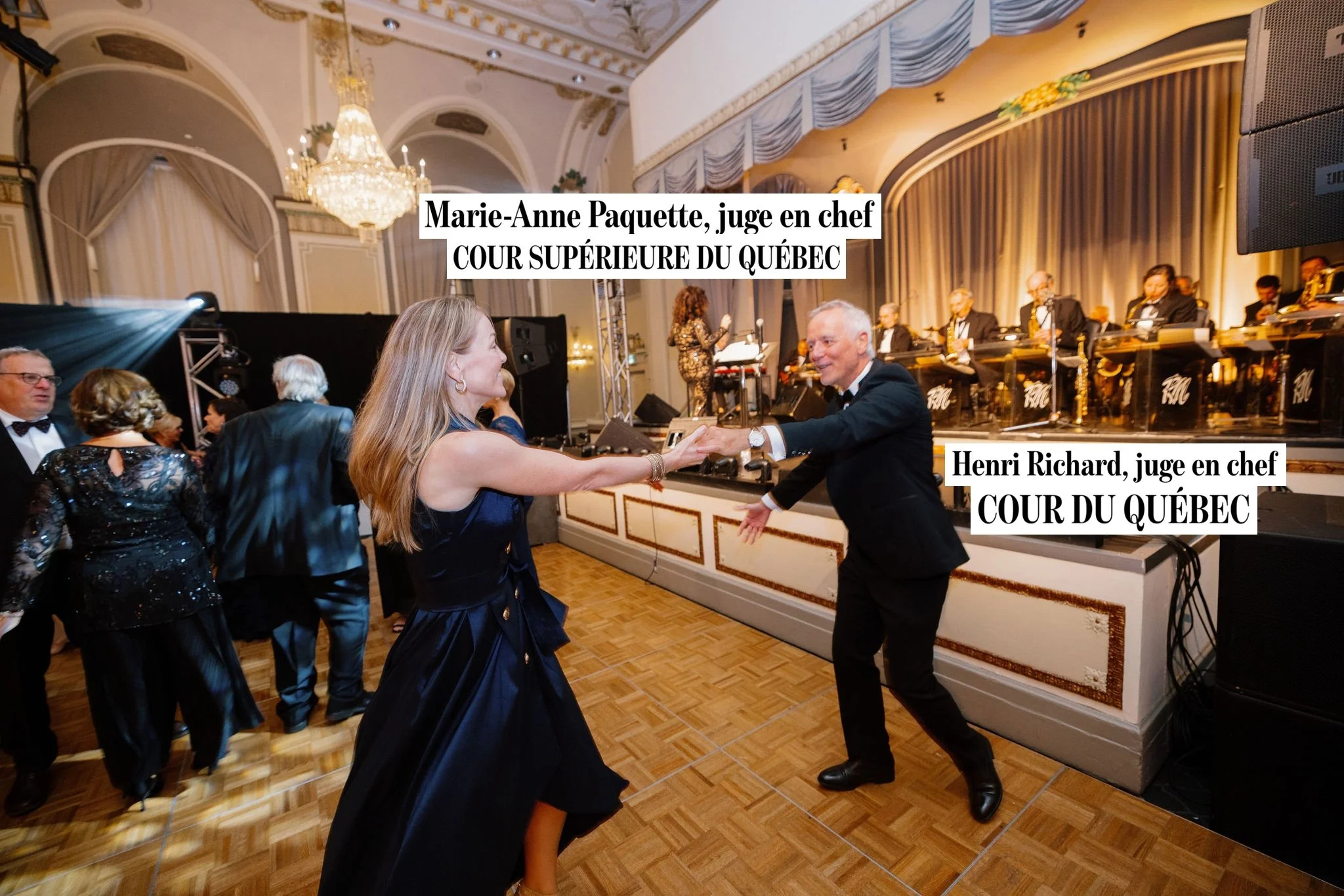
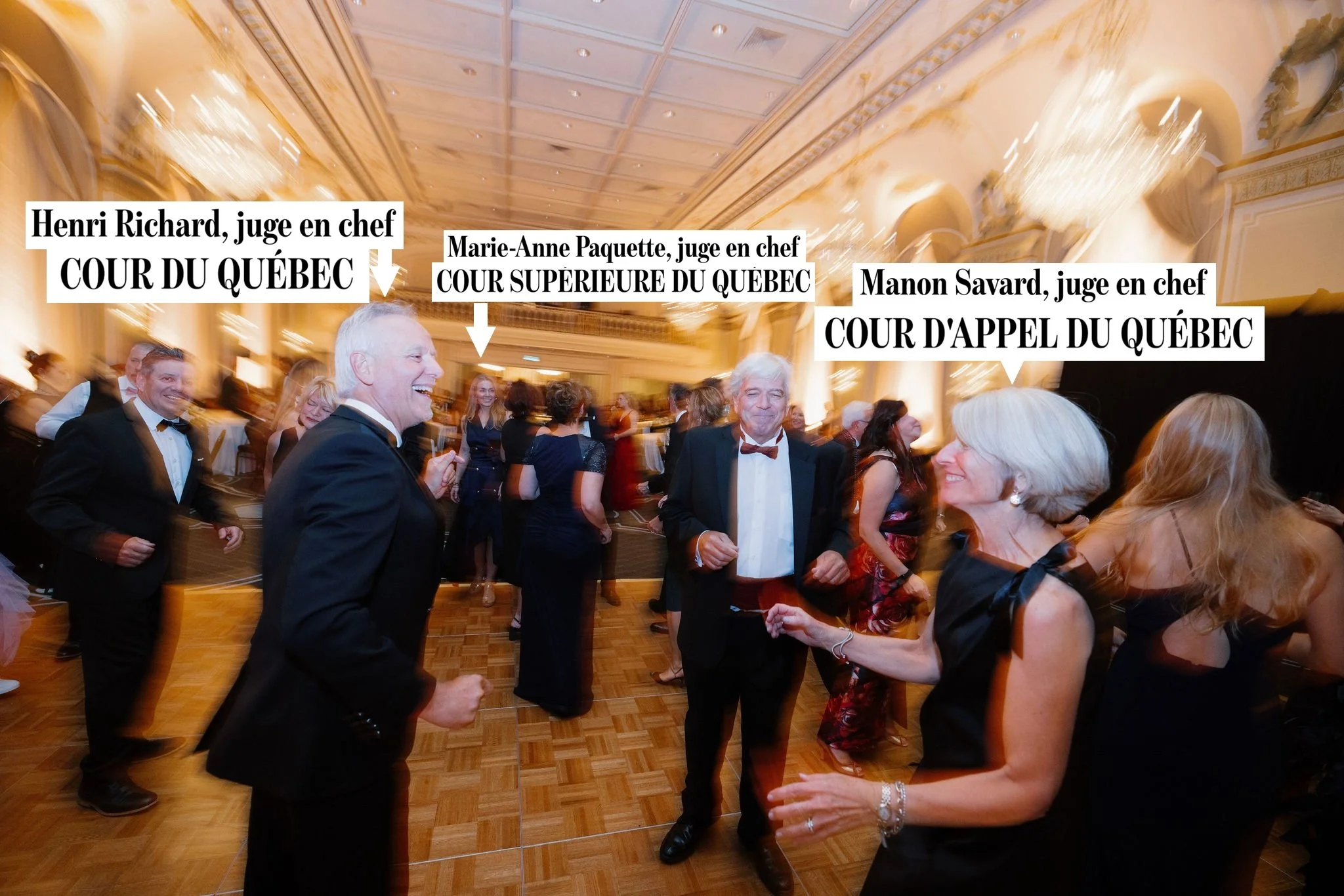
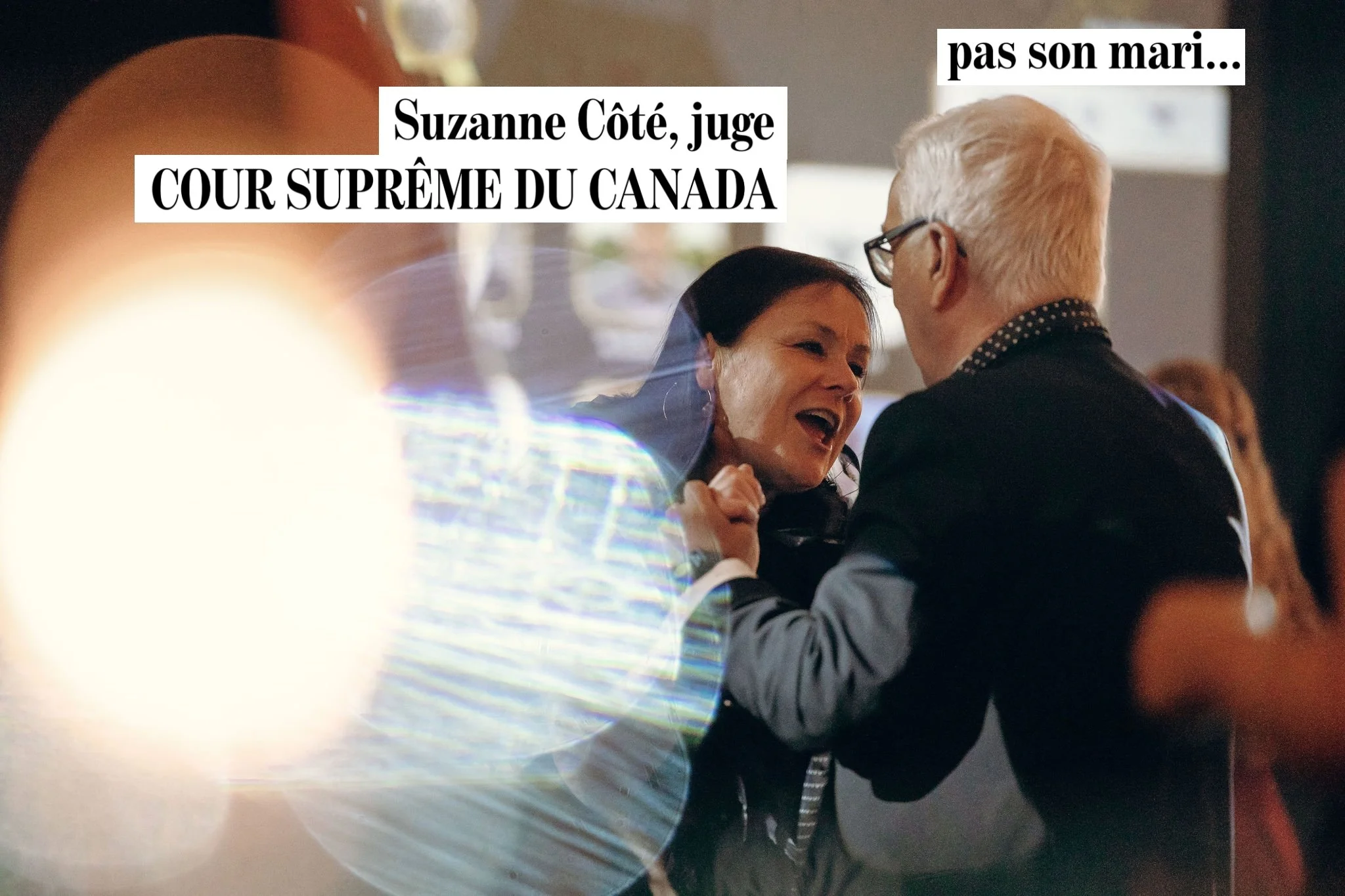
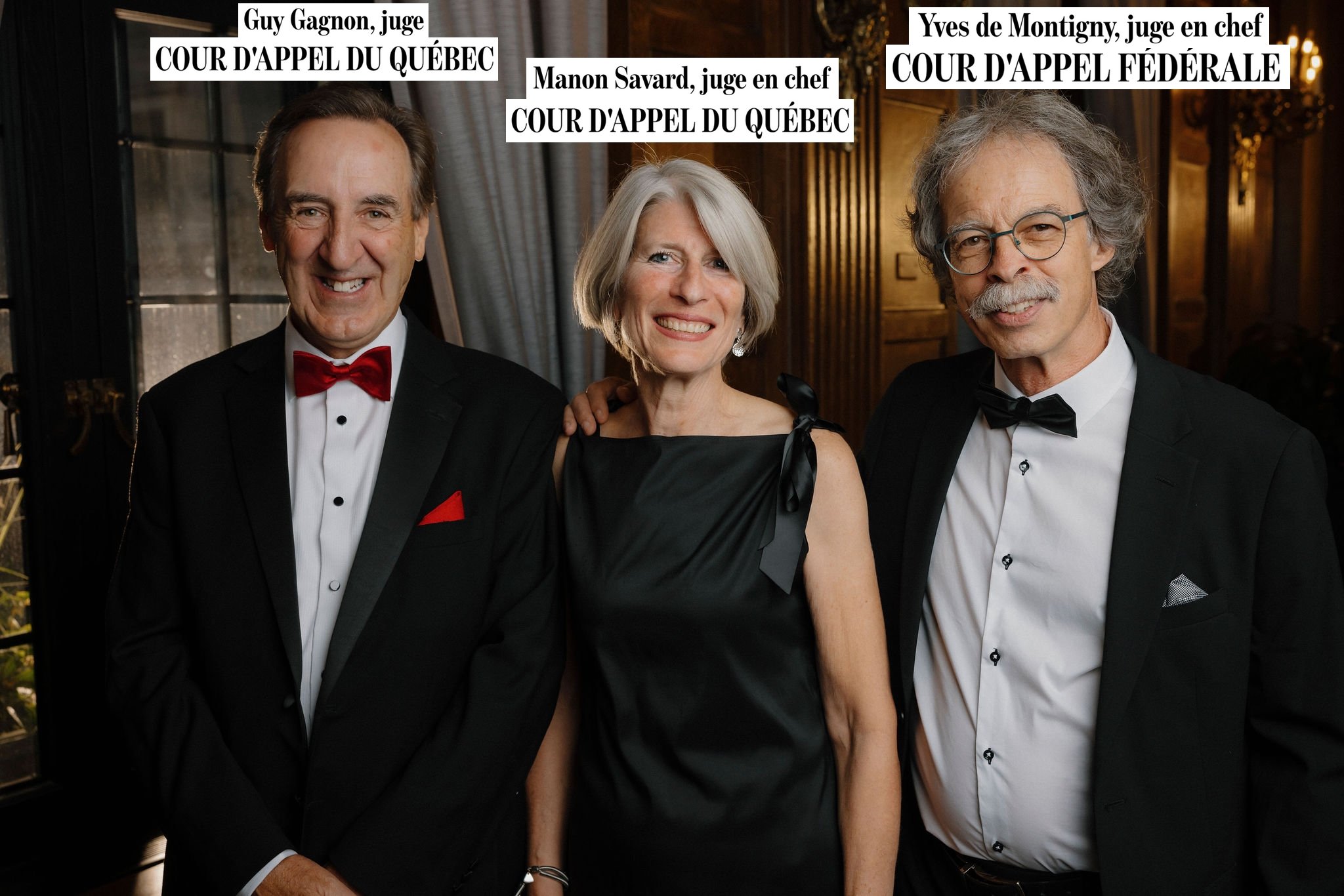
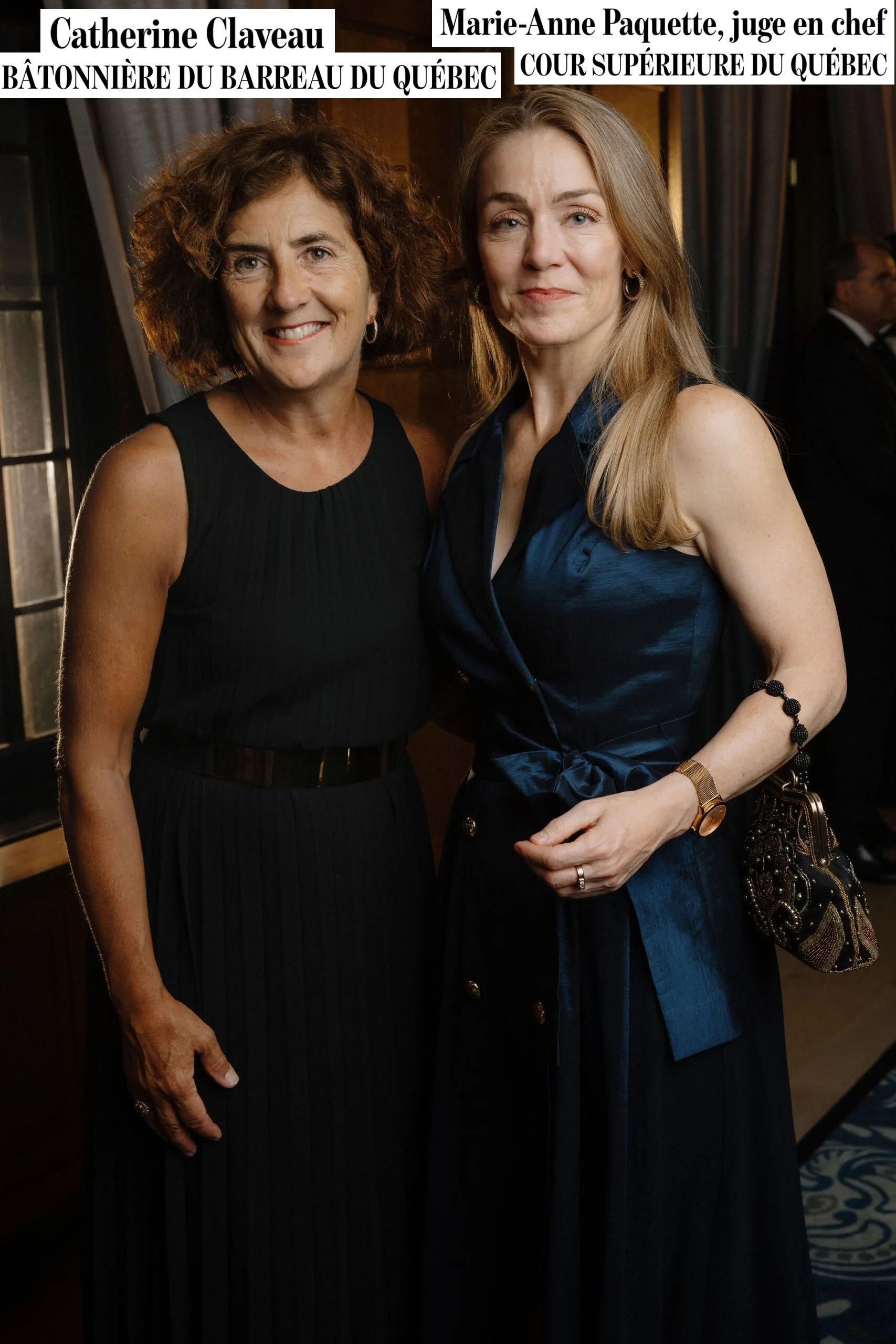

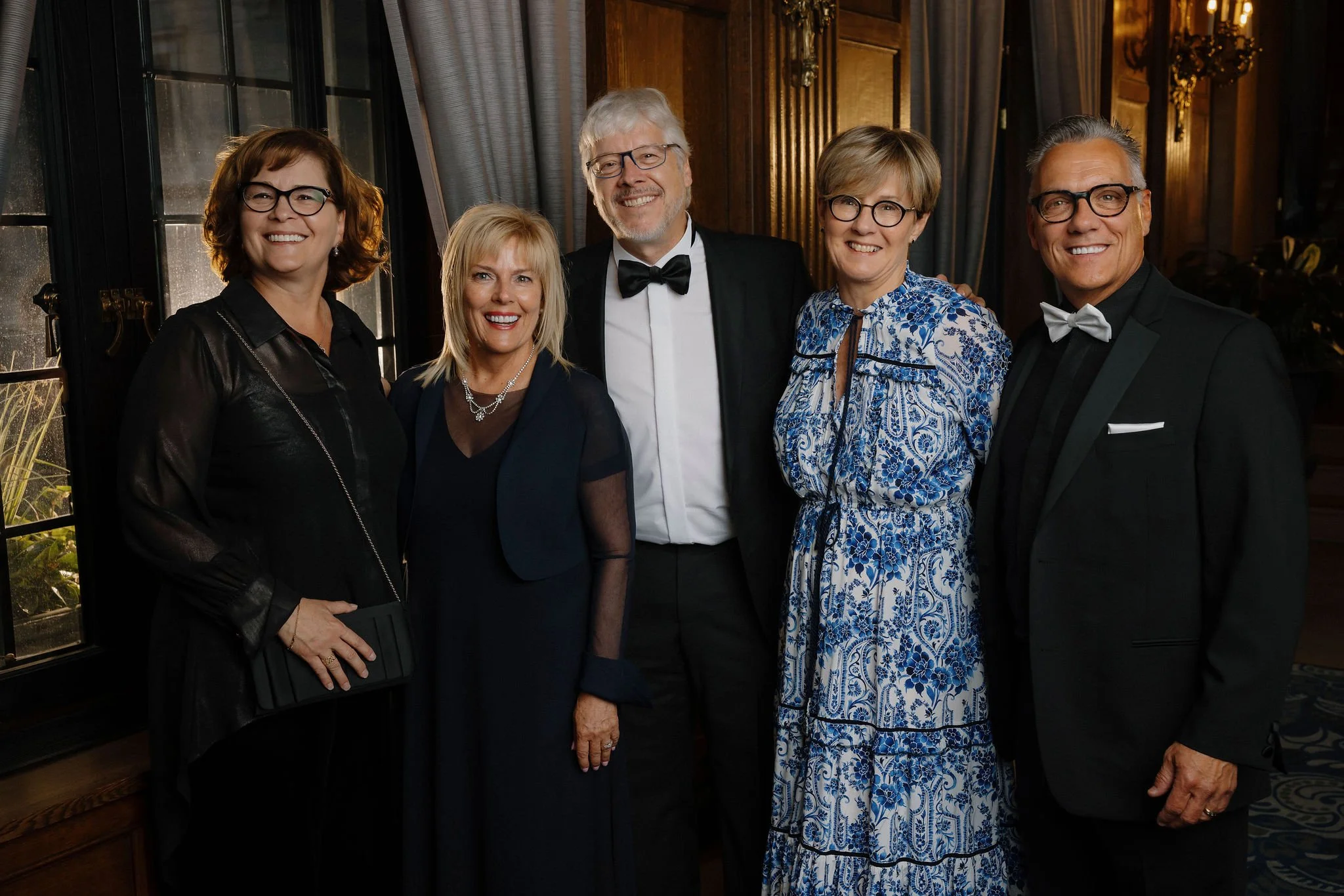











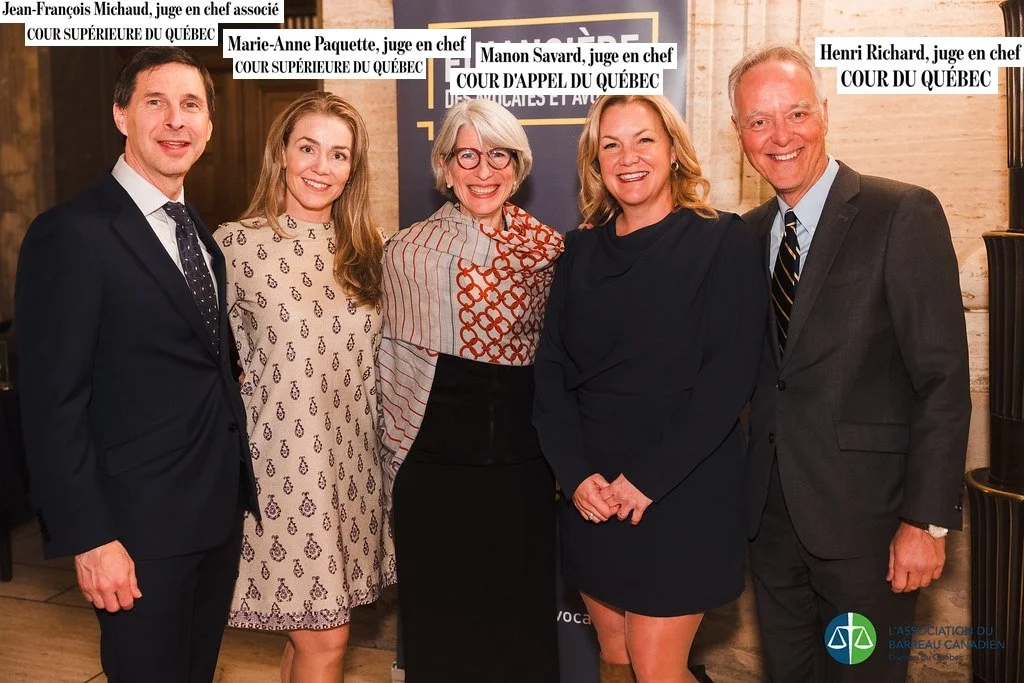
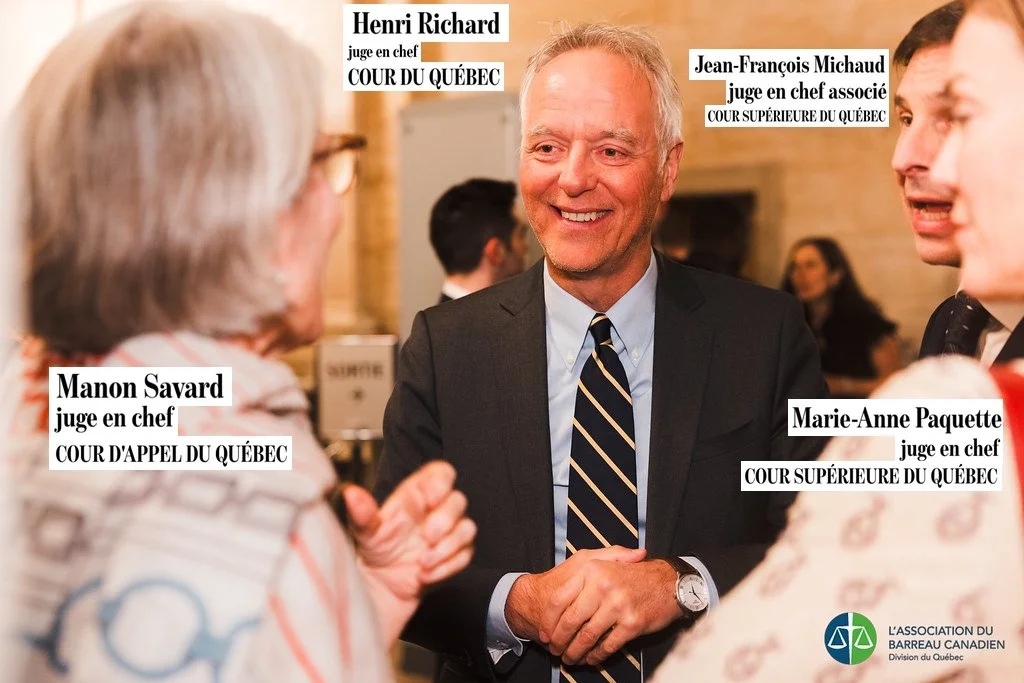
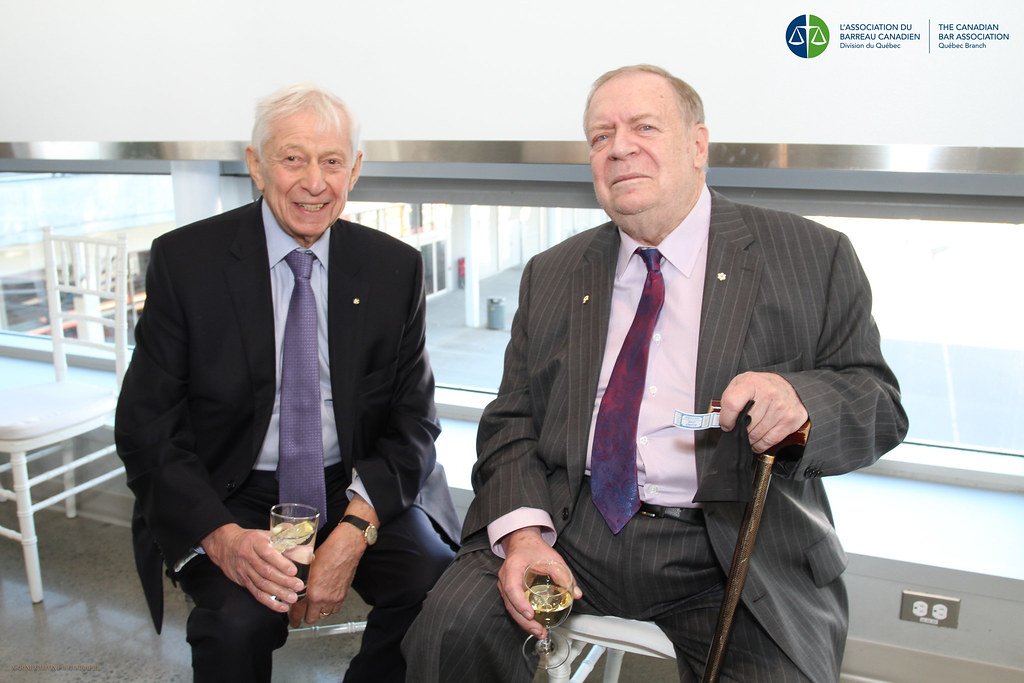
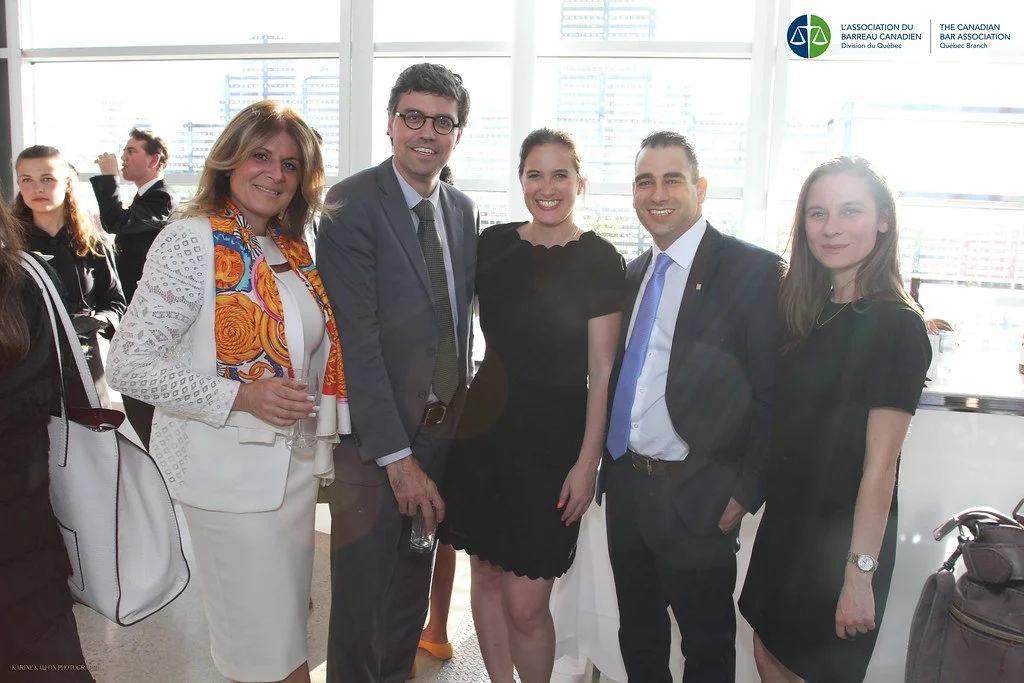
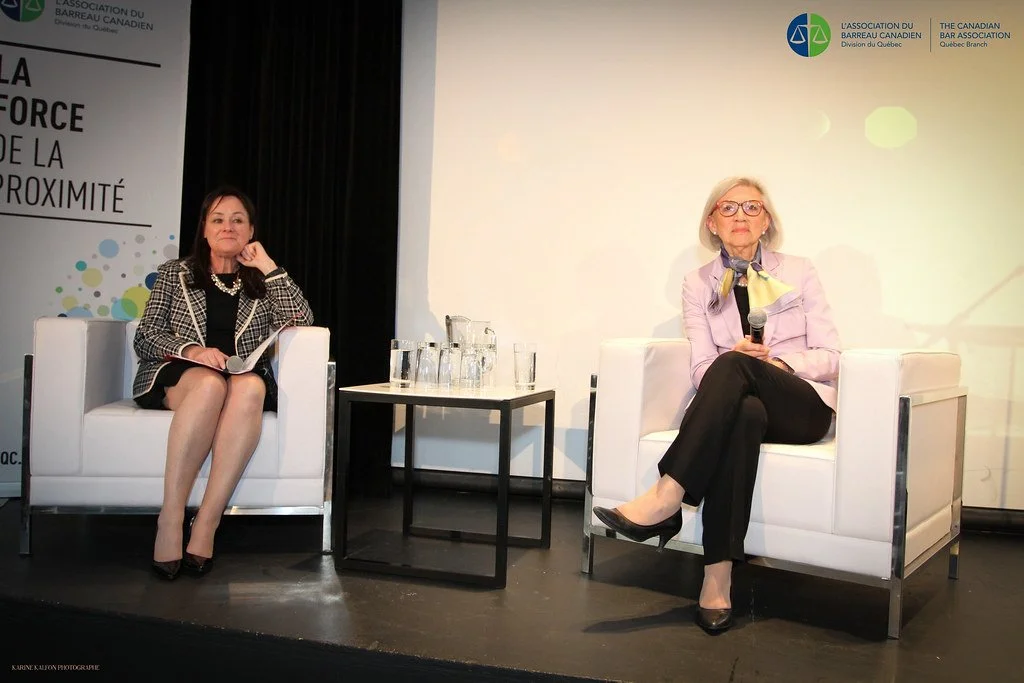



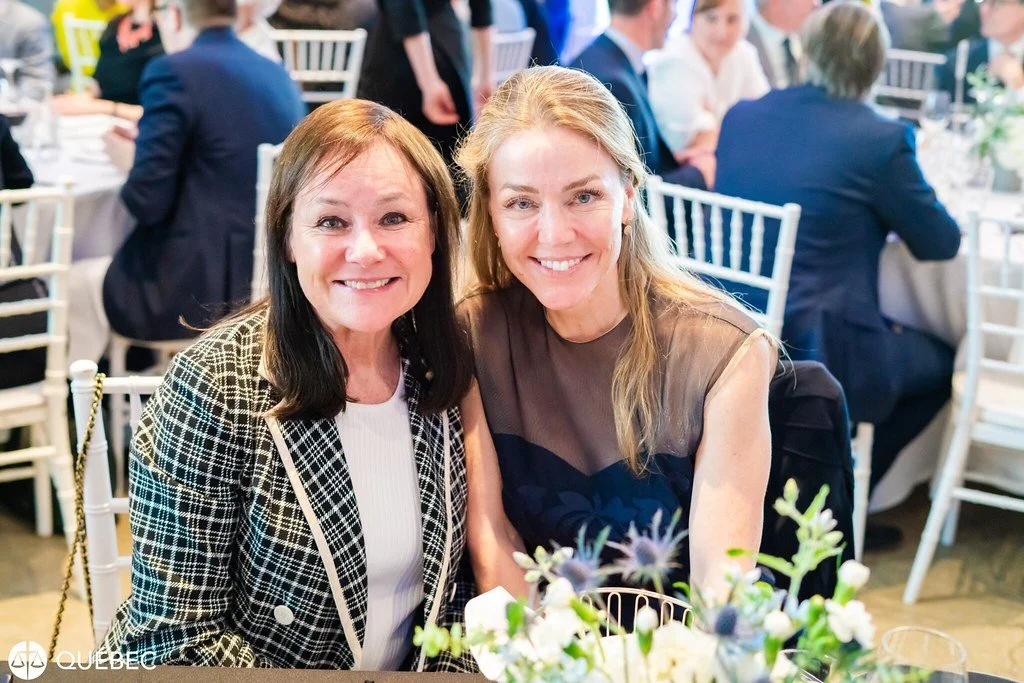

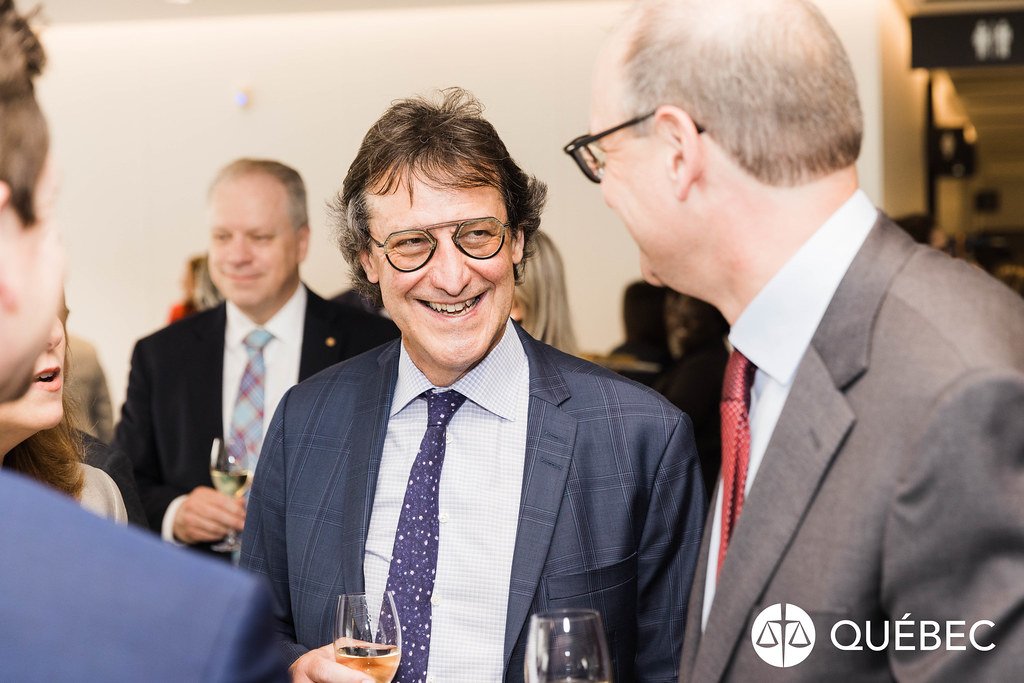
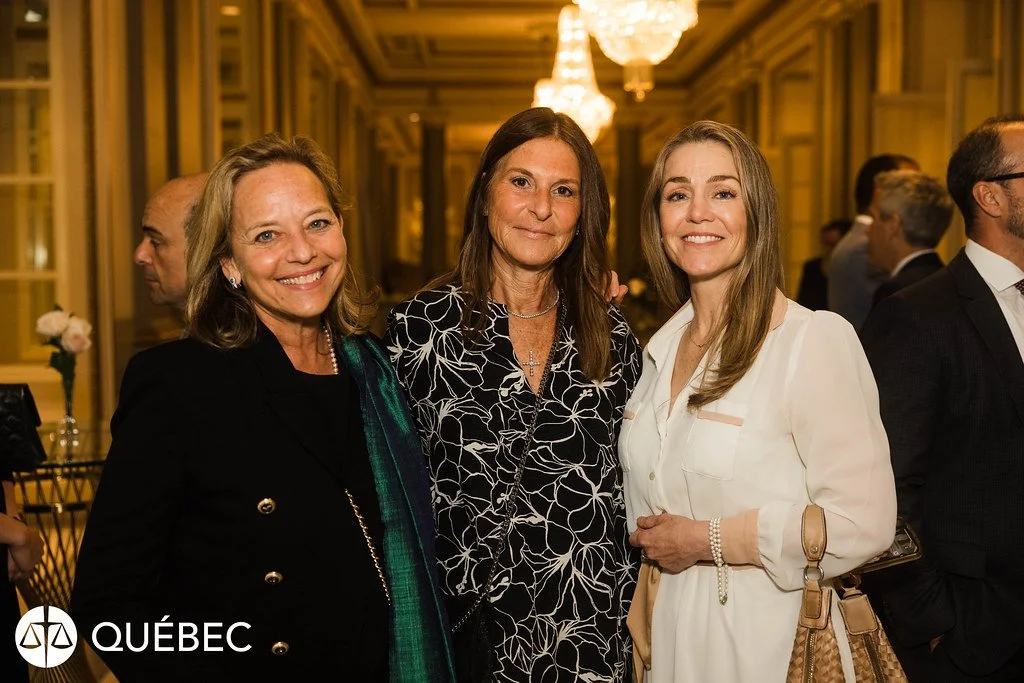
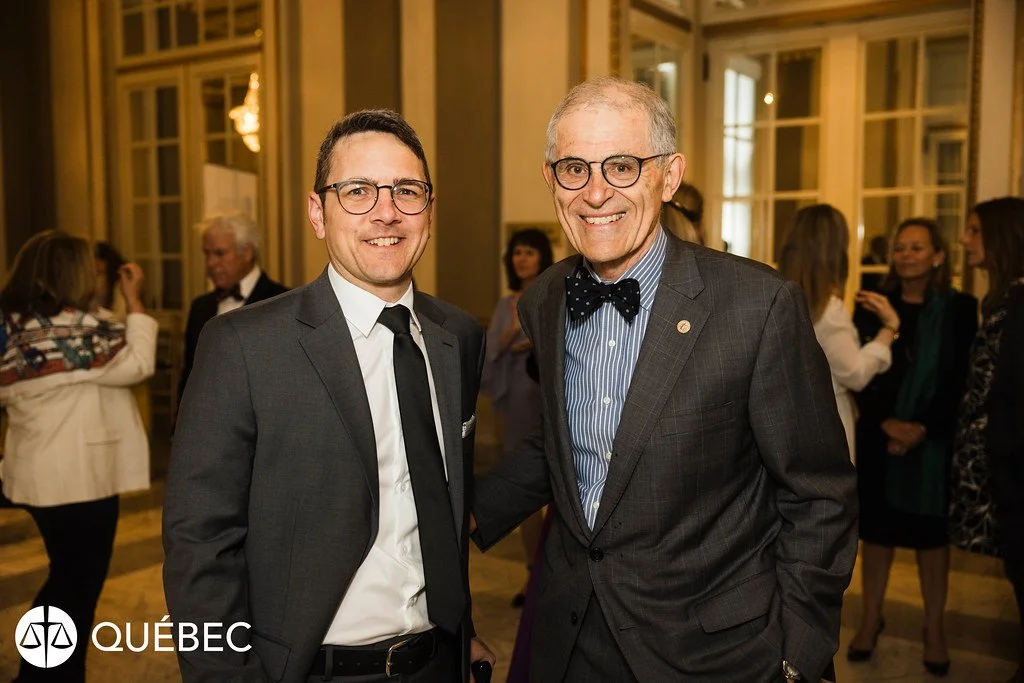

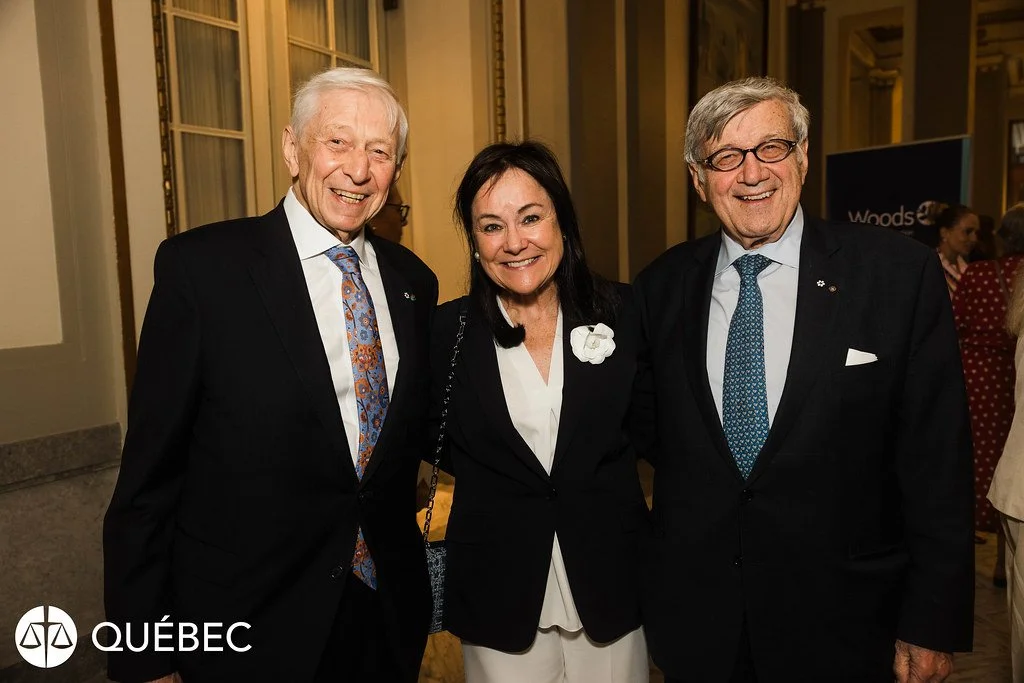
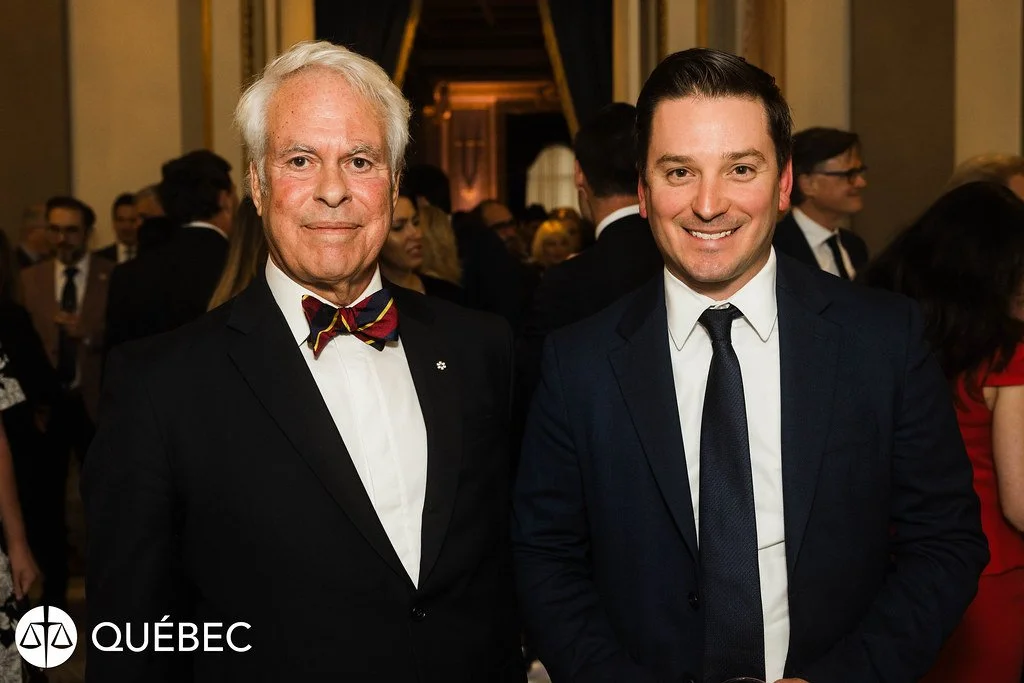
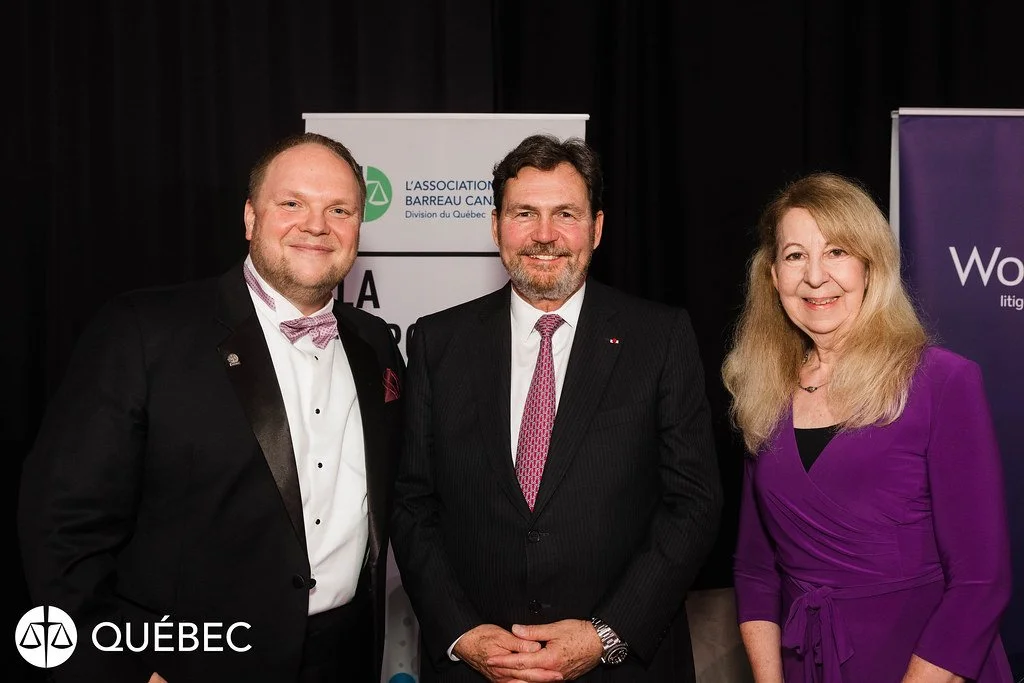
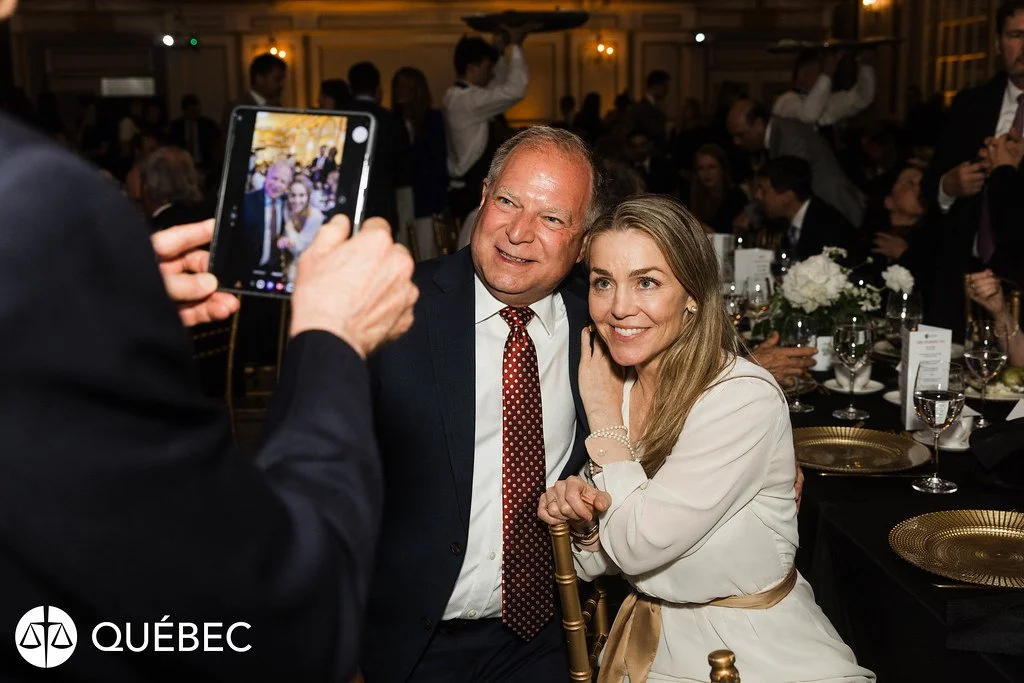
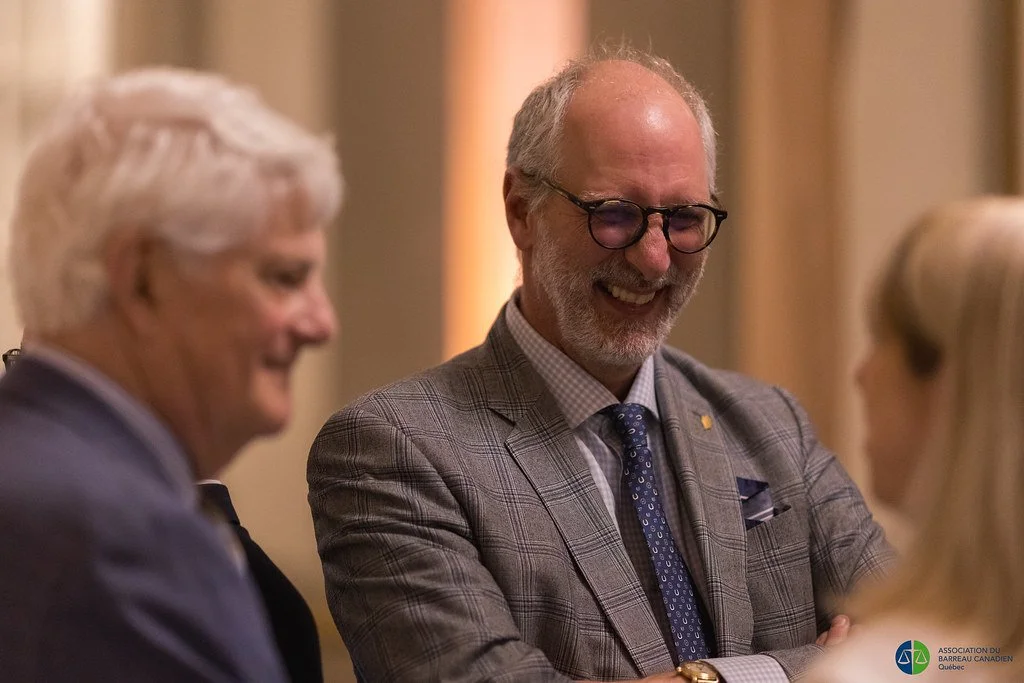
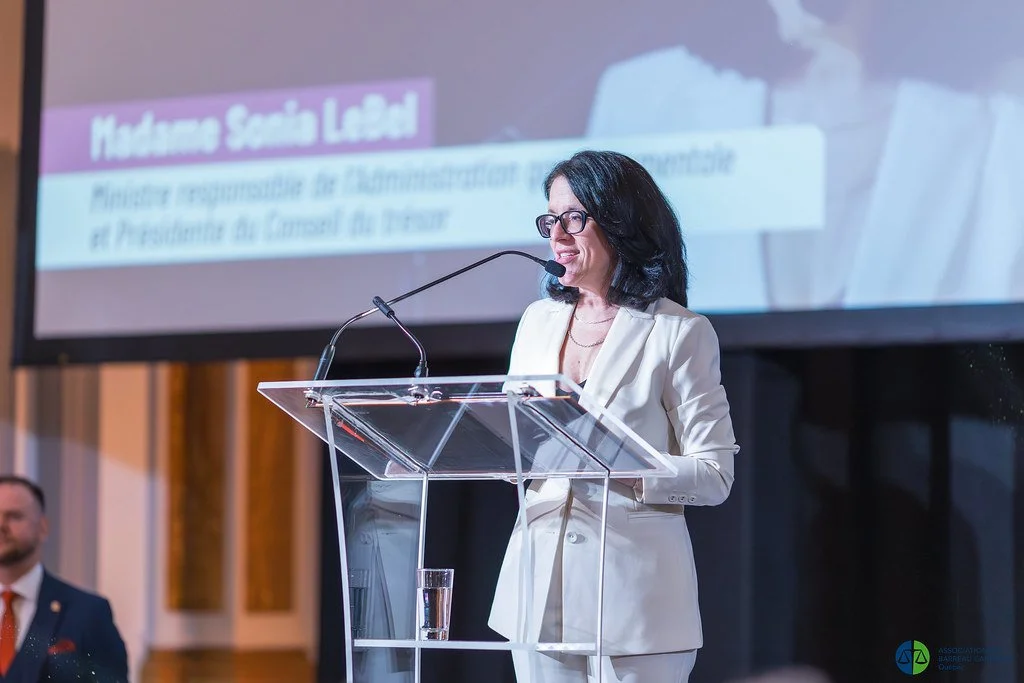
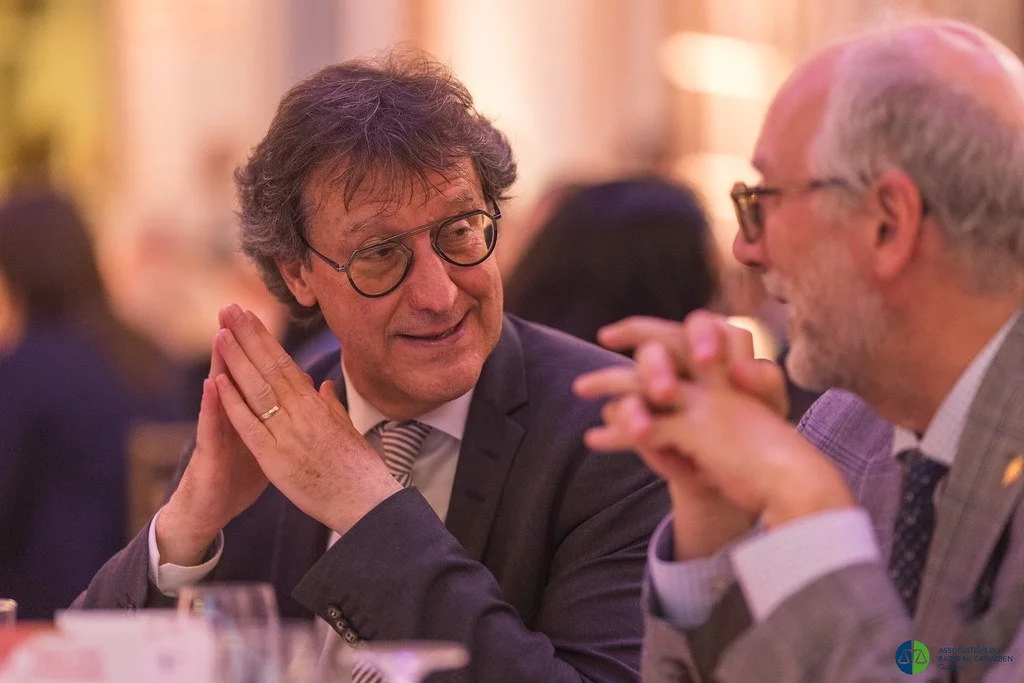



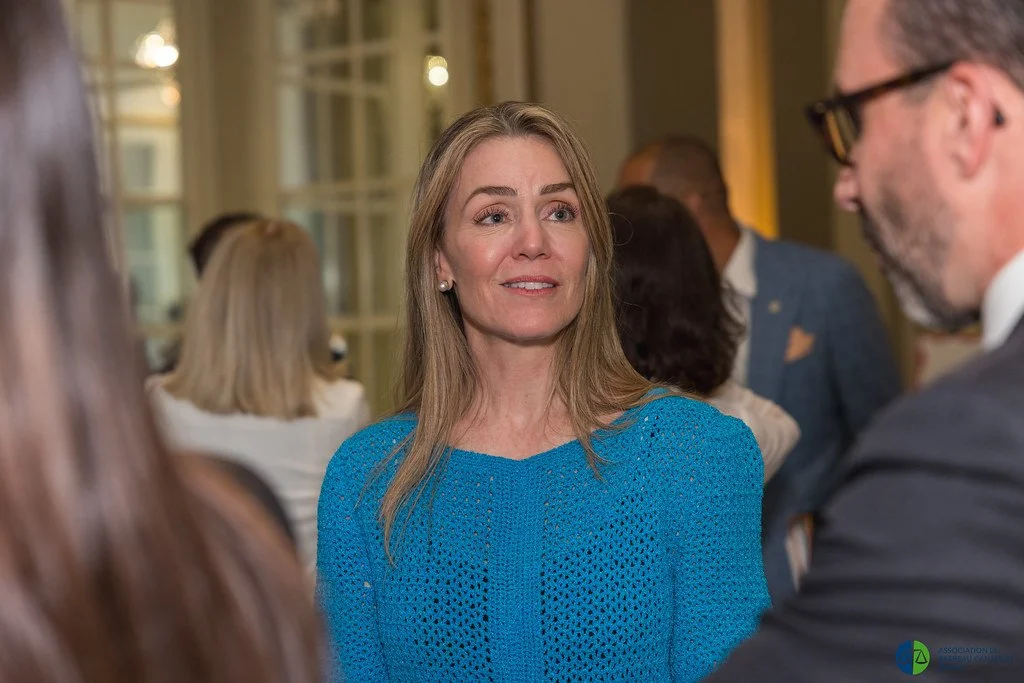


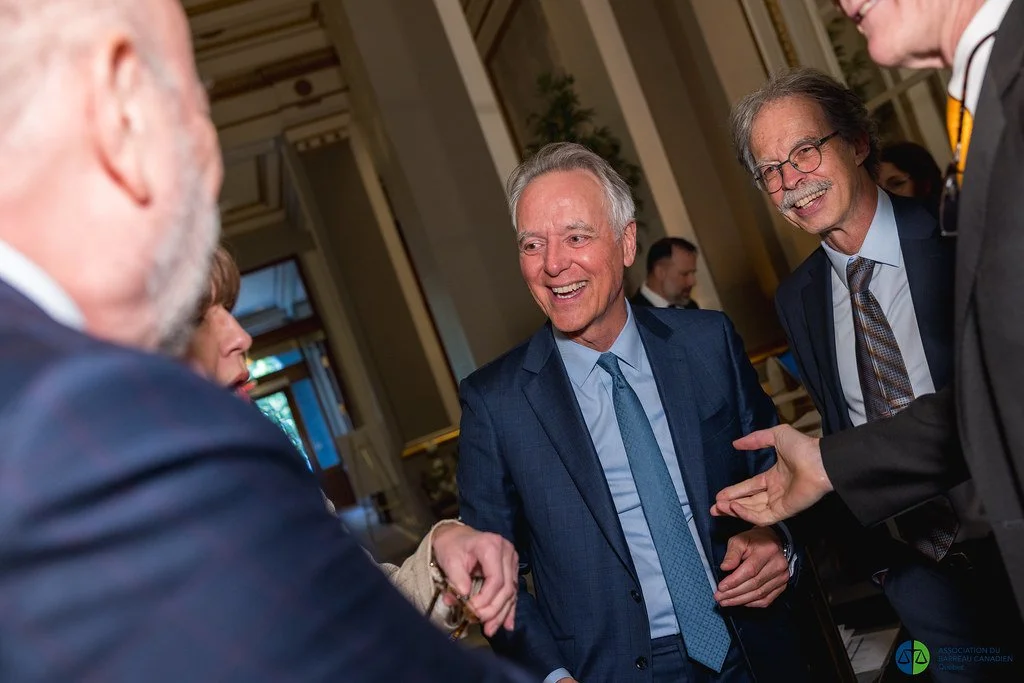
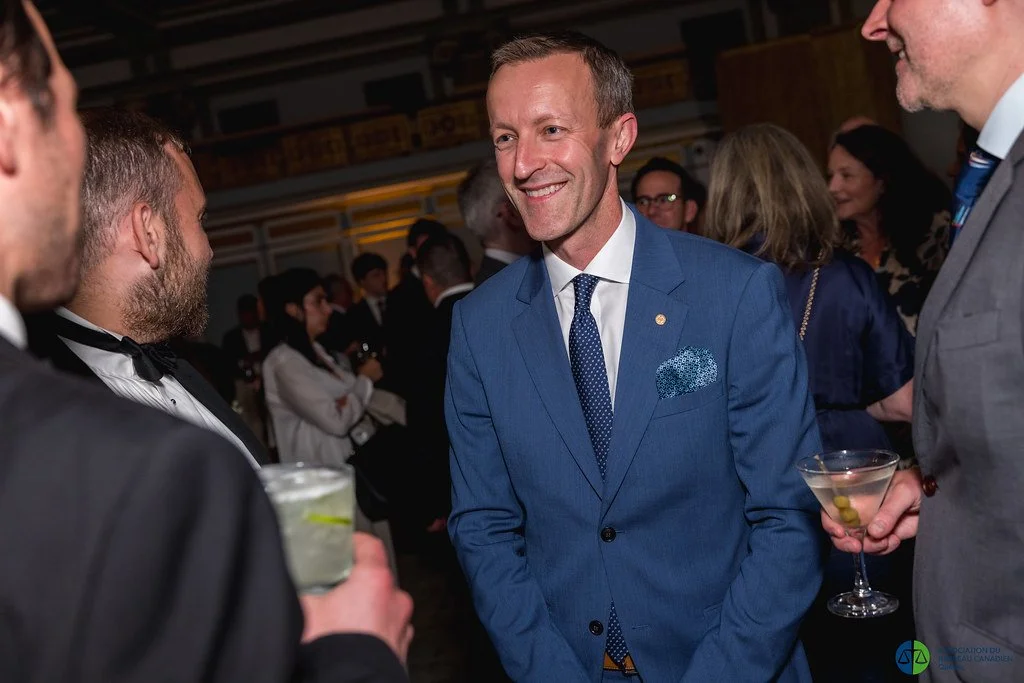
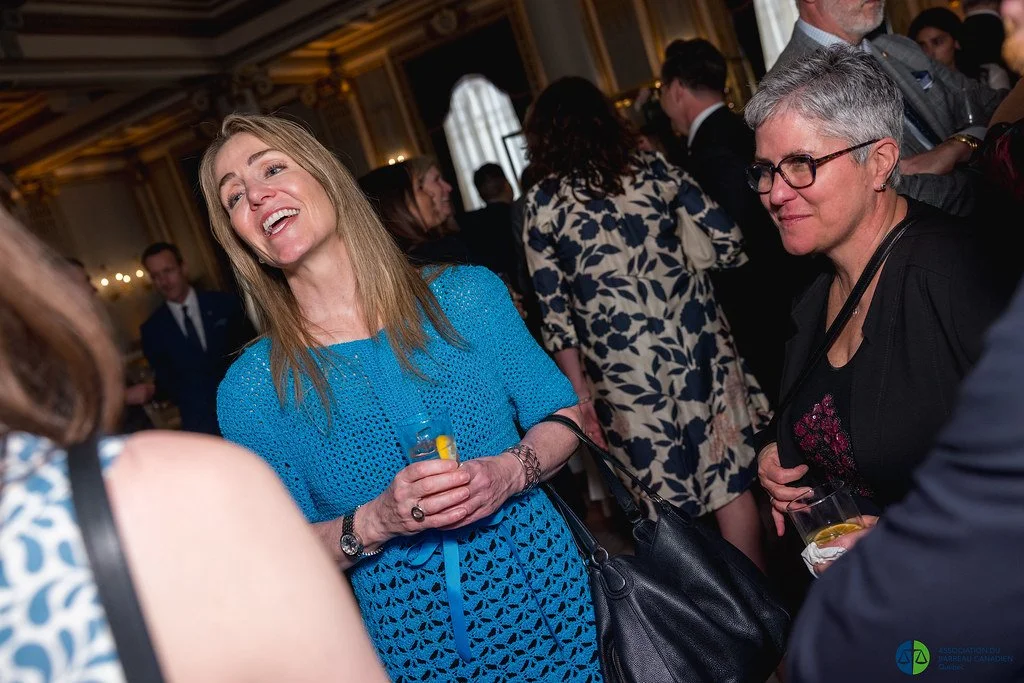
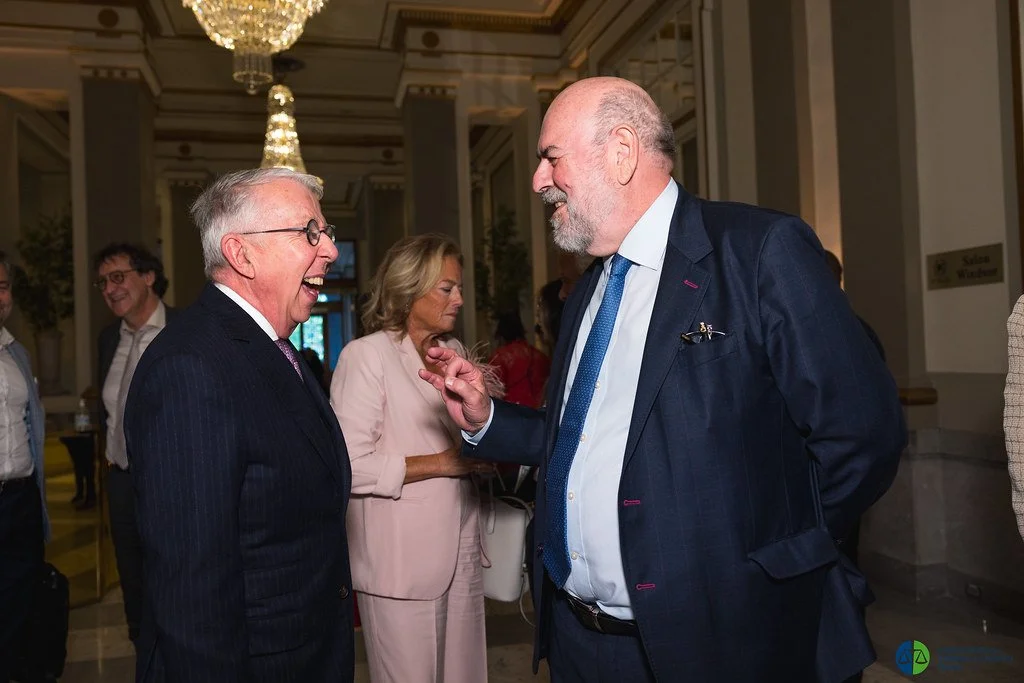
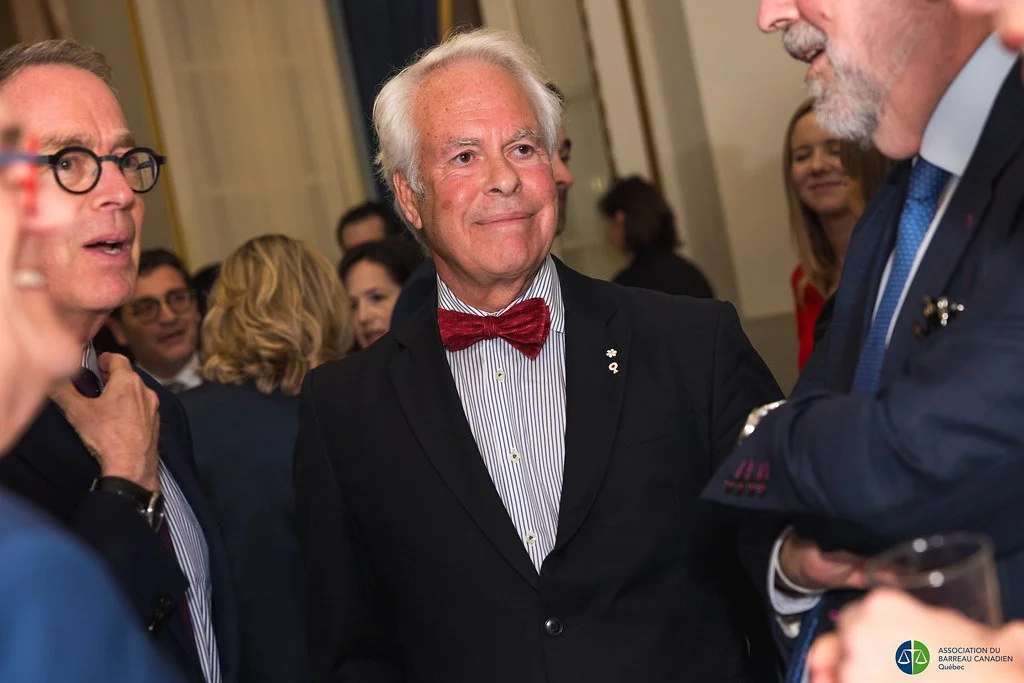
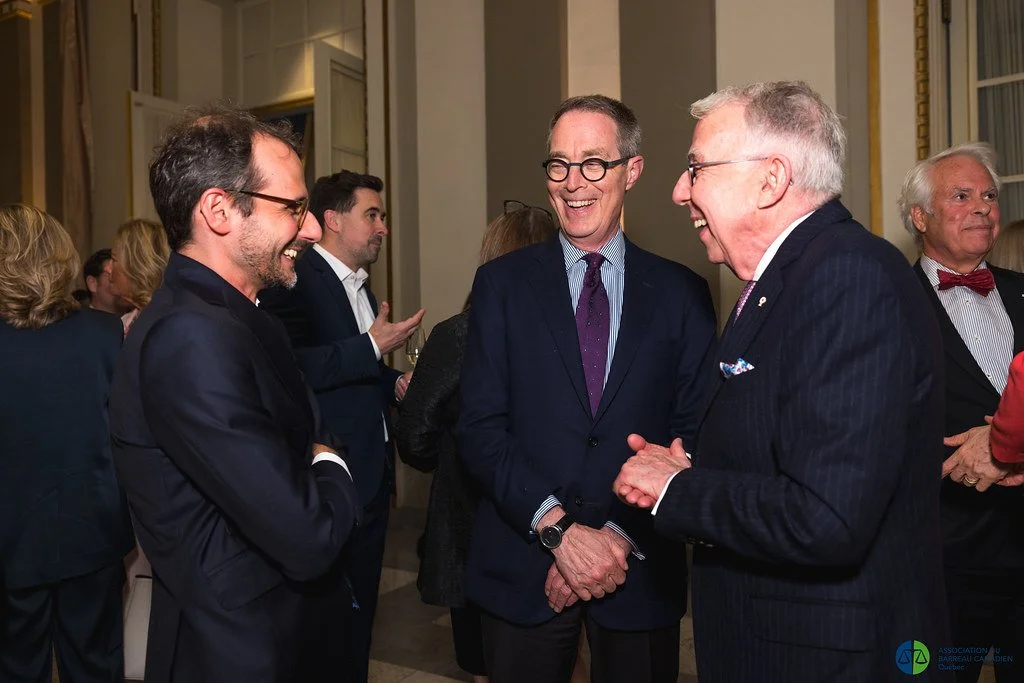


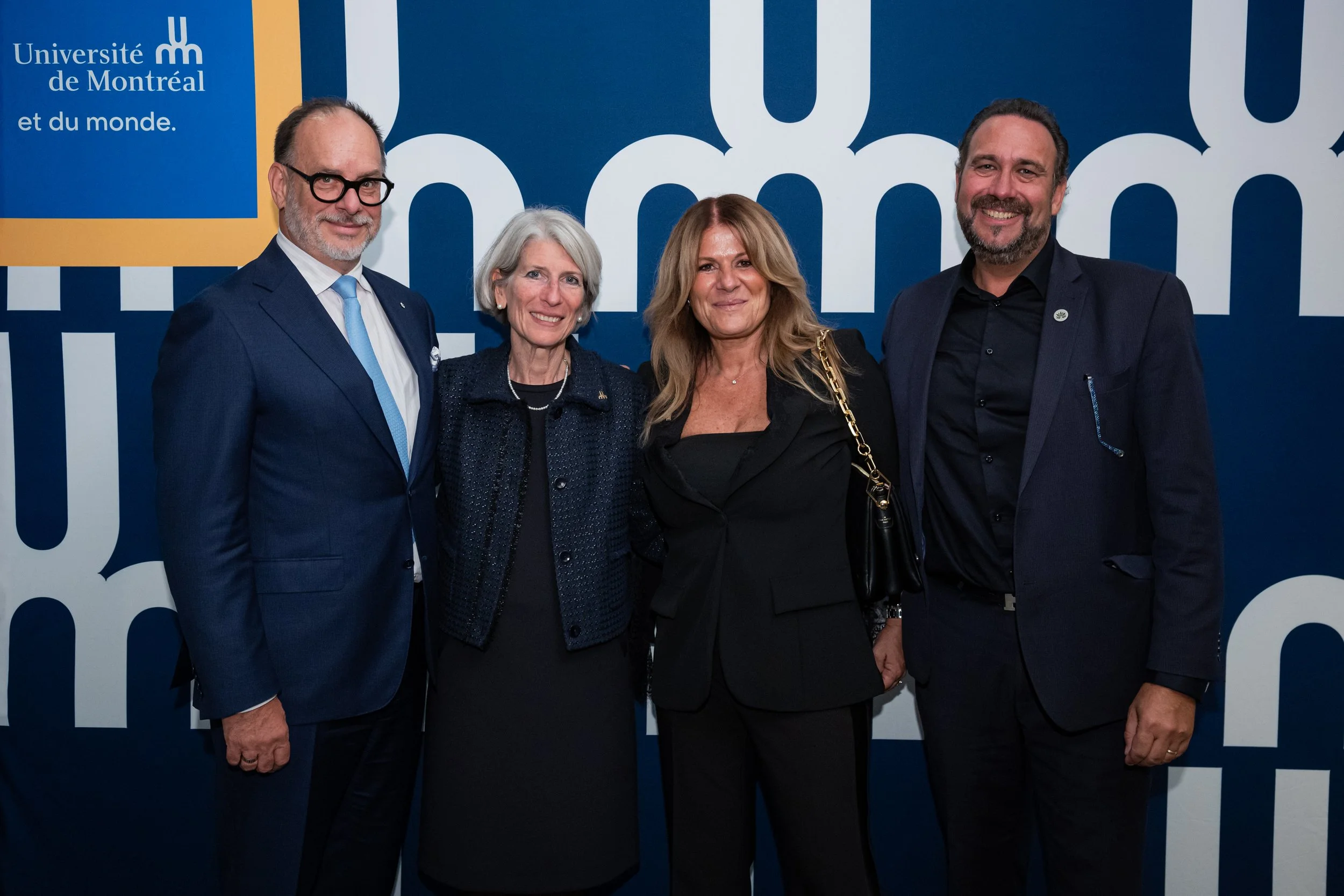
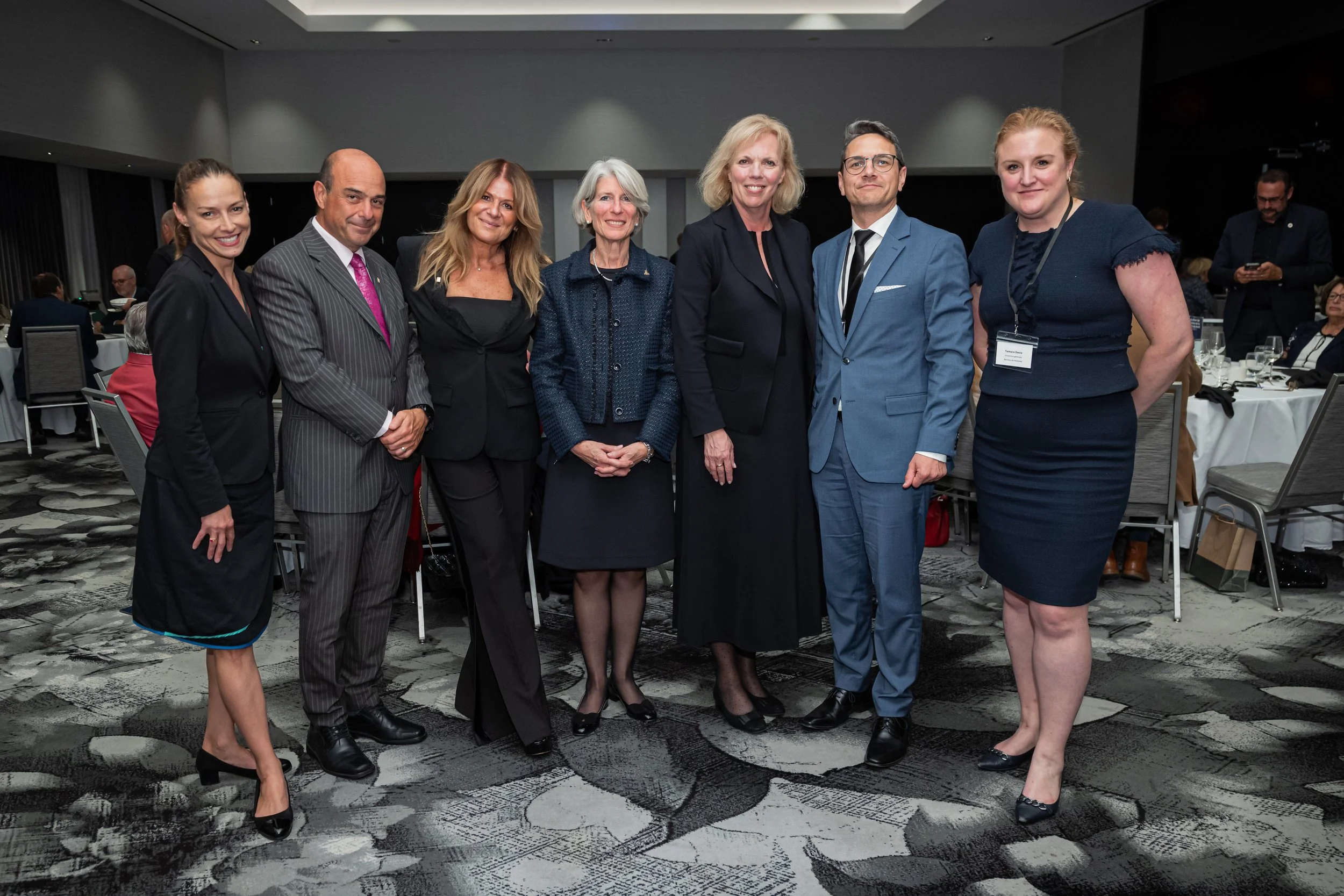
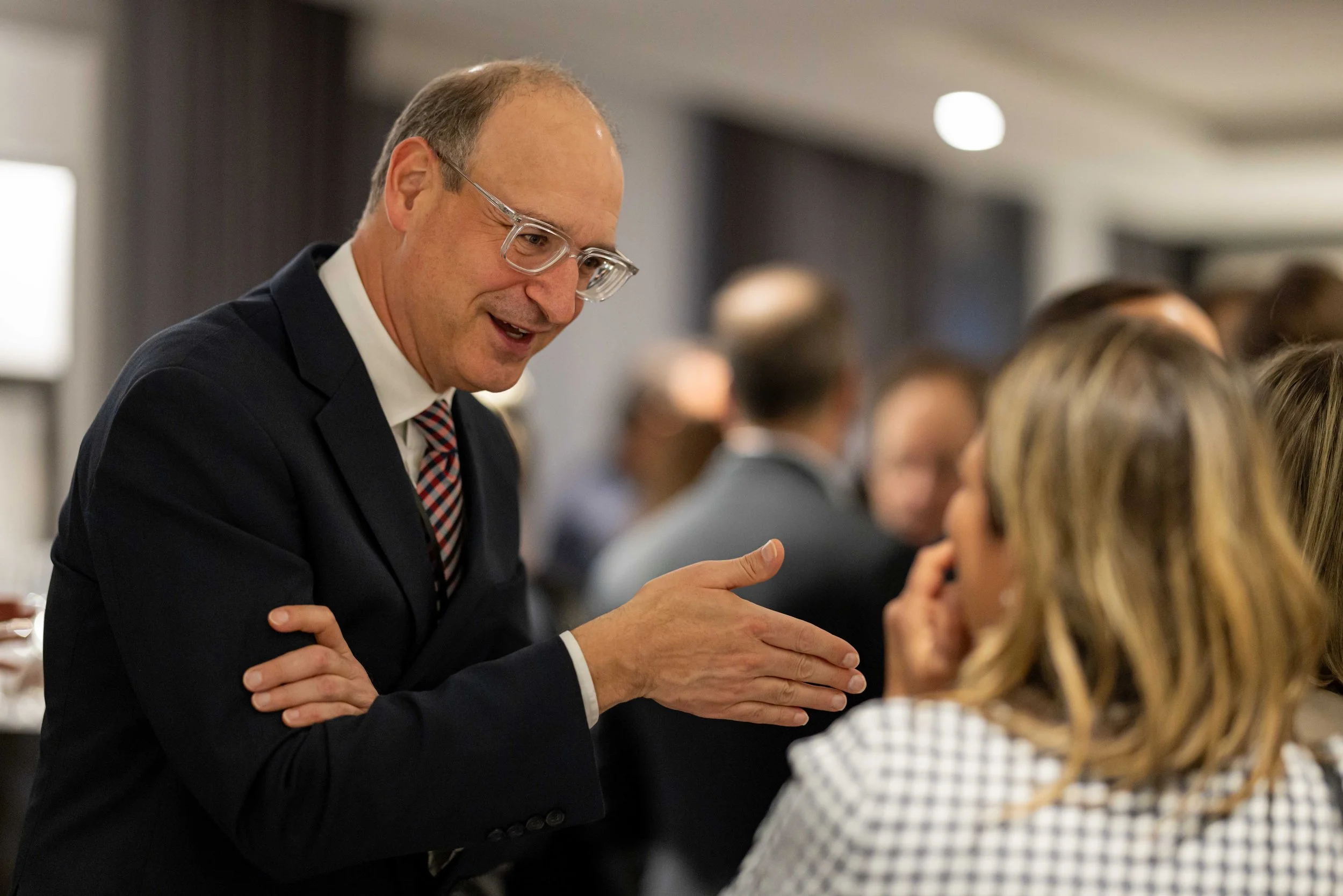

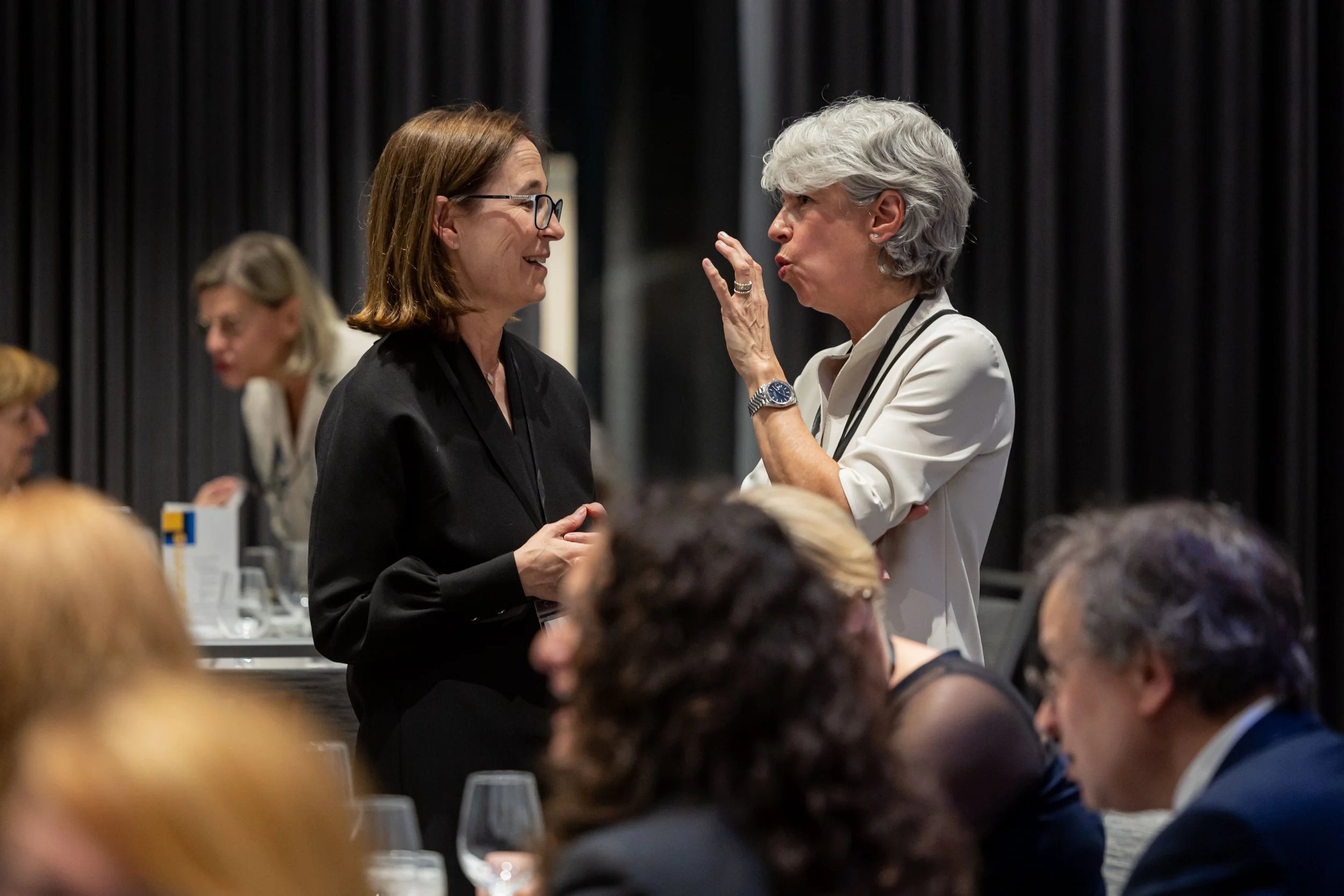





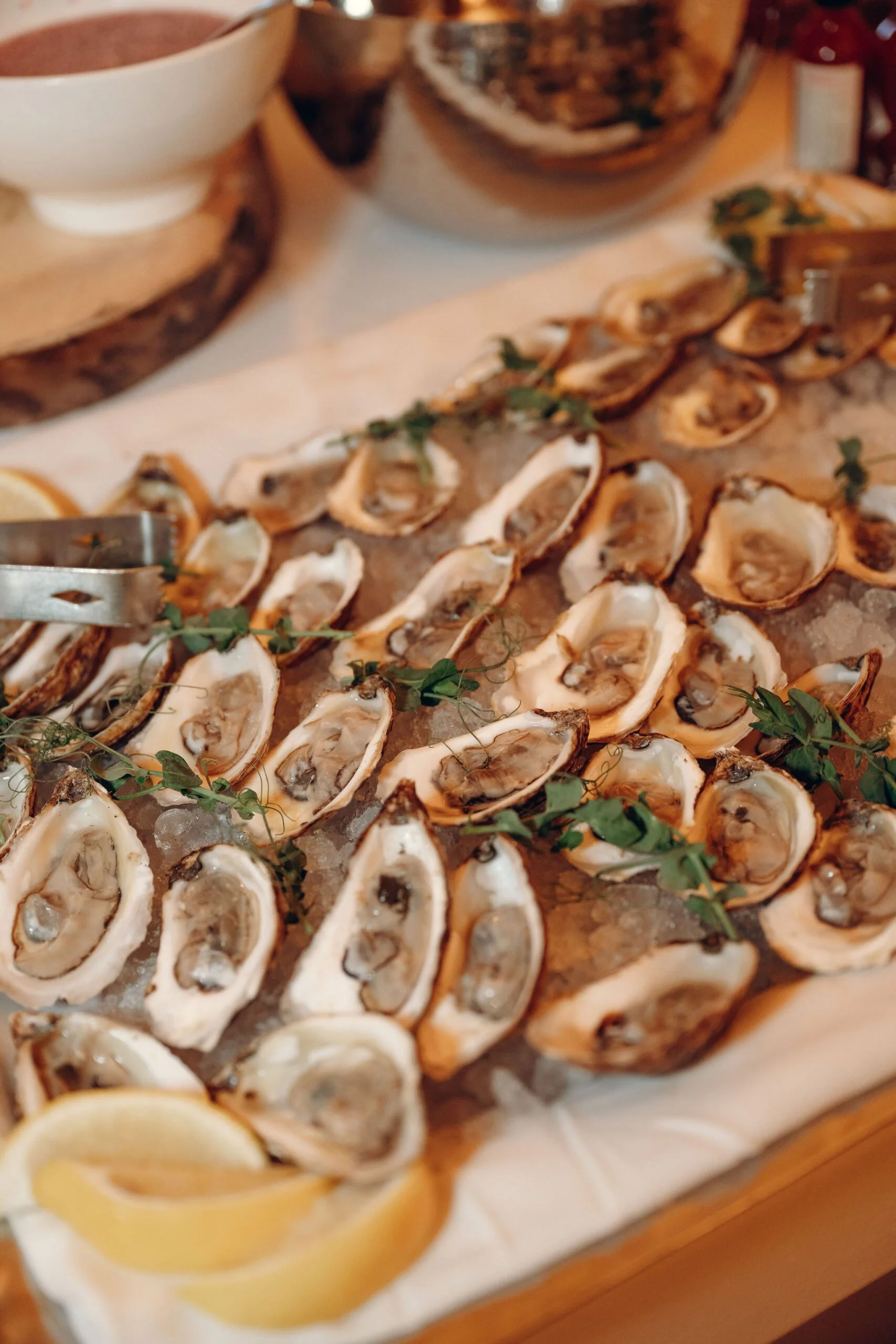

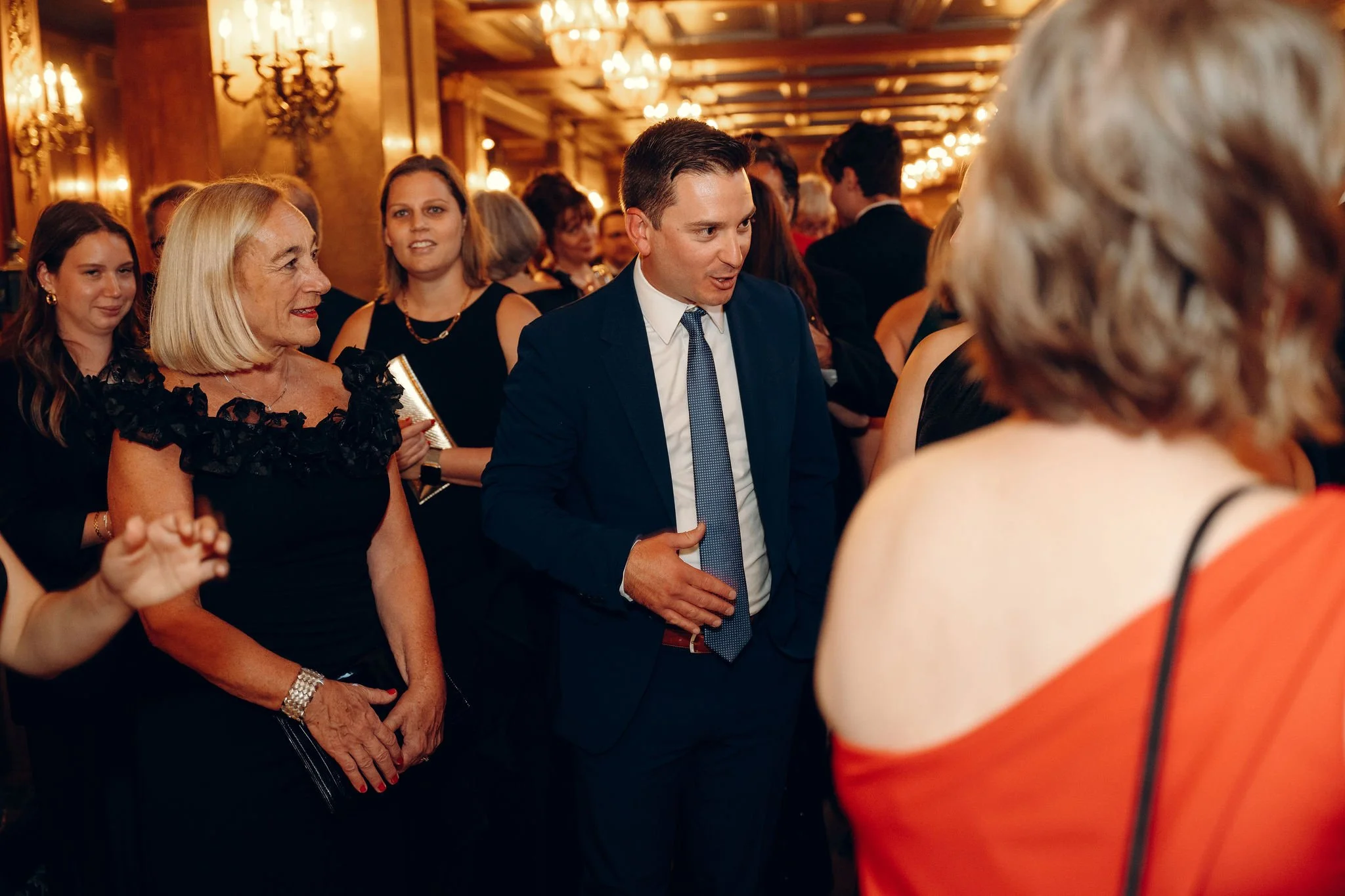
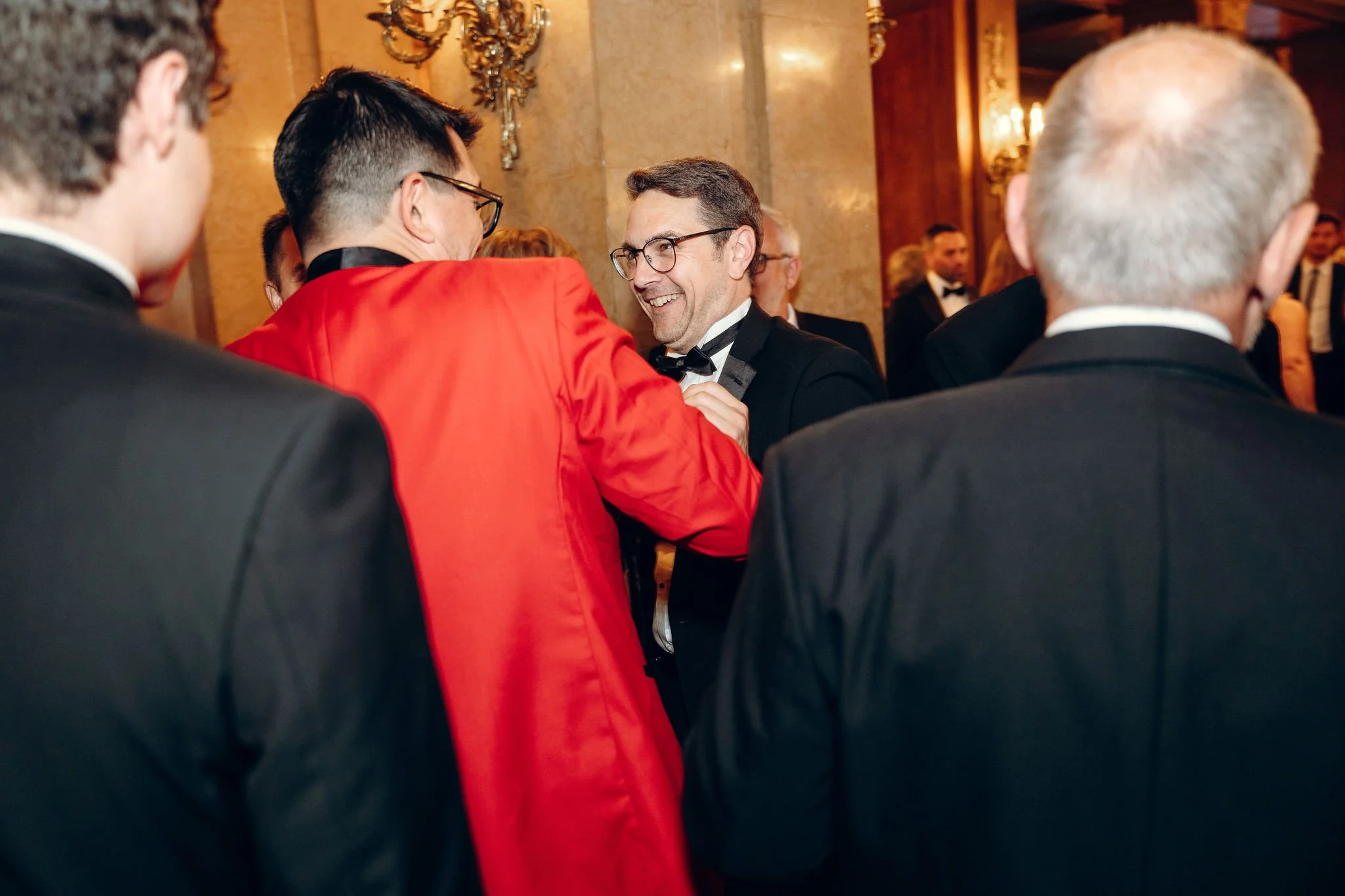
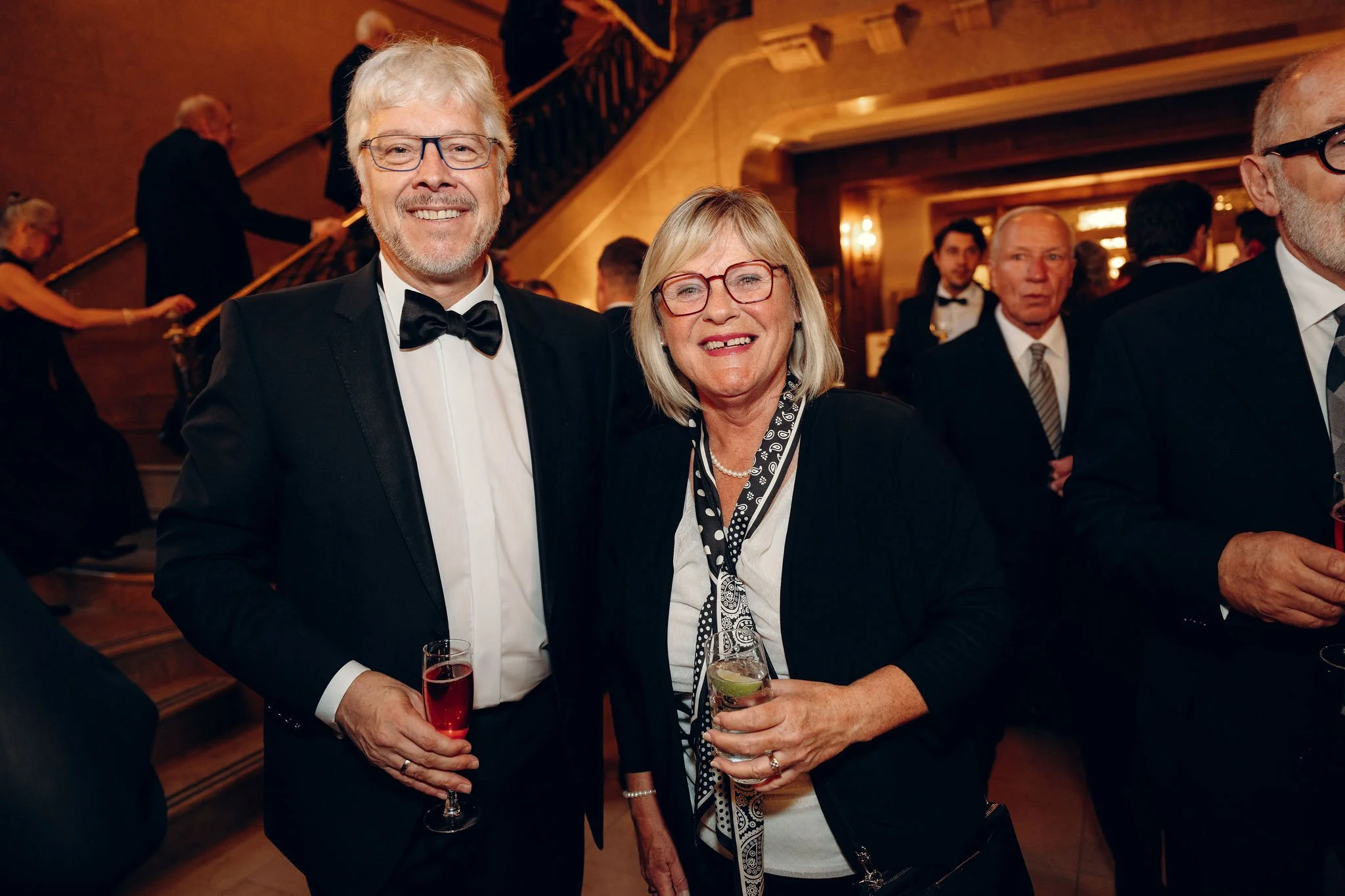
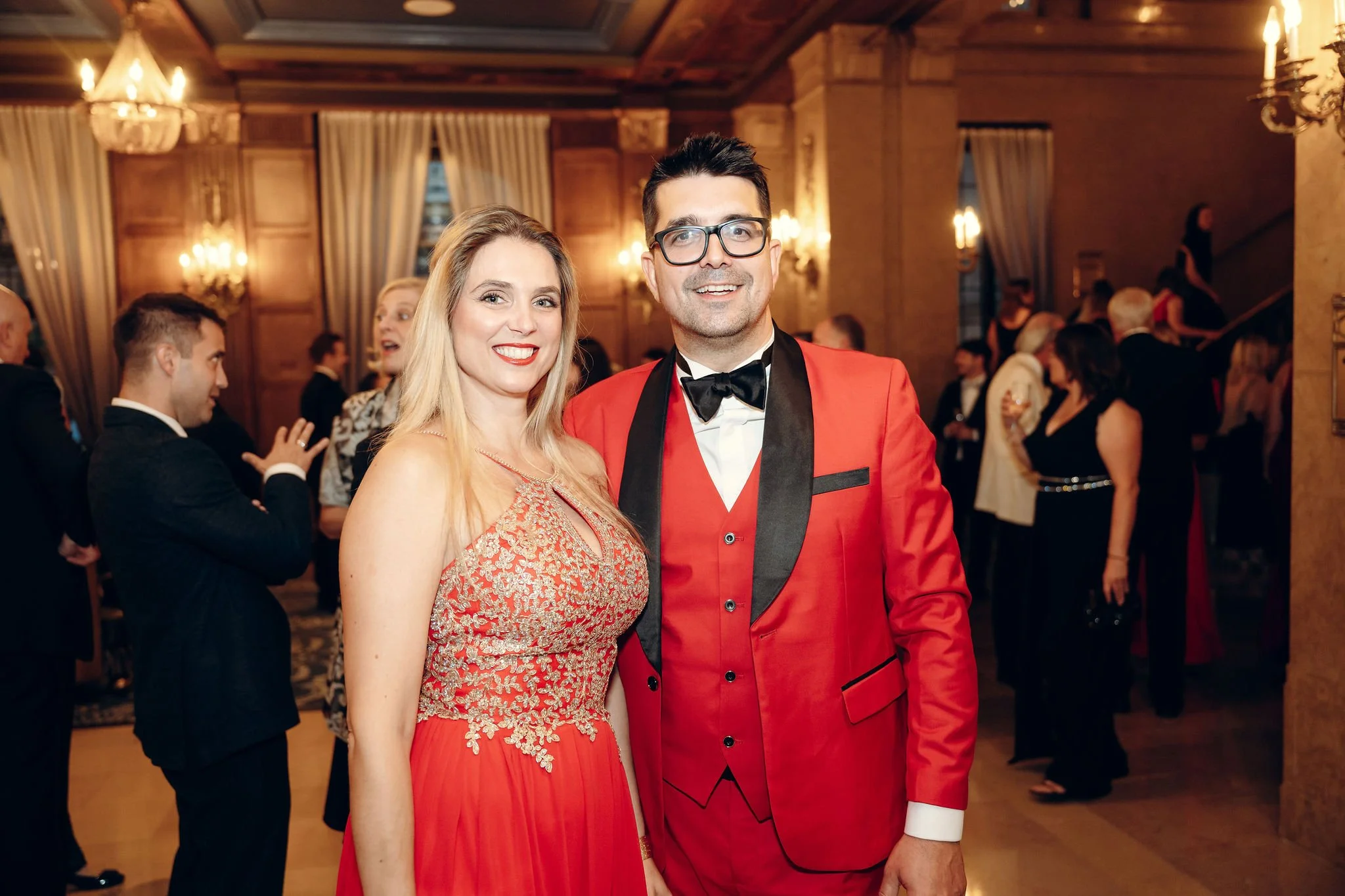
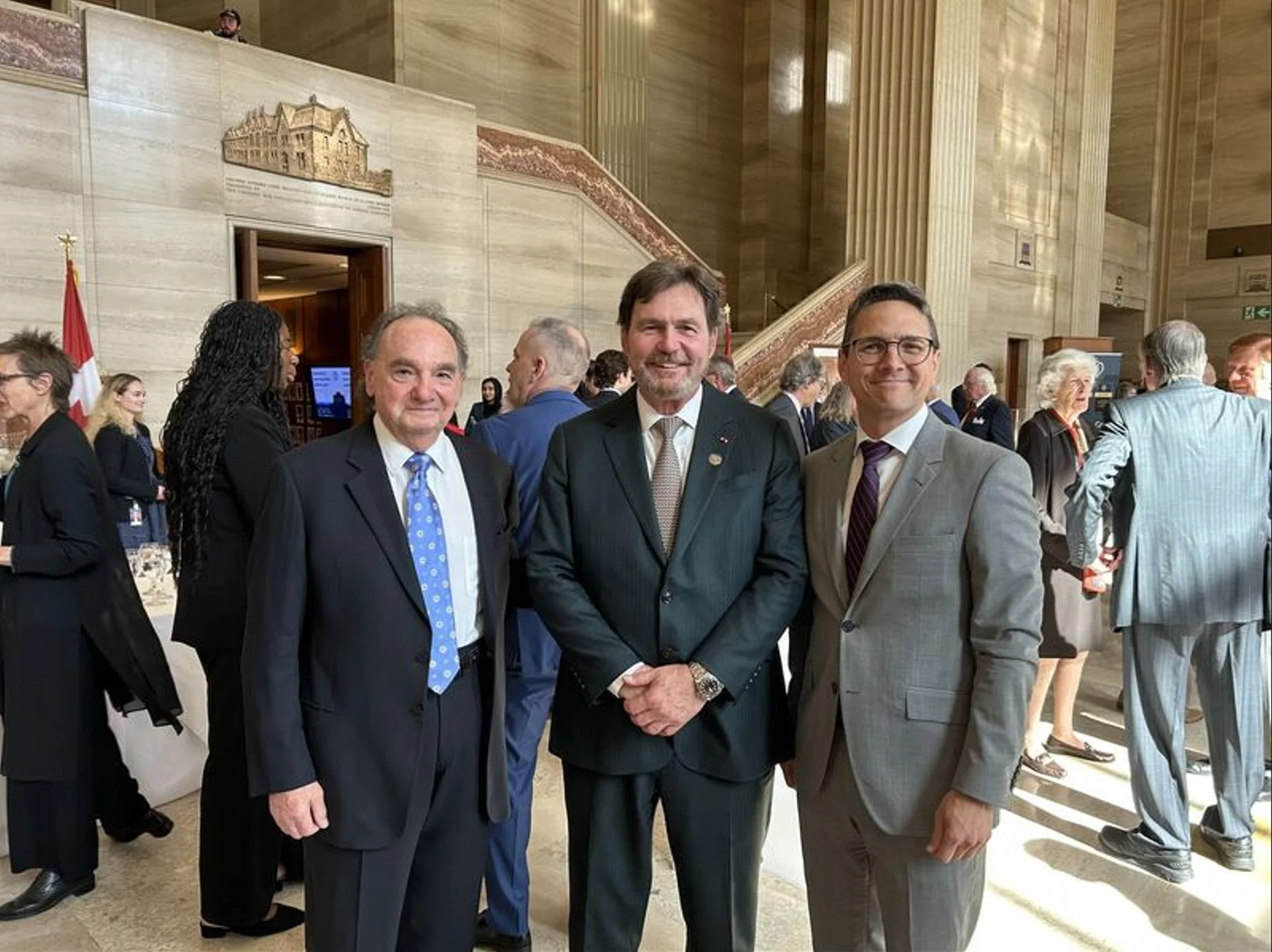

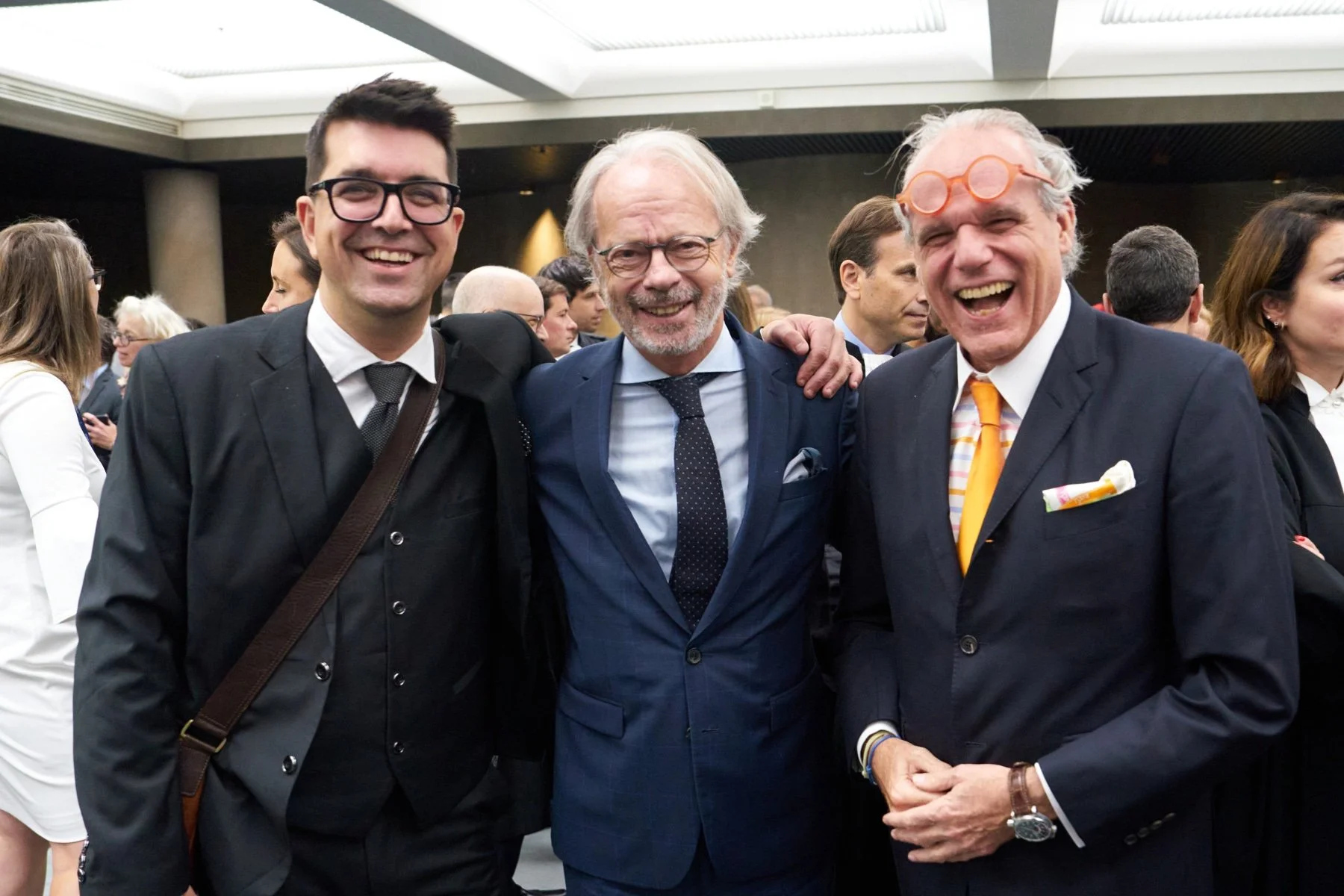

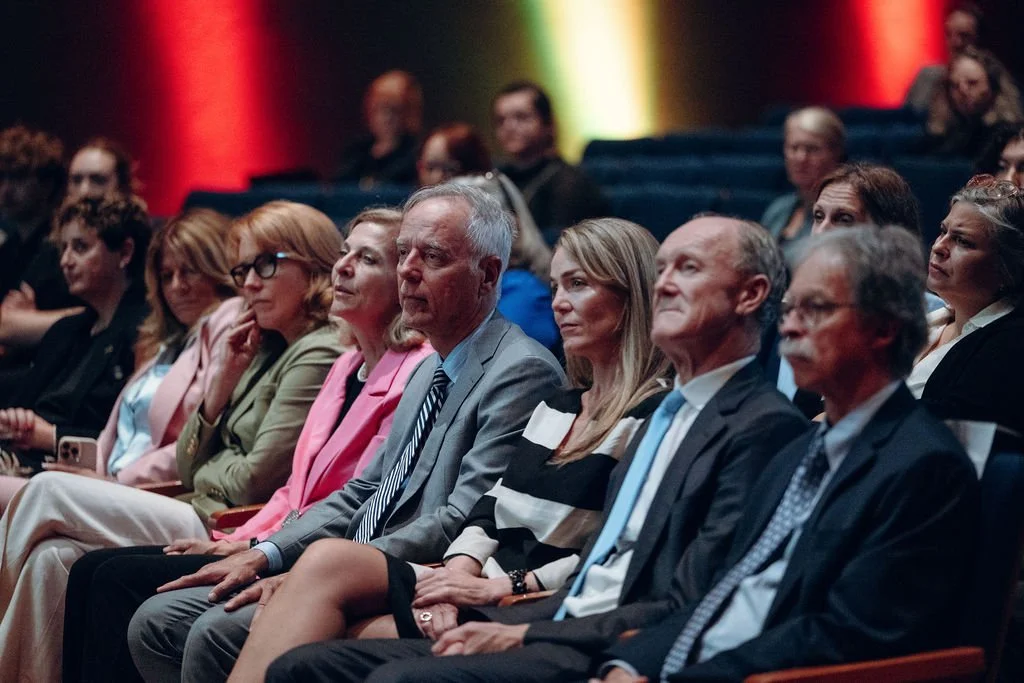

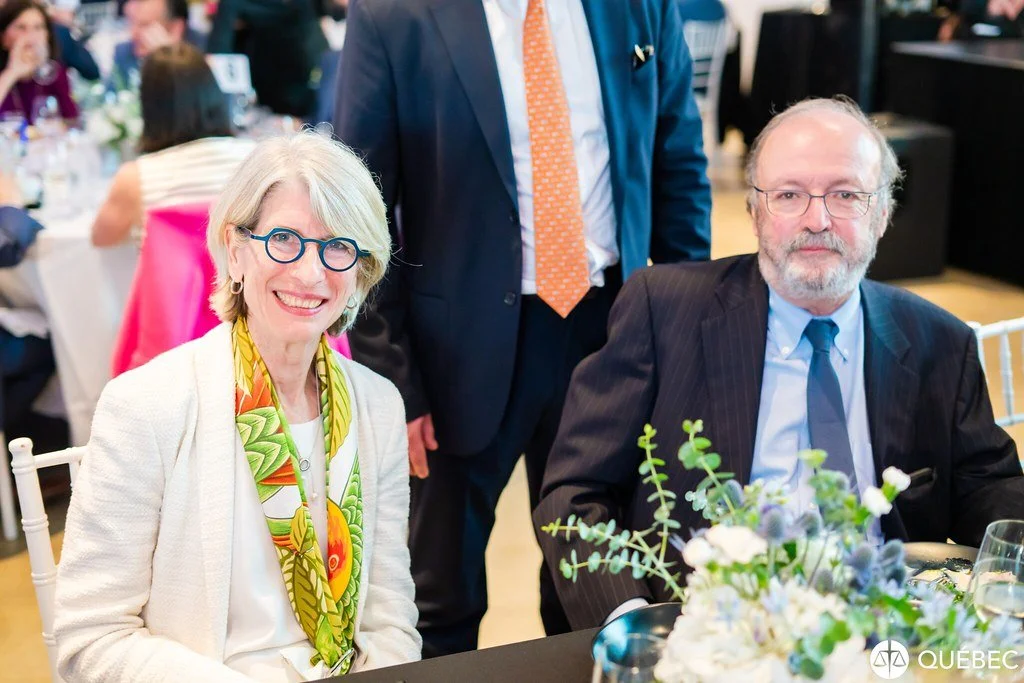



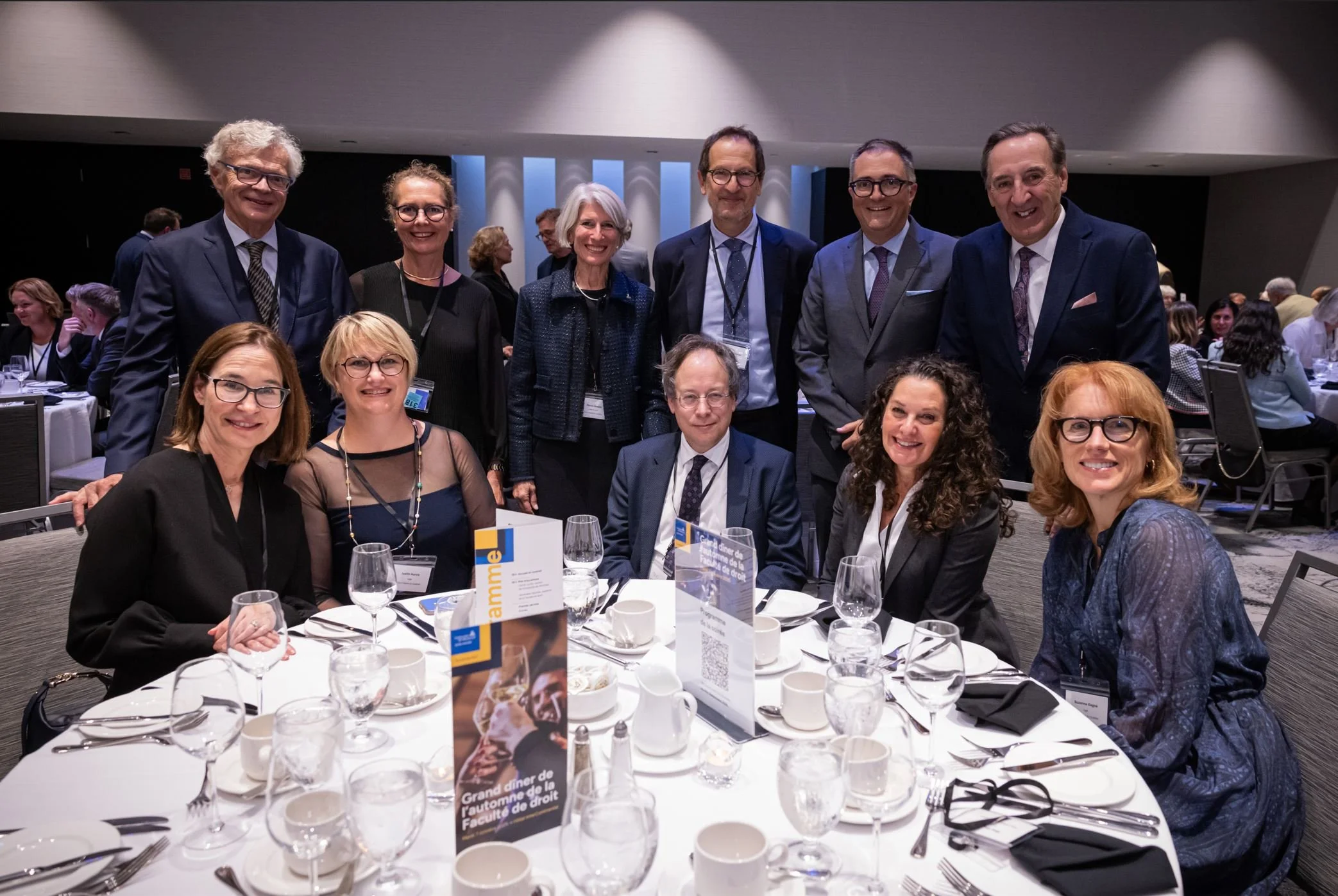




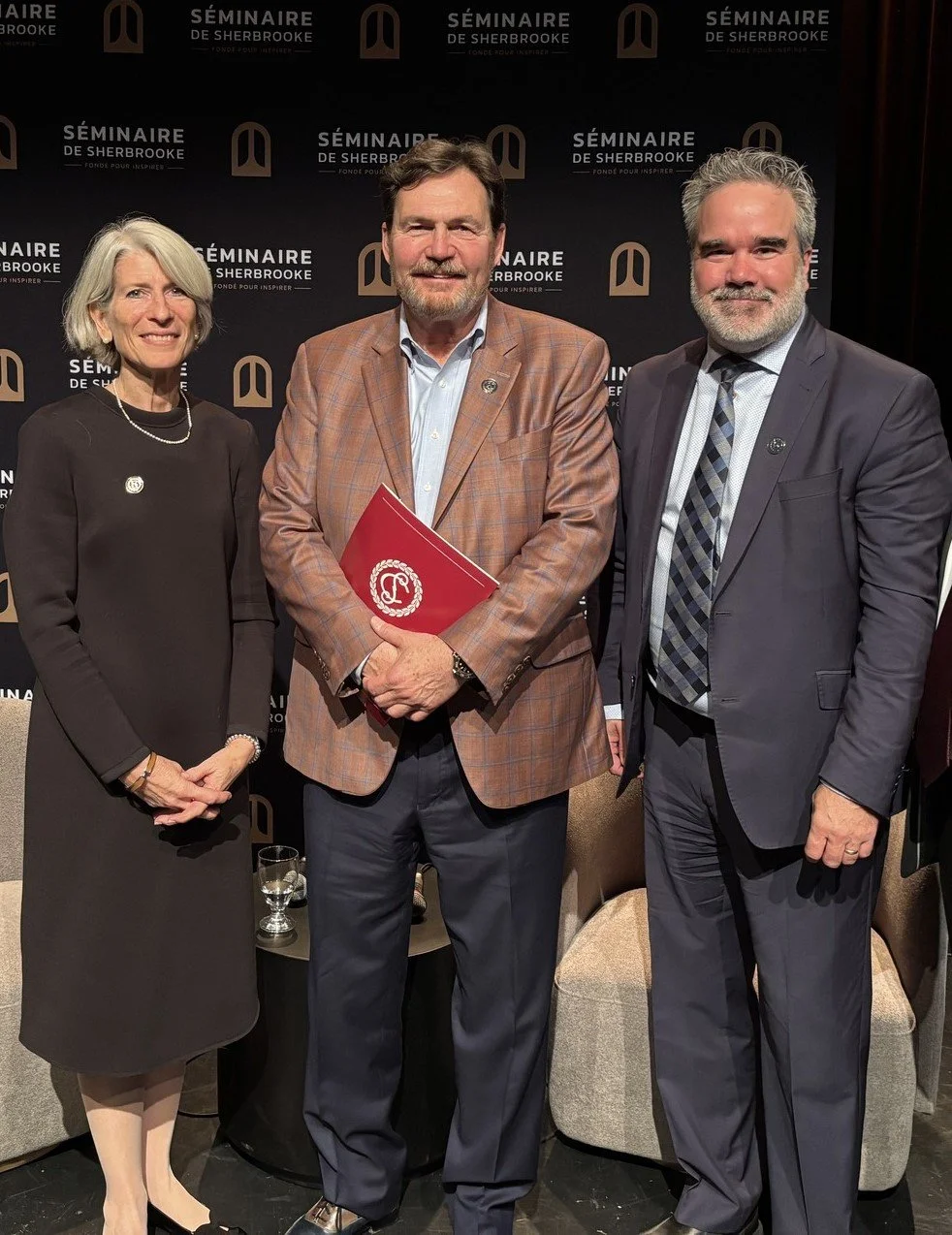
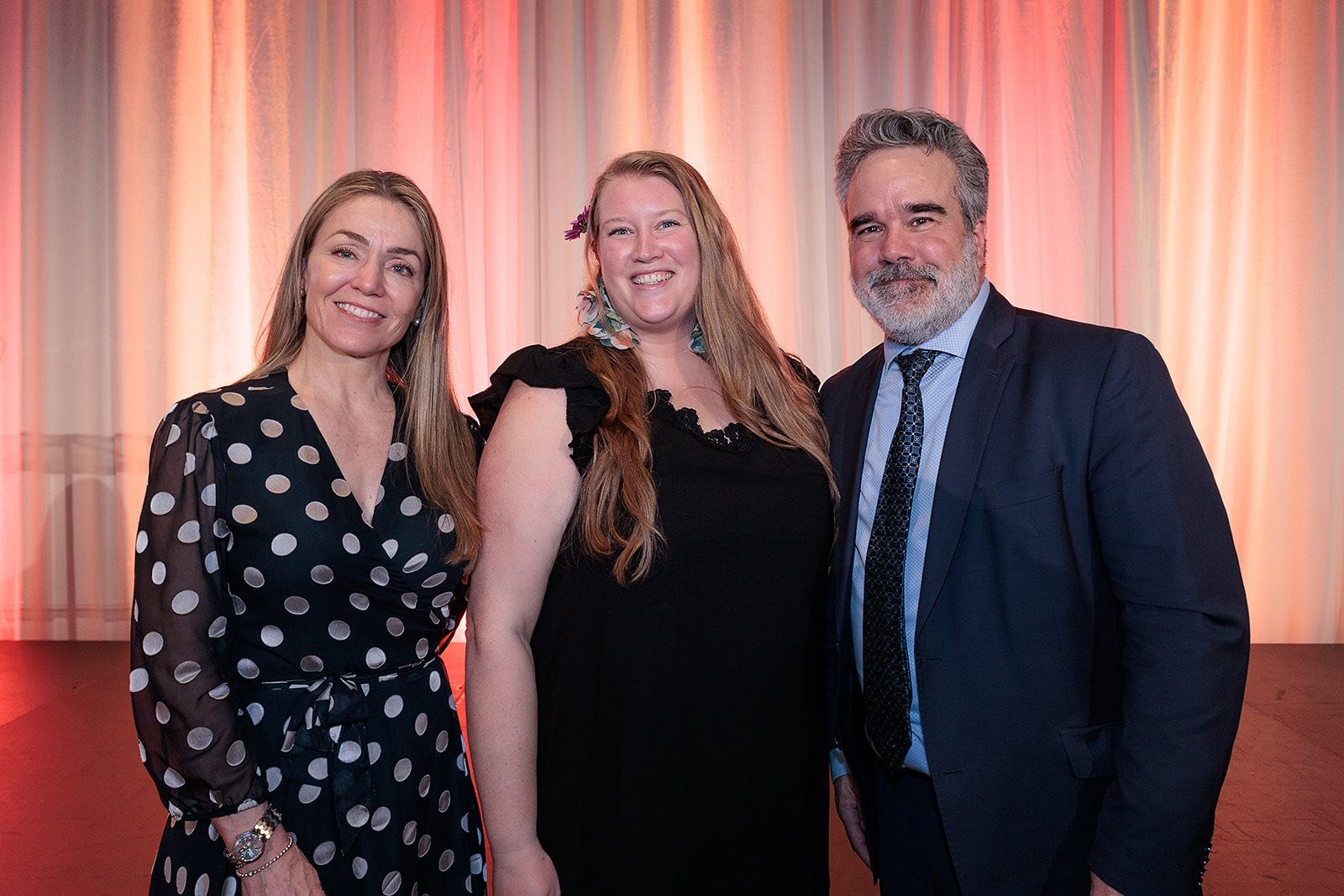
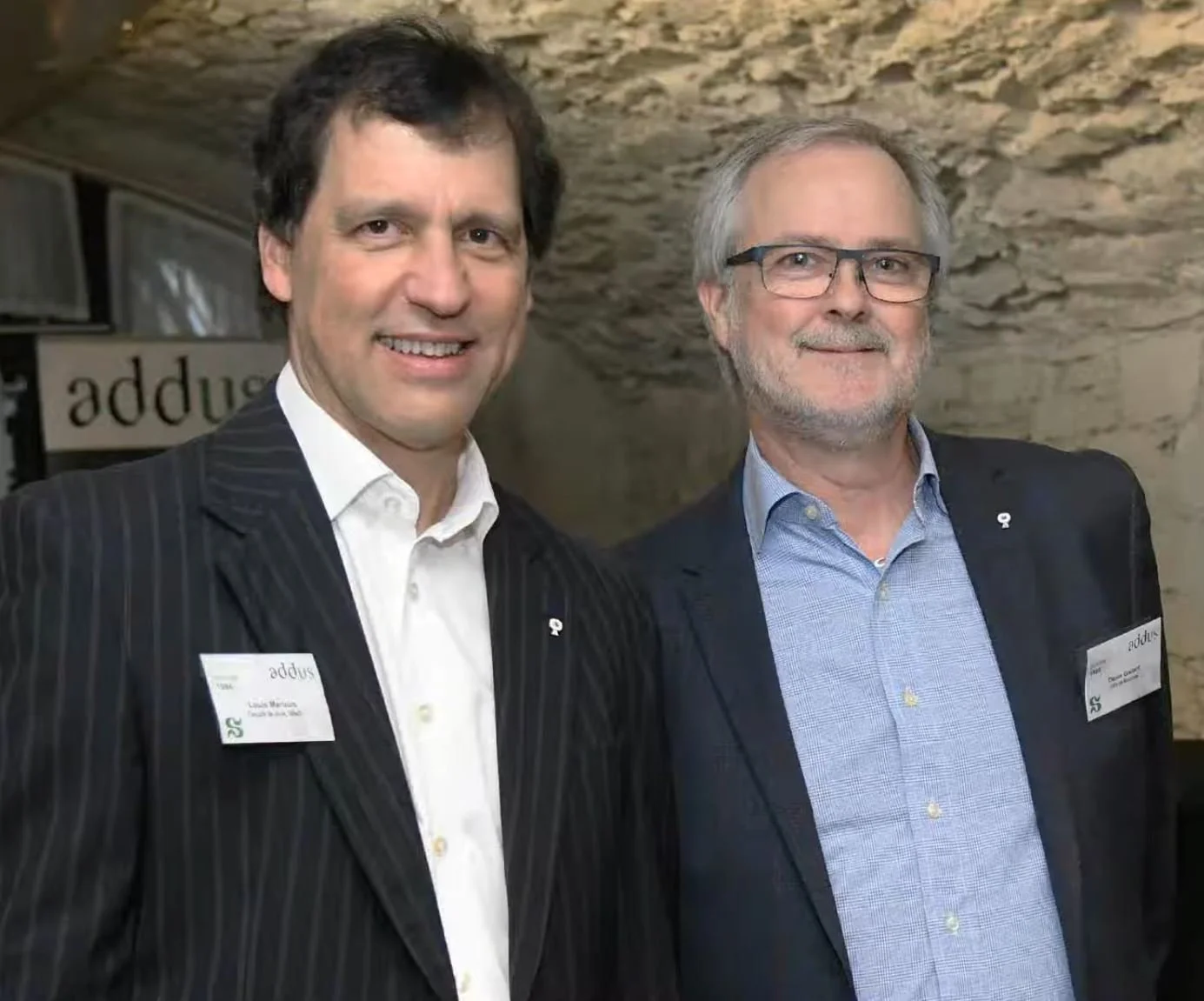
Then, they ask the public to trust them.
That's obscene.
These people cannot credibly claim to form an adversarial justice system. Bar president Marcel-Olivier Nadeau, who is part of this privileged network of lawyers and judges, cannot credibly appear on every platform and portray himself as a Joan of Arc defending the rights and freedoms of the “common people,” claiming to “fight” against some of his friends who are “jeopardising” the rights and freedoms of members of the public.
Whether Marcel-Olivier Nadeau likes it or not, the public is begining to see through the charade. Kabuki theatre, performed by actors who want to make the public believe they are adversaries because the play they are performing requires it, who simulate fierce legal battles for the public's eyes, but who, once the performance is over, go off to feast together.
This is, among other things, why the Quebec Bar president Marcel-Olivier Nadeau has seemed to some to be playing the role of Don Quixote tilting at windmills for the past few months. He makes a great deal of noise about two or three issues in a futile manner, proposing solutions that have no real impact. He knows perfectly well that the noise he is making will not change much of substance for the public regarding the real problems in the justice system, but by doing so, he takes up all the airtime, giving Bar president Marcel-Olivier Nadeau the opportunity to avoid talking about real issues and cover up the system's actual problems.
He fails to address a whole range of other problems with this system. Among the issues the president of the Bar avoids are :
the cronyism of judges that are tied to the parties in dispute or to their lawyers, particularly the chief judges responsible for assigning cases to other judges;
the handling of cases by judges who are disqualified from hearing those cases (s. 203 Code of Civil Procedure of Quebec : A judge who has an interest or whose spouse has an interest in a case is disqualified and cannot hear the case), who are in conflict of interests or who have ties with one of the parties or with their lawyers;
judges exceeding their jurisdiction by rendering decisions that go beyond what the parties have requested, and this without first hearing the parties (ultra petita, violations of audi alteram partem, other violations of basic rules);
political appointments to the judiciary of lawyers who have ties with the ruling political party that appoints them as judges;
the cronyism between politicians and judges;
the politicisation of judges and of the judicial decisions; ideology prevailing over “common sense”;
the autocratic judicial elitism of Canadian judges;
the absence of a genuine, legally binding Code of Conduct for federally appointed judges (the “Ethical Principles for Judges” do not constitute a genuine code and the wording of the text is vague and non-binding : “should”, “it would be important to”, etc.) and the lack of uniform application of ethical rules (which are strictly enforced on some and little or not at all on others);
the recurring lack of respect shown by judges towards the members of the population they judge (and the mistreatment inflicted by judges on litigants).
Since the president of the Quebec Bar and his associates are both participants in and facilitators of this unhealthy close relationship between certain judges and lawyers, it is understandable why he does not take a critical stance on this dynamic that contributes to eroding the rule of law. He does not critically address any aspect concerning judges. He even goes so far as to make absurd claims contrary to reality, simply to project a positive image of the judiciary, even if these claims are false.
Furthermore, given what appears to be a burning desire on the part of Bar president Marcel-Olivier Nadeau to become someone of importance by standing close to judges and serving their interests, it is also hardly surprising that Bar president Nadeau turns a blind eye to the proliferation of judicial misconducts constantly denounced by members of the public who come into contact with the judicial system.
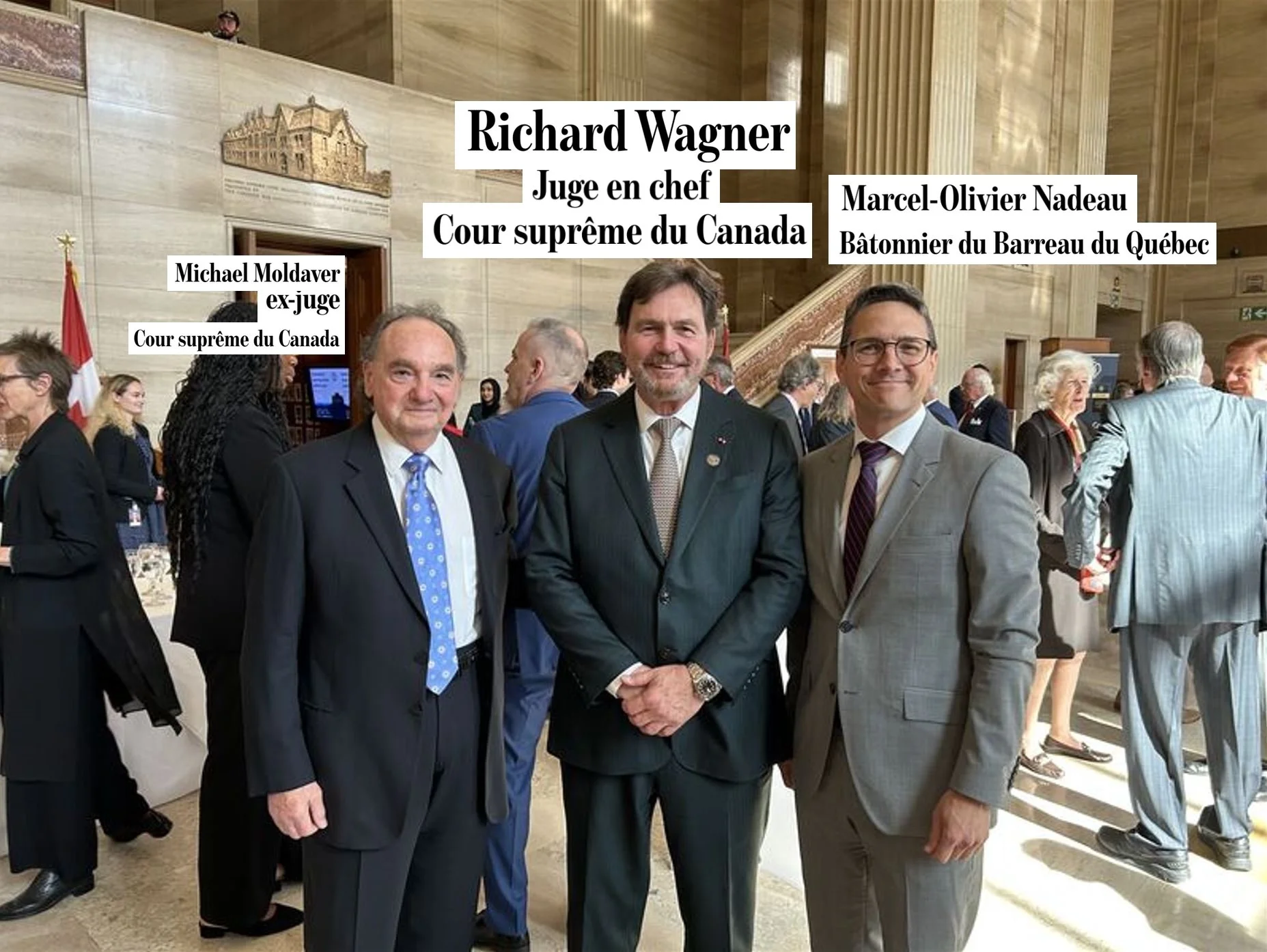
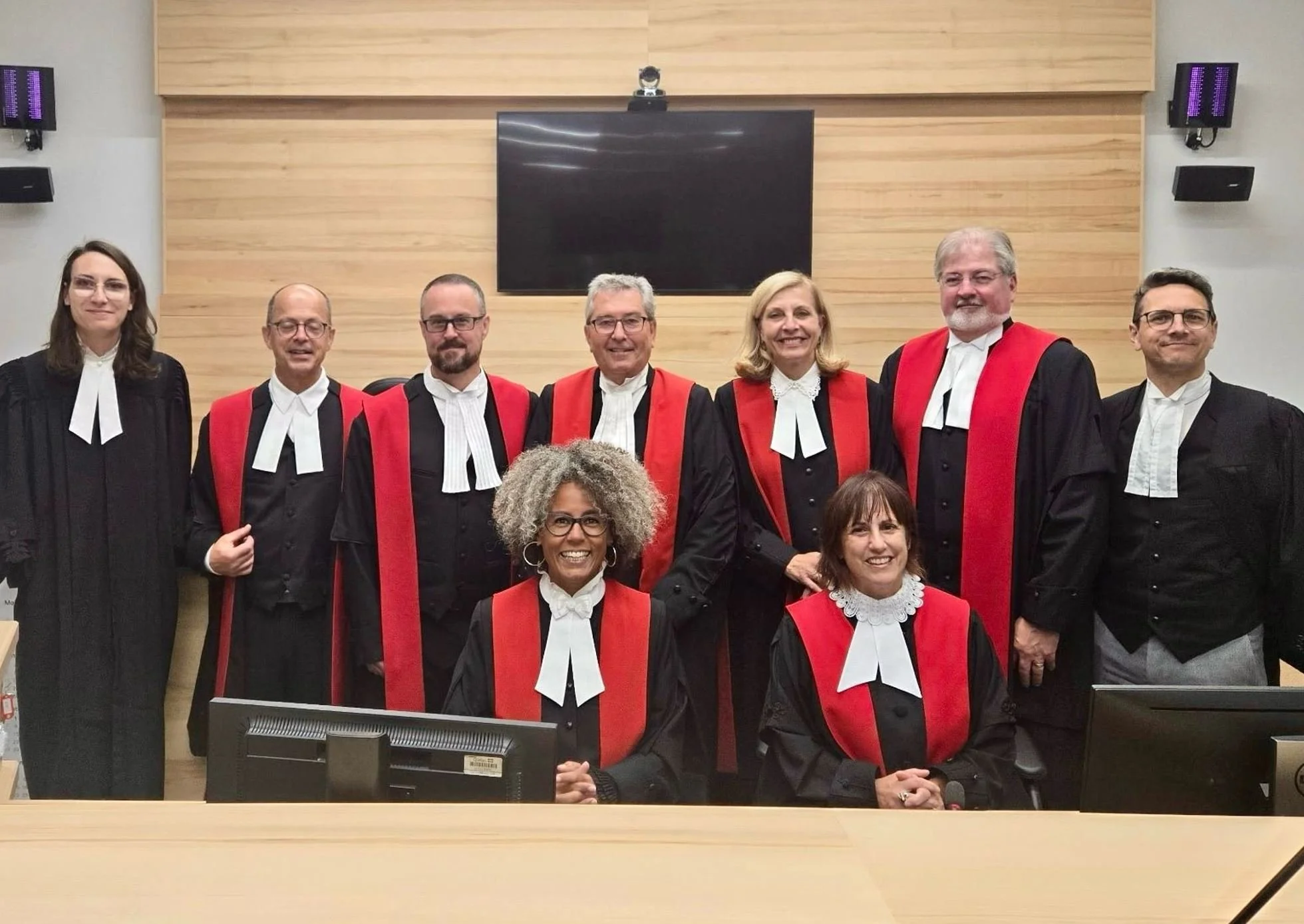
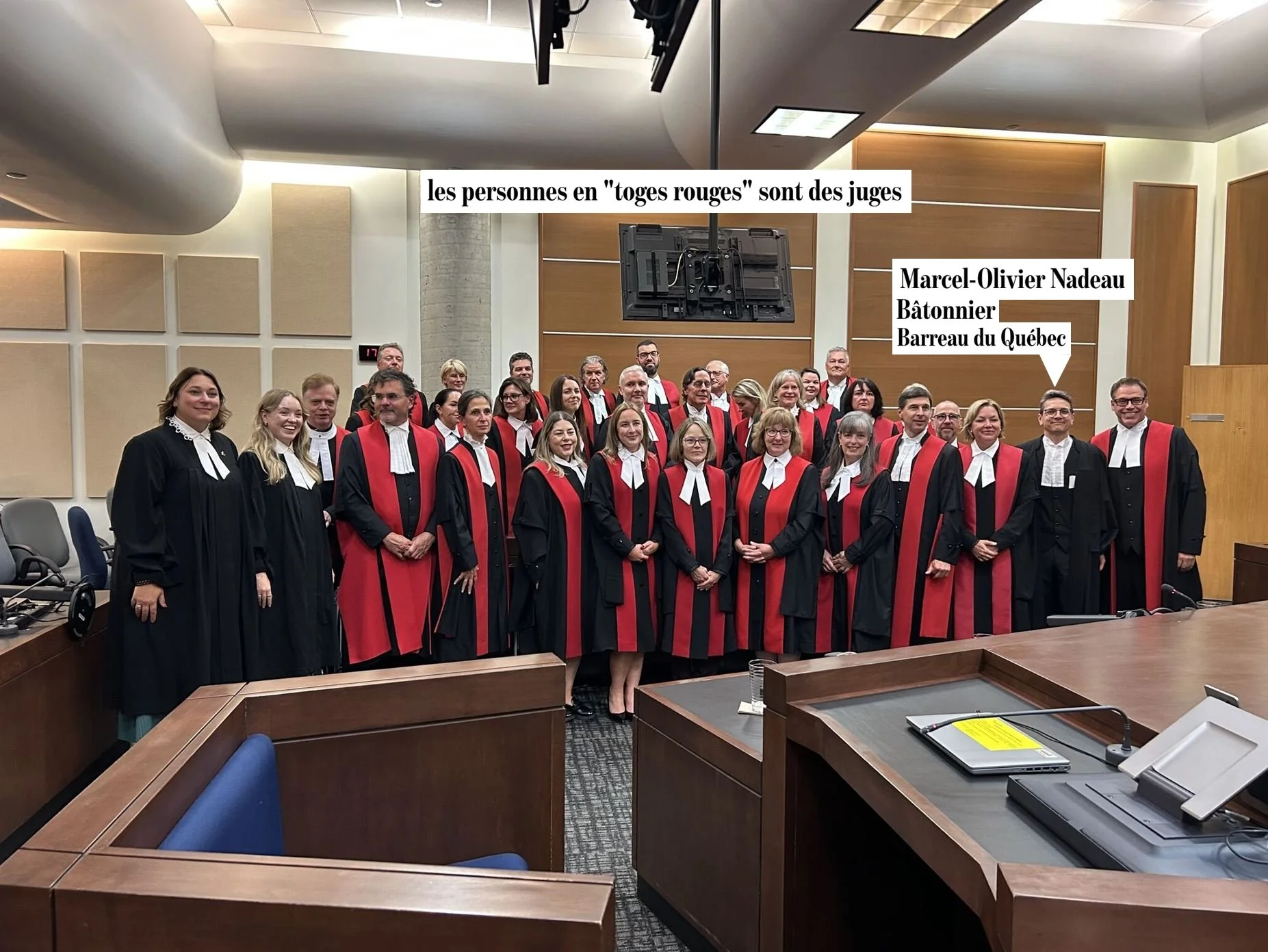

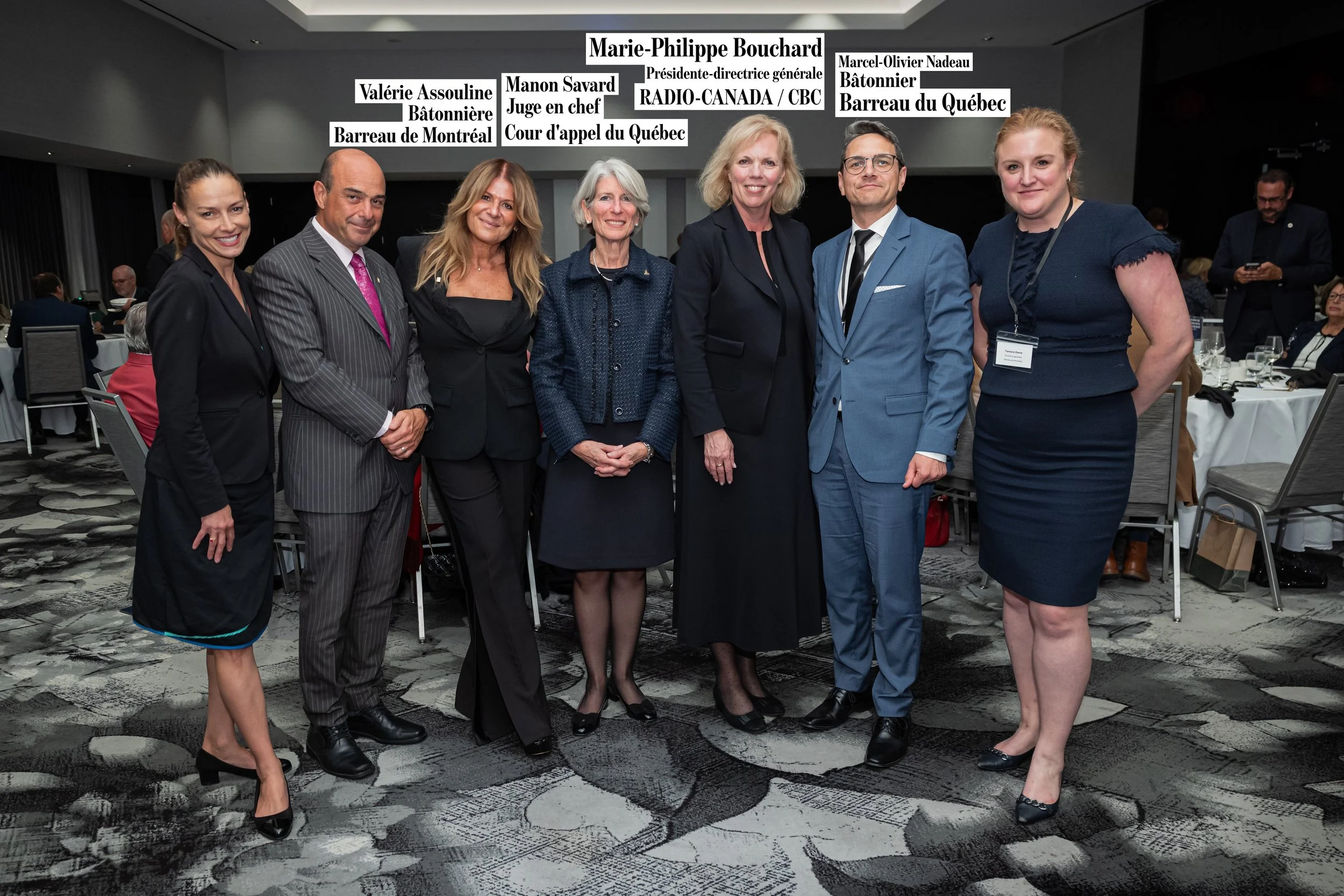
Have you seen Marcel-Olivier Nadeau fight against judicial misconduct?
This president of the Quebec Bar simply does not talk about it.
Yet the problem is particularly serious. Despite the fact that judges have an ethical obligation to treat "all persons with courtesy and respect in the exercise of their judicial functions" [11], and that they must demonstrate "respect and integrity so as to support and strengthen public confidence in the judiciary" [12], many litigants have denounced over the past decade the lack of respect shown to them by judges, judges who belittle them, who are hostile, or who act in ways that alienate the litigants from the judicial process, especially when they are not represented by a lawyer (pro se) [13]. Having witnessed such judicial conduct, court staff and service providers have confirmed that some judges treat litigants in "rudely and harshly" [14].
In the same vein, an academic study analysing Canadian case law highlighted the fact that unrepresented litigants face a fundamentally contradictory challenge : if self-represented litigants do not represent themselves adequately, they risk being punished by the judge for "delaying" the proceedings or attempting to "circumvent" the system; conversely, if they represent themselves well, they risk that the judge will not forgive them any error whatsoever but, on the contrary, criticise them for everything imaginable (margins in proceedings, paragraph length, line spacing, pagination, etc.). This conduct on the part of judges fuels the unequal judicial treatment between parties represented by lawyer(s) and litigants who represent themselves :
"lawyers were given more leeway regarding procedural requirements while the [self-represented litigants] was held to a more rigid standard" [15]
In some cases, judges did not allow self-represented litigants to speak as long as their opponents who were represented by lawyer, they unduly accepted evidence submitted after the deadline or accepted proceedings whose service was defective when it came from the opposing party's lawyer, judges interrupted self-represented litigants whilst they presented their case or did not consult them on procedural matters concerning adjournments or setting dates (for trial or otherwise), judges setting hearing dates that conflicted with the self-represented litigants' schedules.
Furthermore, despite the fact that judges are required to perform their duties "without discrimination or prejudice" [16] and that they are required to refrain "from discriminatory behaviour" [17], many self-represented litigants report a widespread pattern of prejudice and discrimination displayed by judges towards them :
“My biggest disappointment – and surprise – is the overwhelming amount of prejudice I have encountered. I have not been taken seriously by both lawyers and judges.” [18]
or
"I really don't think that judges like [self-represented litigants]. The judge appeared annoyed with my attempt to self-represent and showed total bias and condescension in his tone. He had already subconsciously tagged me as an idiot." [19]
or
"I expect to experience prejudice and discrimination as a [self-represented litigant]." [20]
or
"judges sometimes go with the source they perceive as 'credible' – this means that big corporations or government with lawyers are always going to win." [21]
What often emerges from studies on this subject is that judges favour parties represented by lawyers "whenever they have the opportunity", to the detriment of parties not represented by a lawyer. To quote the study :
“One of the biggest lessons we have learned is that if you are short on cash, and up against well-resourced defendants such as an insurance company, the benefits of justice are extremely difficult to access. We are horrified, to be frank, at the extent to which the system is weighted in favour of those with means to fully to access it. We are white and reasonably well-educated people who were fortunate enough to get a good start in life. We shudder to think about what happens to people who are members of visible minority groups, or to people down on their luck, who have been wronged and have no way to even begin to make themselves whole again” [22].
The bias that some judges display to the detriment of those seeking justice fuels their mistrust in the judicial system and leads to observations such as the following :
"My advice to other [self-represented litigants] is not to seek justice since there is none. It is the worst experience I went through. You lose your mind and health from the judicial abuses [23]
or
"(T)he method of obtaining justice does not exist within the system designed to abuse them" [24]
or
"Further, the Tribunal’s conduct of blindly supporting lawyers and disregarding a [self-represented litigant’s] evidence and submissions is obvious bias and an abuse of power or improper exercise of jurisdiction" [25]
or
“I am treated as though being self-represented is inherently an abuse of process” [26].
The sense of disillusionment and mistrust felt by self-represented litigants towards the judicial system has been a recurring theme that emerges from studies conducted by law professor Julie Macfarlane of the University of Windsor and by other legal professionals :
"I have no faith in the justice system and zero respect for lawyers or the judiciary after my experience. The legal system needs to stop condescending, bullying and discriminating citizens from their self entitled perch" [27].
Or
“As a member of the lower caste - even if you get to court, are respectful, are well prepared, have strong arguments - you will not receive fairness, equity or consideration. It is likely your argument will not be heard” [28].
Litigants also complain about the justice system :
"presumes that the principle of fairness is applied [...]. For most self-represented litigants, like myself, we are not treated fairly, nor do we as a group have equality when we go to court. Our rights to economic and psychological security are violated and we are discriminated against 95% of the time when we try to defend ourselves [...]."
The action [self-represented litigants] take in going to court alone is self-defeating and deeply demoralizing. It renders the [self-represented litigant] psychologically battered, ultimately financially impoverished, and economically injured for the rest of their lives" [29].
Even lawyers have denounced the mistreatment they suffered at the hands of judges when they appeared in court without being represented by another lawyer :
"I was a civil litigation lawyer for over 30 years. I am now a retired […] [self-represented litigant]"
"Regardless of my legal sophistication and extensive experience, it is a daunting experience to self-represent. Costs of every step are very high. Results are always extremely uncertain."
“The application of the law is often perplexing. […] Justice is a concept, [a] dream. It is hard to find” [30].
Academic studies conducted between 2021 and 2023 paint the same picture of a judicial system that is unfavorable to self-represented litigants due to systemic biases rooted in judges' attitudes toward their status [31]. In addition to the same findings reported by previous studies, the study conducted between 2021 and 2023 highlights a significant number of self-represented litigants who were discriminated against during their hearing for reasons of race, gender, or disability [32].
For years, self-represented litigants have been denouncing the mistreatment they receive from judges when they appear before the courts.
This is a frequently researched and documented reality. Studies conducted in Canada have revealed findings that puts to shame any justice system that claims to “place the individual” and “compassion” at the heart of justice.
These studies are publicly available and free of charge, accessible for reading to anyone interested, including to president of the Quebec Bar, Marcel-Olivier Nadeau.
However, the Quebec Bar president Marcel-Olivier Nadeau has not spoken out publicly on these issues.
To date, we have never heard the Quebec Bar president Nadeau reiterate the judges’ obligation to respect the law that they enforce upon others.
We have never heard the Quebec Bar president Marcel-Olivier Nadeau ask the judiciary to stop insulting self-represented litigants or mocking them.
Bar president Nadeau has never aknowledged these issues.
Nor has he proposed any solutions to resolve them.
On the contrary, the campaign led by the Quebec Bar president Marcel-Olivier Nadeau is gaslighting and misleading the public regarding several problematic aspects related to the judiciary and the justice system in Quebec.
How should the public interpret the Quebec Bar president Marcel-Olivier Nadeau's silence? That these issues are not issues? That he is unaware of thse issues? That he is aware of them but does not consider them important? Or is it that he is aware of these issues but chooses to conceal them through his silence? In any case, the Quebec Bar president Marcel-Olivier Nadeau's conduct is reprehensible.
Ignorance, willful blindness, or malice?
ALL ARTICLES IN THIS SERIES :
-
-
-
-
-
-
Coming soon
-
Coming soon
-
-
-
English version coming soon.
French version available here : https://www.claudiu-popa.com/publications-juridiques/decoder-la-fraude
*****
[1] Marcel-Olivier NADEAU, « Sortir des sentiers battus », LinkedIn.com, January 22nd, 2026, online : <https://fr.linkedin.com/posts/marcel-olivier-nadeau-69502015a_hier-avait-lieu-%C3%A0-luniversit%C3%A9-de-sherbrooke-activity-7420191088302460928-qMb_>; Marcel-Olivier NADEAU, « Sortir des sentiers battus », Facebook.com, January 22nd, 2026, online : <https://web.facebook.com/batonnierduquebec/posts/hier-avait-lieu-%C3%A0-luniversit%C3%A9-de-sherbrooke-le-lancement-de-notre-grande-tourn%C3%A9e/1534859815313511/>.


[2] Coming soon
[3] Katia GAGNON, « L’Université de Sherbrooke accusée de discrimination », La Presse, July 1st, 2020, online : <https://www.lapresse.ca/actualites/2020-07-01/l-universite-de-sherbrooke-accusee-de-discrimination.php>.
The case of discrimination against Professor Manon Guay mentioned in this La Presse article has been contentious for over 8 years :
Guay c. Association des professeures et professeurs de la faculté de médecine de Sherbrooke (APPFMUS) et Université de Sherbrooke, 2022 QCCQ 5098 (July 21st, 2022) (decision rendered by Judge Sophie Lapierre, former lawyer of the law firm Cain Lamarre);
Association des professeures et professeurs de la Faculté de médecine de l’Université de Sherbrooke (APPFMUS)et Université de Sherbrooke v. Guay, 2024 CanLII 505 (QC SAT) (January 3rd, 2024) - see here the history of her actions which began in 2018;
Association des professeures et professeurs de la Faculté de médecine de l’Université de Sherbrookeet Université de Sherbrooke v. Guay, 2024 CanLII 21933 (QC SAT) (March 13th, 2024);
Association des professeures et professeurs de la Faculté de médecine de l’Université de Sherbrooke (APPFMUS) et Université de Sherbrooke c. Guay, 2024 CanLII 42207 (April 23rd, 2024);
Association des professeures et professeurs de la faculté de médecine de l’Université de Sherbrooke (APPFMUS) c. Professeure Guay, 2025 CanLII 47479 (QC SAT) (May 16th, 2025);
Guay et Université de Sherbrooke, 2025 QCTAT 3209 (July 30th, 2025);
Association des professeures et professeurs de la faculté de médecine de l’Université de Sherbrooke (APPFMUS) c. Université de Sherbrooke, 2025 CanLII 91164 (QC SAT) (August 28th, 2025);
Association des professeures et professeurs de la Faculté de médecine de l’Université de Sherbrooke (APPFMUS) c. Université de Sherbrooke, 2025 CanLII 111018 (QC SAT) (October 27th, 2025).
Other cases of abuse, discrimination, harassment, etc. alleged and/or substantiated against the University of Sherbrooke :
Mostafalou c. Université de Sherbrooke, 2011 QCCS 6289 (November 15th, 2011) (decision rendered by Judge Charles Ouellet, former lawyer for the Université de Sherbrooke, described by lawyer Charles Guay of the firm Cain Lamarre as the "founder of the Cain Lamarre office in Estrie");
Université de Sherbrooke c. Syndicat des professeures et professeurs de l’Université de Sherbrooke, 2013 CanLII 9107 (QC SAT) (January 21st, 2013);
Fadlallah c. Université de Sherbrooke, 2013 QCCS 2951 (June 27th, 2013) (decision rendered by Judge Gaétan Dumas, a judge who participated in the educational, networking and fundraising activities of the Faculty of Law of the Université de Sherbrooke);
Commission des droits de la personne et des droits de la jeunesse (Lemieux et autres) c. Université de Sherbrooke, 2013 QCTDP 15 (July 2nd, 2013);
Josefowich c. Université de Sherbrooke, 2014 QCCRT 726 (December 17th, 2014);
Université de Sherbrooke c. Syndicat des professeures et professeurs de l’Université de Sherbrooke (SPPUS), 2015 CanLII 104148 (QC SAT) (March 3rd, 2015);
Université de Sherbrooke c. Commission des droits de la personne et des droits de la jeunesse, 2015 QCCA 1397 (September 3rd, 2015);
Kiam c. Syndicat des chargées et chargés de cours de l'Université de Sherbrooke (CSQ) et Université de Sherbrooke, 2016 QCCA 154 (February 1st, 2016) (decision rendered by Justice Marie-Josée Hogue, former lecturer at Université de Sherbrooke, ambassador for the Faculty of Law of the University of Sherbrooke, participant in the networking and fundraising activities of the University of Sherbrooke, honored by the University of Sherbrooke with the highest distinction a university can offer : an honorary doctorate );
Porras-Murilloc. Syndicat des chargées et chargés de cours de l'Université de Sherbrooke (CSQ) et Université de Sherbrooke, 2016 QCTAT 750 (February 9th, 2016);
Hassan c. Syndicat des employées et employés de soutien de l'Université de Sherbrooke, section locale 7498 SCFP et Université de Sherbrooke, 2016 QCTAT 1156 (February 29th, 2016);
Université de Sherbrooke c. Syndicat des employées et employés de soutien de l’Université de Sherbrooke, 2016 CanLII 59892 (QC SAT) (August 22nd, 2016);
Syndicat des professeures et professeurs de l’université de Sherbrooke (SPPUS) c. Université de Sherbrooke, 2017 CanLII 60928 (QC SAT) (September 12th, 2017);
Syndicat des professeures et professeurs de l’université de Sherbrooke c. Université de Sherbrooke, 2017 CanLII 82349 (QC SAT) (December 5th, 2017);
Syndicat des professeures et professeurs de l’Université de Sherbrooke (SPPUS) c. Université de Sherbrooke, 2018 CanLII 36405 (QC SAT) (April 16th, 2018);
Université de Sherbrookec. Syndicat des chargées et des chargés de cours de l’Université de Sherbrooke, 2019 CanLII 14479 (QC SAT) (February 26th, 2019);
Syndicat des employées et employés de soutien de l’Université de Sherbrooke c. Université de Sherbrooke, 2020 CanLII 12320 (QC SAT) (February 19th, 2020);
Université de Sherbrooke c. Syndicat des employées et employés de soutien de l’université de Sherbrooke (SEESUS), 2020 CanLII 29791 (April 20th, 2020);
Adjo c.Université de Sherbrooke, 2020 QCCS 5120 (November 4th, 2020) (decision rendered by Judge Gaétan Dumas, a judge who participated in the educational, networking and fundraising activities of the Faculty of Law of the University of Sherbrooke);
Madiounic. Comité de discipline de l'Université de Sherbrooke, 2021 QCCS 1243 (April 6th, 2021) (decision rendered by Judge Claude Villeneuve, former lawyer and lecturer at the University of Sherbrooke);
Syndicat des employés de soutien de l'Université de Sherbrooke c. Beaupré et Université de Sherbrooke, 2021 QCCS 1934 (May 14th, 2021) (decision rendered by Judge Claude Dallaire, judge in residence at the University of Sherbrooke who led educational activities for the Faculty of Law of the University of Sherbrooke);
Madiouni c. Comité de discipline de l'Université de Sherbrooke, 2021 QCCA 936 (June 4th, 2021);
Murat Memisoglu c. Université de Sherbrooke, 2021 QCCS 2451 (June 11th, 2021) (decision rendered by Judge Claude Villeneuve, former lawyer and lecturer at University of Sherbrooke);
Malakijoo c. Université de Sherbrooke, 2021 QCCS 5061 (November 24th, 2021) (decision rendered by Judge Claude Dallaire, judge in residence at the Université de Sherbrooke who led educational activities for the Faculty of Law of the Université de Sherbrooke);
Morency c. Université de Sherbrooke, Faculté de médecine et des sciences de la santé, 2021 QCCS 5407 (December 17th, 2021) (decision rendered by Judge Claude Villeneuve, former lawyer and lecturer at the University of Sherbrooke);
Rhnima c. Syndicat des professeures et professeurs de l'Université de Sherbrooke et Université de Sherbrooke, 2021 QCTAT 6070 (December 22nd, 2021);
Obaid c. Université de Sherbrooke, 2022 QCCS 1325 (April 14th, 2022) (decision rendered by Judge Charles Ouellet, former lawyer for the Université de Sherbrooke, described by lawyer Charles Guay of the law firm Cain Lamarre as the "founder of the Cain Lamarre office in Estrie");
Ives Scherzer c. Université de Sherbrooke, 2022 QCCS 4411 (November 28th, 2022) (decision rendered by Judge Charles Ouellet, former lawyer for the Université de Sherbrooke, described by lawyer Charles Guay of the firm Cain Lamarre as the "founder of the Cain Lamarre office in Estrie");
Cloutier c. Université de Sherbrooke, 2023 QCCS 458 (February 20th, 2023) (decision rendered by Justice Line Samoisette, graduate of Université de Sherbrooke, participant in the networking activities of Université de Sherbrooke, cousin of the former rector of Université de Sherbrooke, Luce Samoisette);
Scherzer c. Université de Sherbrooke, 2023 QCCA 419 (March 6th, 2023) (on appeal from a decision rendered by Judge Charles Ouellet, former lawyer for the University of Sherbrooke, described by lawyer Charles Guay of the law firm Cain Lamarre as the "founder of the Cain Lamarre office in Estrie");
Université de Sherbrookec. Syndicat des employées et employés de soutien de l’Université de Sherbrooke, SCFP, section locale 7498 (SEESUS), 2023 CanLII 45964 (QC SAT) (April 14th, 2023);
Association du personnel administratif et professionnel de l'Université de Sherbrooke (APAPUS) c. Université de Sherbrooke, 2023 CanLII 52587 (QC SAT) (June 15, 2023);
Scherzer c. Université de Sherbrooke, 2024 QCCA 203 (February 16th, 2024) (on appeal from a decision rendered by Judge Charles Ouellet, former lawyer for the Université de Sherbrooke, described by lawyer Charles Guay of the law firm Cain Lamarre as the "founder of the Cain Lamarre office in Estrie");
Adjo c. Université de Sherbrooke, 2024 QCCS 1177 (April 9th, 2024);
Syndicat des chargées et chargés de cours de l’Université de Sherbrooke v. Université de Sherbrooke, 2024 CanLII 52199 (QC SAT) (June 4th, 2024).
[4] Sabrina LAVOIE, « La vérificatrice générale blâme l’UdeS », La Tribune, June4th, 2021, online : <https://www.latribune.ca/2021/06/05/la-verificatrice-generale-blame-ludes-8a2dce2bf2381f9e7c124aa27fe488fe/>; Rémi LÉONARD, « 31 M$ de plus: Québec se penche à nouveau sur le système Véo de l’UdeS », La Tribune, January 29th, 2023, online : <https://www.lavoixdelest.ca/2023/01/30/31-m-de-plus-quebec-se-penche-a-nouveau-sur-le-systeme-veo-de-ludes-e4b51649ff198577ebdec72368197ec5/>; Isabelle PION, « Projet Véo : l’UdeS maintenant accompagnée par une firme », La Tribune, March 20th, 2024, online : <https://www.latribune.ca/actualites/actualites-locales/sherbrooke/2024/03/20/projet-veo-ludes-maintenant-accompagnee-par-une-firme-HQRGKGX275AV3ITURGMGVC2YBA/>; Lilia GAULIN, « La mise en service de Véo prévue au printemps à l’UdeS », La Tribune, October 27th, 2025, online : <https://www.latribune.ca/actualites/education/2025/10/27/la-mise-en-service-de-veo-prevue-au-printemps-a-ludes-EXU2KAHUR5APRPRR67JTPCCIVI/>. The project is still ongoing.
[5] BARREAU DU QUÉBEC, « Le bâtonnier du Québec », Barreau.qc.ca, 2025, online : <https://www.barreau.qc.ca/fr/ordre/gouvernance/batonnier-quebec/>.

[6] CAIN LAMARRE, « Marcel-Olivier Nadeau », Cainlamarre.ca, November 2025, online : <https://cainlamarre.ca/employe/marcel-olivier-nadeau/>.
[7] Éric OUELLET, lawyer, Simon CADOTTE, lawyer and initiator of the letter with Mr. Ouellet, Guillaume ROUSSEAU, lawyer, full professor at the University of Sherbrooke and also initiator of the letter with Mr. Ouellet, Luc ALARIE, lawyer, Isabelle ALBERNHE, lawyer, Luc BRUNET, citizen, François CÔTÉ, lawyer, Louise DÉSAUTELS, retired lawyer, Fabien GÉLINAS, lawyer and full professor at McGill University, Dominique GOUDREAULT, lawyer, Patrick LAVALLÉE, jurist, Martin LEBLANC, lawyer, Marc MICHAUD, lawyer, Daniel TURP, retired professor emeritus, University of Montreal, « Une critique sur ce que dit le Barreau de la clause de souveraineté parlementaire », Ledevoir.com, February 17th, 2026, online : <https://www.ledevoir.com/opinion/idees/956730/critique-ce-dit-barreau-clause-souverainete-parlementaire>. Excerpts :
A critique of what the Bar’s comments on the parliamentary sovereignty clause
The role of the Bar is to inform the political debate, not to replace the legislator.
Presented on February 10, 2026, to a parliamentary committee, the Quebec Bar’s brief on Bill 9 is presented as a legal analysis intended to inform the legislator. It appears to us, however, that this document goes beyond a simple exposition of positive law, adopting a normative and prescriptive stance, rooted in a particular political vision of the law and based on factual errors.
Thus, section 33 of the Canadian Charter, commonly referred to as the "parliamentary sovereignty clause", was reportedly used only five times between 1983 and 2017, and then ten times since 2018. This account is inaccurate and gives a distorted picture of the actual use of this provision, which could mislead citizens about its historical and democratic significance.
Widely cited works, such as those by Guillaume Rousseau and the Rosen studies from the Library of the Parliament of Canada, show that section 33 has been used frequently since 1982. It has been empirically established that Canada and Quebec have resorted to it more than 100 times in the last 40 years to shield certain laws from judicial review of their validity in relation to rights and freedoms. […]
The report therefore presents an inaccurate account that minimizes the historical use of this provision, and a picture that does not accurately reflect the current state of knowledge. Despite its supposedly exhaustive nature, it fails to mention several instances of the use of Article 33 in key areas of public policy, such as education and pension systems.
From a legal perspective
Legally speaking, the brief does not merely describe the state of the law. It undertakes a critical assessment of the use of the parliamentary sovereignty clause, arguing that its preventive and repeated use would weaken the rule of law, undermine democracy, and compromise the legitimacy of the laws adopted.
However, these conclusions do not stem from positive law as it currently stands. Rather, they reflect a particular conception of institutional balance, as well as a stance on the role of the courts and elected officials as desired by the authors. This is thus a political vision in which judicial review plays a dominant role vis-à-vis the legislative branch, to the point where the elected legislature could only express the democratic will with the approval of the courts. Such an interpretation grants the courts a primacy that is not explicitly enshrined in the constitutional text. […]
Institutional role and timing of the intervention
The recommendations made by the Bar, including the adoption of a framework law dealing, for example, with the obligation of judicial referral, go beyond simply providing legal guidance to the legislature. They constitute genuine proposals for institutional reform aimed at restricting the exercise of a recognised constitutional prerogative.
In a context where a major legal challenge concerning the constitutionality of the Act respecting the laicity of the State, and more broadly, the use of section 33, will be debated before the country's highest court, it is deeply concerning that a professional order is intervening at this time to issue detailed normative prescriptions. Such an approach goes beyond the traditional role of providing legal guidance and risks blurring the distinction between legal expertise and political arbitration.
The Bar can and should explain the state of the law, highlight its inconsistencies, and identify its legal risks. It must, however, refrain from substituting itself for the legislature in the arbitration of political choices or from promoting, under the guise of legal expertise, a particular normative vision of democracy.
The political debate belongs to elected officials and civil society; the role of the Bar, which is the guardian of the civil law tradition in Quebec, is to enlighten it, not to substitute itself for the legislature.
[8] Antoine ROBITAILLE, « Quand le Barreau fait dans l’activisme politique », Journaldequebec.com, November 15th, 2025, online : <https://www.journaldequebec.com/2025/11/15/quand-le-barreau-fait-dans-lactivisme-politique>.
[9] Marc BOILARD, « Barreau: “Le discours du bâtonnier est COMPLÈTEMENT déplacé”, affirme Marc Bellemare », QUB, December 8th, 2025, online : <https://www.youtube.com/watch?v=0MdFiPL_8QQ>.
[10] The gallery presented is a small selection of photos from a few “events” among many similar ones, with similar participants (lawyers and judges celebrating together), organised during the last few years:
Justice Pro Bono Quebec - 2026 Benefit Evening
Quebec Bar - 2025 Judicial Year
Quebec Bar and Quebec City Bar - 2025 Cruise
Quebec Bar - 2025 General Assembly
Quebec Bar - 2024 Judicial Year
Quebec Bar and Quebec City Bar - 2024 Judicial Opening Ball
Canadian Bar Association - Presidential Dinner 2025
Canadian Bar Association - 2024 Holiday Cocktail
Canadian Bar Association - 2024 Presidential Dinner
Canadian Bar Association - 2023 Presidential Dinner
Canadian Bar Association - 2022 Presidential Dinner
Canadian Bar Association - 2019 Presidential Dinner
University of Montreal - Grand Dinner 2025
University of Montreal - Grand Dinner 2024
University of Sherbrooke Alumni Association - 2023 Cocktail Reception
The photos include, among others :
Manon Savard, Chief Justice of the Court of Appeal of Quebec, former lawyer at Ogilvy Renault (now Norton Rose Fulbright) : https://courdappelduquebec.ca/a-propos/juges-de-la-cour-dappel/manon-savard
Marie-Anne Paquette, Chief Justice of the Superior Court of Quebec, former lawyer with McCarthy Tétrault and Woods : https://www.barreaudemontreal.qc.ca/activites/biographie-lhonorable-marie-anne-paquette/
Henri Richard, Chief Justice of the Court of Quebec: https://www.barreaudemontreal.qc.ca/activites/biographie-lhonorable-henri-richard/
Richard Wagner, Chief Justice of the Supreme Court of Canada, former lawyer at Lavery : https://www.scc-csc.ca/fr/about-apropos/judges-juges/list-liste/richard-wagner/
Suzanne Côté , Supreme Court of Canada Justice, former lawyer at Stikeman Elliott and Osler, Hoskin & Harcourt : https://www.scc-csc.ca/fr/about-apropos/judges-juges/list-liste/suzanne-cote/
Simon Ruel, judge of the Quebec Court of Appeal, former lawyer with BCF Avocats and Heenan Blaikie : https://courdappelduquebec.ca/a-propos/juges-de-la-cour-dappel/simon-ruel
Guy Gagnon, Judge of the Court of Appeal of Quebec : https://courdappelduquebec.ca/a-propos/juges-de-la-cour-dappel/guy-gagnon
Yves de Montigny, Chief Justice of the Federal Court of Appeal
Lucien Bouchard, former Prime Minister of Canada
Christian Brunelle
Jocelyn F. Rancourt, Judge of the Court of Appeal of Quebec, former lawyer at Ogilvy Renault (now Norton Rose Fulbright) : https://courdappelduquebec.ca/a-propos/juges-de-la-cour-dappel/jocelyn-f-rancourt
Éric Hardy, Judge of the Court of Appeal of Quebec : https://courdappelduquebec.ca/a-propos/juges-de-la-cour-dappel/eric-hardy
Marcel-Olivier Nadeau
Marco Labrie
Catherine Claveau
Jean-François Michaud, Associate Chief Justice of the Superior Court of Quebec
Michel Robert, former Chief Justice of the Court of Appeal of Quebec : https://courdappelduquebec.ca/informations-generales/actualites/actualites?tx_news_pi1%5Baction%5D=detail&tx_news_pi1%5Bcontroller%5D=News&tx_news_pi1%5Bnews%5D=718&cHash=575ceb24f7645cd9028946148c635342
Steeves Bujold
Lucie Rondeau
Nicholas Kasirer
Joseph R. Nuss
Philippe-André Tessier
Valérie Assouline
Rémi Bourget
Beverly McLachlin
Audrey Boctor
Horia Bundaru
Frédéric Pérodeau
Bernard Synnotte
Hélène De Kovachich
Judith Harvie, judge of the Court of Appeal of Quebec, formerly a lawyer at Ogilvy Renault (now Norton Rose Fulbright) and CBC/Radio-Canada : https://courdappelduquebec.ca/a-propos/juges-de-la-cour-dappel/judith-harvie
Christine Baudouin, judge of the Court of Appeal of Quebec, former lawyer at Casavant Mercier Avocats and Heenan Blaikie : https://courdappelduquebec.ca/a-propos/juges-de-la-cour-dappel/christine-baudouin
Gérald R. Tremblay
François Rolland
Simon Jolin-Barrette
Mary T. Moreau
Sylvain Lussier
Martin F. Sheehan
Sonia Lebel
Marie-Josée Hogue, former judge of the Court of Appeal of Quebec, former lawyer at McCarthy Tétrault and Heenan Blaikie, currently Deputy Minister of Justice of Canada : https://www.pm.gc.ca/fr/nouvelles/notes-dinformation/2025/12/19/lhonorable-marie-josee-hogue
Isabelle Richer
Jonathan Pierre-Étienne
Robert Mainville, former judge of the Court of Appeal of Quebec, lawyer at Gowling WLG : https://courdappelduquebec.ca/informations-generales/actualites/actualites?tx_news_pi1%5Bnews%5D=508&tx_news_pi1%5Baction%5D=detail&tx_news_pi1%5Bcontroller%5D=News&cHash=108ebc711bb988bc3e44a152a5bc1d2c
Michel Yergeault
Harry Dikranian
Marie-Claude Bouchard
Daniel Jutras
Benoît Moore, judge of the Court of Appeal of Quebec, former professor at the Faculty of Law of the University of Montreal : https://courdappelduquebec.ca/a-propos/juges-de-la-cour-dappel/benoit-moore
Raymond Bachand
Claude Bachand
Frédéric Bachand, judge of the Court of Appeal of Quebec, former professor at McGill University's Faculty of Law, former lawyer at Ogilvy Renault (now Norton Rose Fulbright): https://courdappelduquebec.ca/a-propos/juges-de-la-cour-dappel/frederic-bachand
Mélanie Joly
Louise Arbour
Daniel Johnson Jr.
Pierre-Marc Johnson
Philippe Johnson
Simon Tremblay
Michael Moldaver
Luc Deshaies
Catherine La Rosa
Jacques R. Fournier, former Chief Justice of the Superior Court of Quebec (2015-2022), currently a lawyer at BLG : https://www.blg.com/fr/people/f/fournier-jacques
Chantal Tremblay, judge of the Superior Court of Quebec, former lawyer at McCarthy Tétrault : https://www.canada.ca/fr/nouvelles/archive/2015/05/nominations-magistrature-quebec.html
Peter Kalichman, judge of the Quebec Court of Appeal, former lawyer at Irving Mitchell Kalichman LLP : https://courdappelduquebec.ca/a-propos/juges-de-la-cour-dappel/peter-kalichman
Alexandre Forest, lawyer at Gowling WLG and president of the Canadian Bar Association – Quebec division : https://gowlingwlg.com/fr/people/alexandre-forest
Lori Renée Weitzman, Judge of the Court of Appeal of Quebec : https://courdappelduquebec.ca/a-propos/juges-de-la-cour-dappel/lori-renee-weitzman
Suzanne Gagné, Judge of the Quebec Court of Appeal: https://courdappelduquebec.ca/a-propos/juges-de-la-cour-dappel/suzanne-gagne
Marie-France Bich, judge of the Quebec Court of Appeal and former professor at the Faculty of Law of the University of Montreal: https://courdappelduquebec.ca/a-propos/juges-de-la-cour-dappel/marie-france-bich
Michel Beaupré, judge of the Court of Appeal of Quebec, former partner at the law firm Langlois Desjardins (now Langlois Lawyers) : https://courdappelduquebec.ca/a-propos/juges-de-la-cour-dappel/michel-beaupre
Claude Villeneuve, judge of the Superior Court of Quebec, former lawyer at Lavery and Heenan Blaikie : https://www.canada.ca/fr/nouvelles/archive/2015/06/nominations-magistrature-quebec.html
Myriam Lachance, Judge of the Court of Appeal of Quebec: https://courdappelduquebec.ca/a-propos/juges-de-la-cour-dappel/myriam-lachance
Jean Charest, former Premier of Quebec, former lawyer at McCarthy Tétrault and currently a lawyer at Therrien Couture Jolicoeur : https://www.groupetcj.ca/equipe/382-jean-charest-avocat-associe-montreal-tcj.html
Jean-Louis Baudouin, former judge of the Court of Appeal of Quebec, former professor at the Faculty of Law of the University of Montreal: https://www.chairejlb.ca/a-propos/jean-louis-baudouin/
François Doyon, former judge of the Court of Appeal of Quebec : https://courdappelduquebec.ca/informations-generales/actualites/actualites?tx_news_pi1%5Baction%5D=detail&tx_news_pi1%5Bcontroller%5D=News&tx_news_pi1%5Bnews%5D=758&cHash=7d727250446ca018573537c6cf741f5a
Conrad Chapdelaine, judge of the Court of Quebec
Louis Marquis, judge of the Superior Court of Quebec, former professor at the Faculty of Law of the University of Sherbrooke : https://www.usherbrooke.ca/actualites/nouvelles/details/53091
Denis Gallant, judge at the Municipal Court of Quebec : https://www.editionssr.com/fr/auteurs/me-denis-gallant
and several others.to
[11] CANADIAN JUDICIAL COUNCIL, Ethical Principles for Judges, “II. Integrity and Respect”, Principle C, 2021, online : <https://cjc-ccm.ca/sites/default/files/documents/2021/CJC_20-301_Ethical-Principles_Bilingual_Final.pdf>.
[12] Id.“Statement”.
[13] Julie MACFARLANE, The National Self-Represented Litigants Project : Identifying and Meeting the Needs of Self-Represented Litigants, Final Report, 2013, p. 103, online : <https://representingyourselfcanada.com/wp-content/uploads/2015/07/nsrlp-srl-research-study-final-report.pdf>.
[14] Id., p. 103.
[15] Id., p. 101.
[16] CANADIAN JUDICIAL COUNCIL, prec., note 11, “IV. Equality”, Principle A.
[17] Id., Principle B.
[18] Julie MACFARLANE, The National Self-Represented Litigants Project : Identifying and Meeting the Needs of Self-Represented Litigants, prec., note 13, p. 54.
[19] Id., p. 100.
[20] Id., p. 53.
[21] Id., p. 100.
[22] Charlotte SULLIVAN and Julie MACFARLANE, Tracking the Trends of the Self-Represented Litigant Phenomenon : Data from the National Self-Represented Litigants Project, 2019-2021, Representingyourselfcanada.com, October 2021, p. 22, online : <https://representingyourselfcanada.com/wp-content/uploads/2021/10/Intake-Report-2021-FINAL.pdf>.
[23] Kaila SCARROW, Becky ROBINET and Julie MACFARLANE, Tracking the Trends of the Self-Represented Litigant Phenomenon : Data from the National Self-Represented Litigants Project, 2017, Representingyourselfcanada.com, 2017, p. 17, online : <https://representingyourselfcanada.com/wp-content/uploads/2018/04/Intake-Report-2017-FINAL.pdf>.
[24] Id., p. 16.
[25] Bradon FRAGOMENI, Kaila SCARROW and Julie MACFARLANE, Tracking the Trends of the Self-Represented Litigant Phenomenon : Data from the National Self-Represented Litigants Project, 2018-2019, Representingyourselfcanada.com, January 2020, p. 19, online : <https://representingyourselfcanada.com/wp-content/uploads/2020/01/Intake-Report-2019-Final.pdf>.
[26] Id.
[27] Julie MACFARLANE, Gurleen GILL and Piper R. THOMPSON, Tracking the Trends of the Self-Represented Litigant Phenomenon : Data from the National Self-Represented Litigants Project, 2015-2016, Representingyourselfcanada.com, 2016, p. 14, online : <https://representingyourselfcanada.com/wp-content/uploads/2017/02/Intake-Report-2015-2016-FINAL1.pdf>.
[28] K. SCARROW, B. ROBINET and J. MACFARLANE, prec., note 19, p. 16.
[29] C. SULLIVAN and J. MACFARLANE, Tracking the Trends of the Self-Represented Litigant Phenomenon : Data from the National Self-Represented Litigants Project, 2019-2021, prec., note 22, p. 23.
[30] Id.
[31] Keerthi CHINTAPALLI, Tracking the Trends of the Self-Represented Litigant Phenomenon : Data from the National Self-Represented Litigants Project, 2021-2023, Representingyourselfcanada.com, January 2024, online : <https://representingyourselfcanada.com/wp-content/uploads/2024/02/2021-23-Intake-Report.pdf>.
[32] Id., p. 29.